
Nanocrystalline cellulose (NCC) composite waterborne epoxy resin and preparation method thereof
A water-based epoxy resin and nano-crystal technology, which is applied in the field of nano-microcrystalline cellulose composite water-based epoxy resin and its preparation, to achieve the effects of improving performance, enhancing interaction, and increasing tensile strength
Patent Information
- Authority / Receiving Office
- CN · China
- Patent Type
- Applications(China)
- Current Assignee / Owner
- Publication Date
- 2014-12-10
- Estimated Expiration
- Not applicable · inactive patent
Smart Images
Figure 1 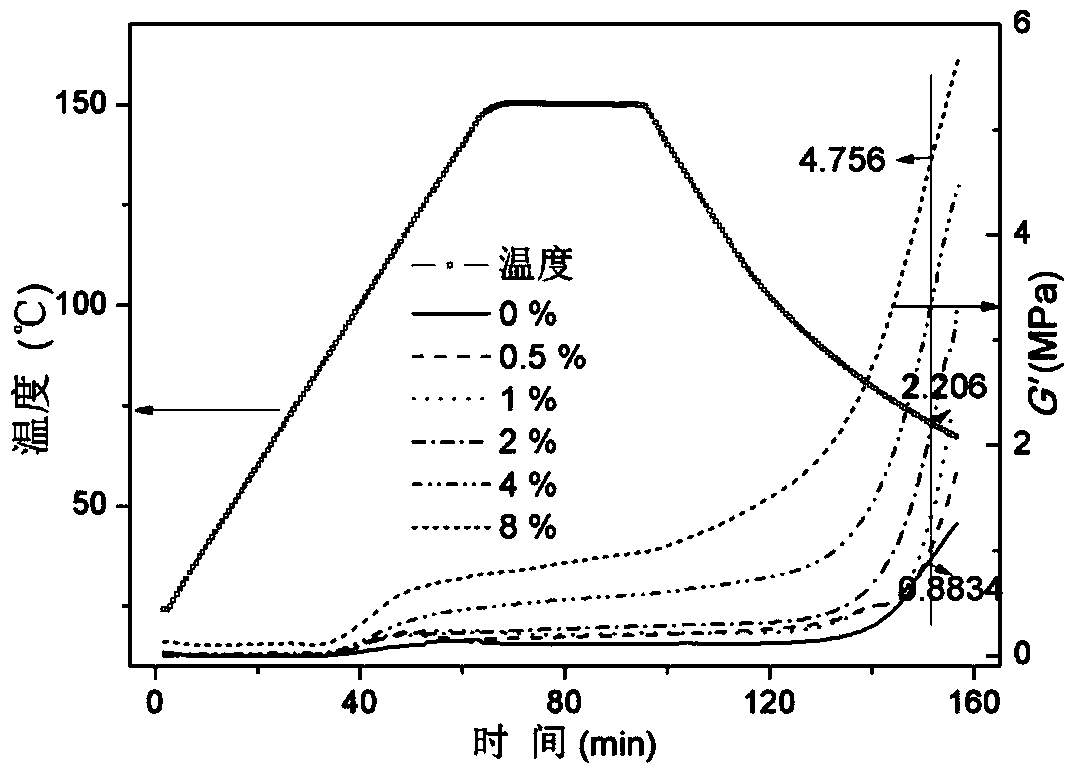
Figure 2 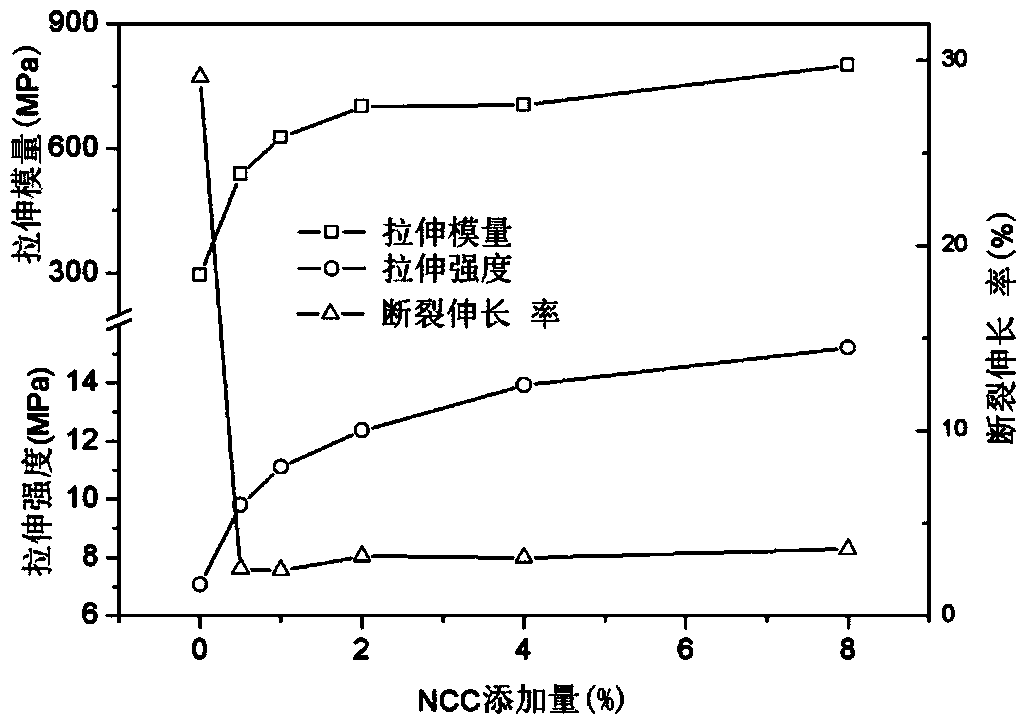
Figure 3
Abstract
Description
technical field
[0001] The invention relates to a nano-microcrystalline cellulose (NCC) composite water-based epoxy resin and a preparation method thereof. Background technique
[0002] Waterborne epoxy resin systems are mainly used as coatings and adhesives in industrial and civil fields. With the substantial increase in demand in the field of water-based coatings and adhesives, its development prospects are very broad. As early as the 1970s, the development of water-based epoxy resin systems began abroad, and many products have entered the practical stage, and their performance is close to the level of solvent-based epoxy resins. Waterborne epoxy coatings have many advantages such as low VOC content, less odor, safe use, and water cleanability, making them attractive in industry and commerce. The water-based epoxy resin system is composed of a water-based epoxy resin component containing an epoxy group and an amine curing agent component containing an amine group. Both c...
Examples
Embodiment 1
[0026] Example 1: The amount of NCC added is 0.5% of the total mass of the solid resin (water-based epoxy resin and amine curing agent)
[0027] Add 0.6033g of NCC aqueous suspension (3% by mass) to 5.00g of water-based epoxy resin (50% by mass of solid content), stir evenly, and then add 2.80g of amine curing agent (40% by mass of solid content) , Mix evenly, add 7.84g water to dilute, coat the film on the polytetrafluoroethylene plate, put it at room temperature for 2 days, and then bake it in a 90℃ oven for 4h to measure the properties of the composite polymer paint film. The composite product has a tensile modulus of 538.3MPa (25°C), a tensile strength of 9.81MPa (25°C), an elongation at break of 2.54% (25°C), and a storage modulus of 1.074MPa (70°C).
Embodiment 2
[0028] Example 2: The amount of NCC added is 1% of the total mass of the solid resin
[0029] Add 1.207g NCC water suspension (mass percent concentration 3%) to 5.00g water-based epoxy resin (mass percent solid content 50%), ultrasonically vibrate for 20min, then add 2.80g amine curing agent (mass percent solid content 40%) ), mix evenly, add 7.32g of water to dilute, coat the film on the polytetrafluoroethylene plate, put it at room temperature for 2 days, and then bake it in a 90℃ oven for 4h to measure the performance of the composite polymer paint film. The composite product has a tensile modulus of 626.2MPa (25°C), a tensile strength of 11.11MPa (25°C), an elongation at break of 2.46% (25°C), and a storage modulus of 1.362MPa (70°C).
Embodiment 3
[0030] Example 3: The amount of NCC added is 2% of the total mass of the solid resin
[0031] Add 2.413g of NCC aqueous suspension (3% by mass) to 5.00g of water-based epoxy resin (50% by mass of solid content), stir evenly, and then add 2.80g of amine curing agent (40% by mass of solid content) , mixed evenly, diluted with 6.27g of water, coated on a polytetrafluoroethylene plate, placed at room temperature for 2 days, and then dried in an oven at 90 °C for 4 hours to measure the properties of the composite polymer paint film. The composite product has a tensile modulus of 700.5MPa (25°C), a tensile strength of 12.37MPa (25°C), an elongation at break of 3.21% (25°C), and a storage modulus of 2.206MPa (70°C).