
Method for removing antibiotics resistance genes (ARGs) in sewage based on disinfecting technology
An antibiotic resistance, sewage technology, applied in biochemical equipment and methods, recombinant DNA technology, chemical instruments and methods, etc.
Patent Information
- Authority / Receiving Office
- CN · China
- Patent Type
- Applications(China)
- Current Assignee / Owner
- Publication Date
- 2015-06-10
- Estimated Expiration
- Not applicable · inactive patent
Smart Images
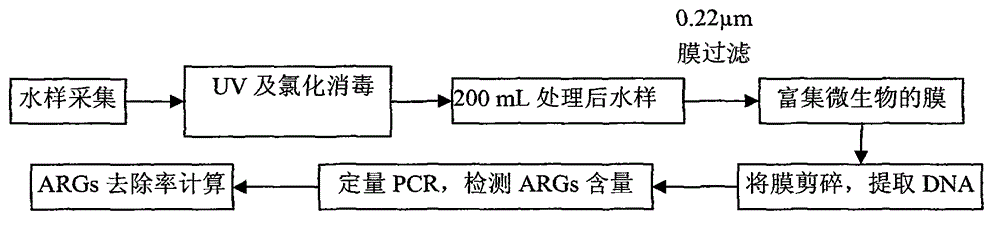
Figure 1 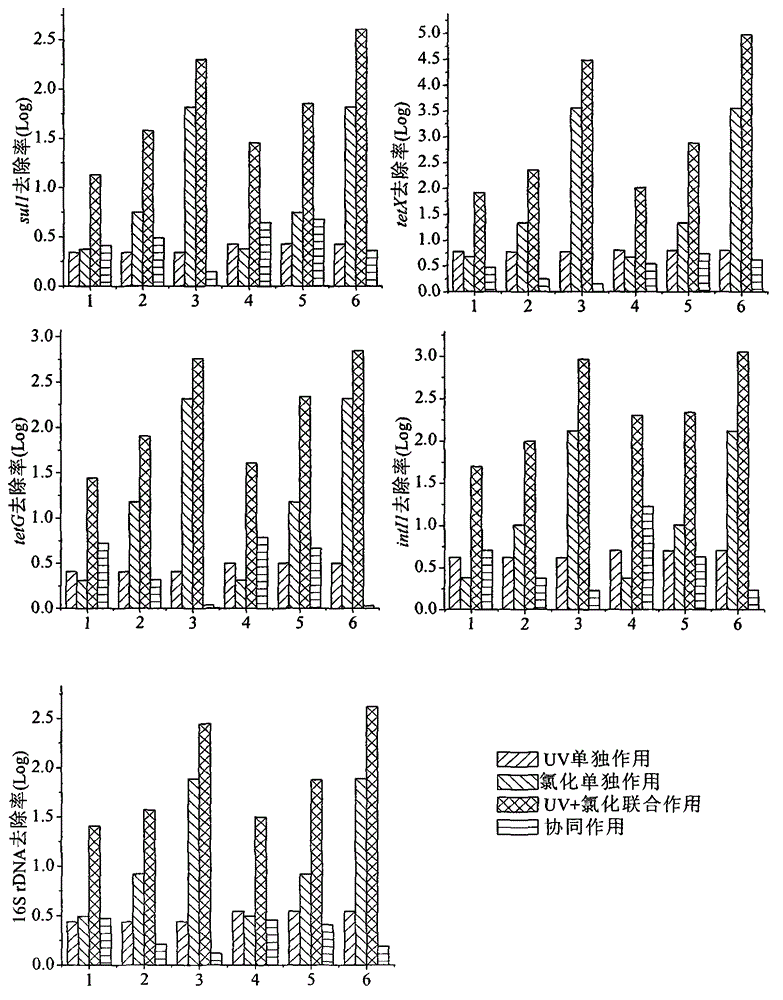
Figure 2 
Figure 3
Abstract
Description
technical field
[0001] The invention relates to the field of water treatment for environmental protection, in particular to a method for purifying antibiotic resistance genes in sewage by disinfection technology. Background technique
[0002] Antibiotic resistance genes (Antibtiotics Resistance Genes, ARGs) are a new type of pollutants. Urban sewage treatment plants are important storage places for ARGs, and their effluent is also an important source of pollution for ARGs discharged into the water environment. Controlling the impact of ARGs in the effluent of sewage treatment plants It is of great significance to reduce the pollution of ARGs in the environment and reduce the ecological risk of ARGs.
[0003] Disinfection technology is an important process section for treating pathogenic microorganisms in urban sewage and ensuring the safe discharge and reuse of sewage. Commonly used disinfection processes include chlorine disinfection, UV, and ozone disinfection. Existing r...
Examples
Embodiment Construction
[0062] Such as figure 1 Shown is a method based on disinfection technology to remove antibiotic resistance genes in sewage. Water samples were taken from a sewage treatment plant in Nanjing, which adopted the Circulating Activated Sludge (CAST) process. Collect the CAST process supernatant (secondary effluent) for disinfection experiments. The water quality and the initial ARGs content in the water samples are shown in Table 1 and Table 2.
[0063] Table 1 Disinfection treatment water quality
[0064]
[0065] Table 2 Gene content in water samples before disinfection (copies / mL)
[0066]
[0067] The collected water samples were subjected to UV light for 15s and 30s at room temperature (20±2°C), respectively, that is, the UV dose was 62mJ / cm 2 、125mJ / cm 2 ; Add NaClO immediately after the light to make the organic chlorine FC reach 5, 20, 40mg / L respectively, stir with a stirrer, add NaClO after 120min of reaction 2 S 2 o 3 (1.5%) to terminate the reaction, get 2...