
Method for detecting multiple-PCR (Polymerase Chain Reaction) product of influenza A virus H3N2 through mass spectrometry, and product thereof
A technology of influenza A virus and influenza virus, which is applied in the field of primer sets and kits for detecting influenza A, can solve the problems of no reporting of specific targets of influenza virus, no reporting scheme, difficulty in teaching and detecting influenza virus, etc.
Patent Information
- Authority / Receiving Office
- CN · China
- Patent Type
- Applications(China)
- Current Assignee / Owner
- Publication Date
- 2018-05-15
Smart Images
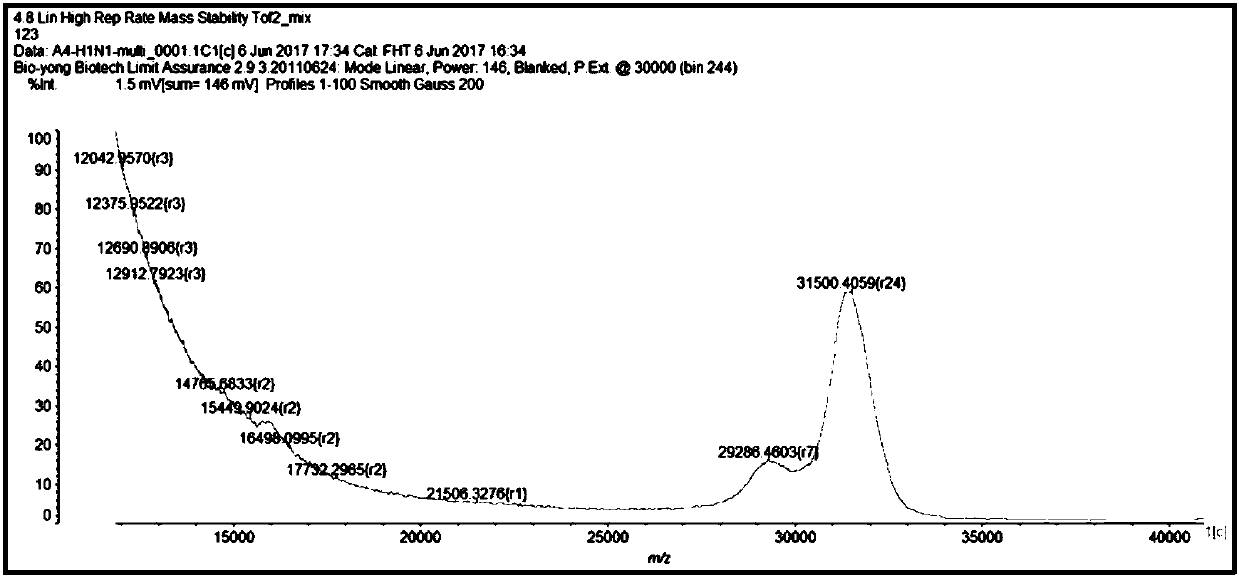
Figure 1 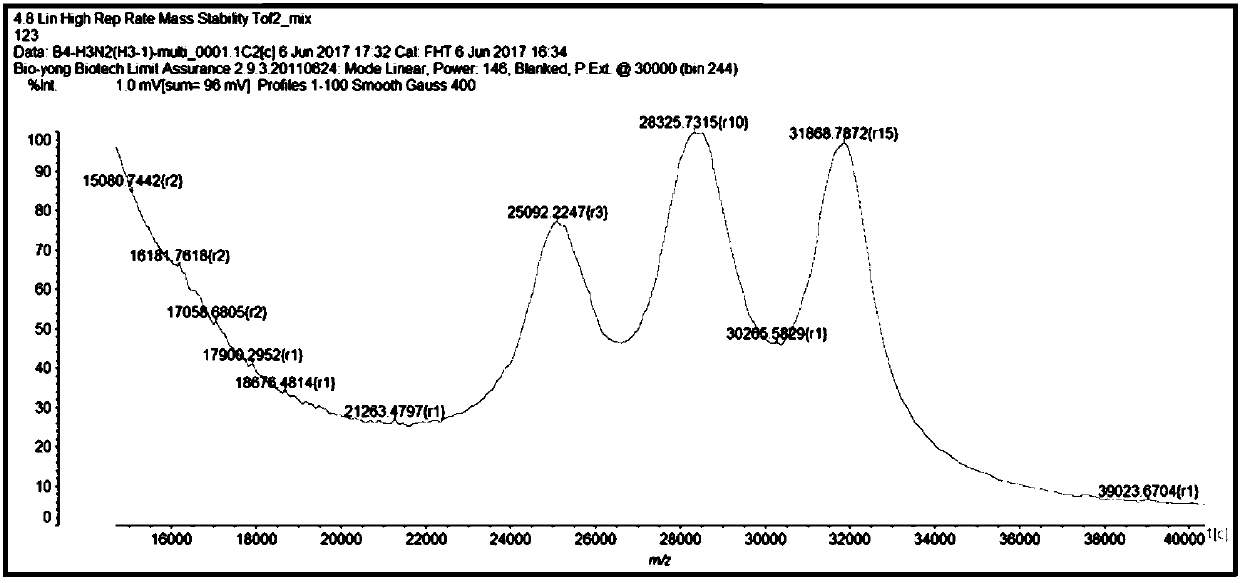
Figure 2 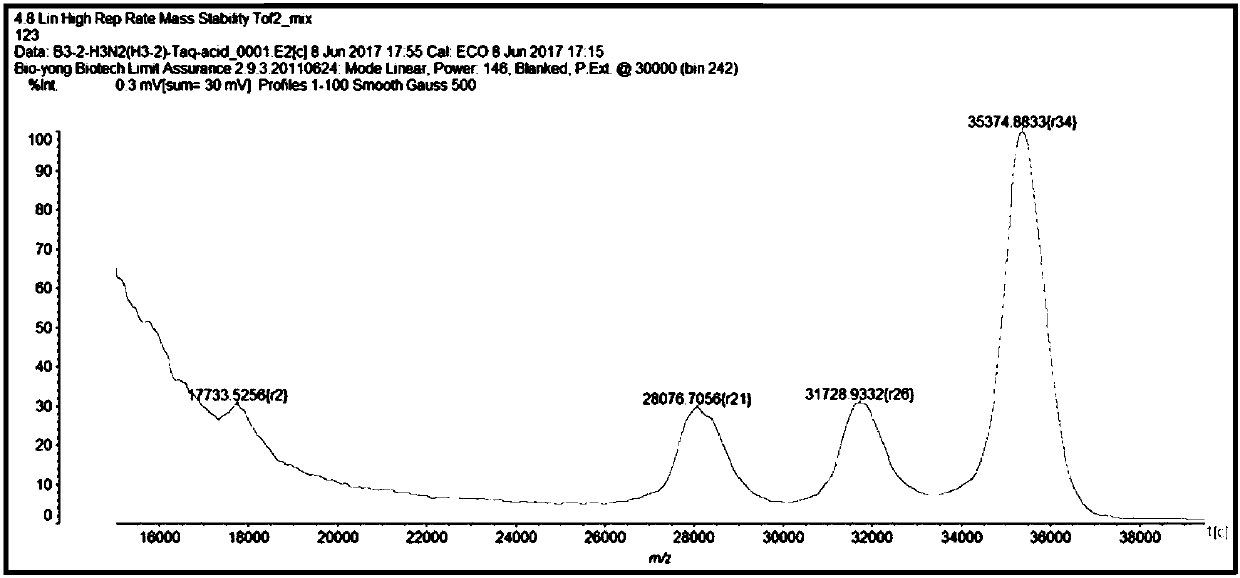
Figure 3
Abstract
Description
technical field
[0001] The invention belongs to the technical field of molecular biology detection, and relates to a method and a product thereof for detecting multiple PCR products by utilizing mass spectrum characteristic peak diagrams. The invention also relates to a primer set and a kit for detecting influenza A by using multiplex PCR amplification technology. Background technique
[0002] Influenza, referred to as "flu", is an acute respiratory infectious disease caused by influenza virus. It has the characteristics of sudden outbreak, rapid spread, and widespread spread, and is mainly transmitted through coughing and sneezing. Influenza has been around for a long time in human history, with a worldwide flu recorded as early as 1580. There were four outbreaks in the 20th century: the Spanish flu (H1N1) in 1918-1920, the Asian flu (H2N2) in 1957, the Hong Kong flu in my country in 1968 (H3N2) and the Russian flu in 1977 (H1N1 broke out again). In the past half century ...
Examples
Embodiment 1
[0087] Example 1. Primer Design
[0088] In order to detect influenza A virus, the following nine nucleic acid sequences of four common subtypes of influenza A virus, H1N1, H3N2, H5N1 and H7N9, were collected. Extract viral RNA, design reverse transcription primers for the target detection segments (M, H1, H3, H5, H7, N1, N2, N9, etc.), reverse transcribe these segments into cDNA, and connect them to the plasmid vector PmdTM19- Transformation was carried out on T SimpleVector, and 9 plasmids respectively containing the 9 nucleic acid sequences were synthesized. After identification, the plasmid DNA was extracted, and the concentration of the plasmid DNA was measured using a NanoDrop ND-2000 nucleic acid detector, and the copy number of the DNA was determined as a sensitivity standard to quantify the mother liquor.
[0089] In the following sequences, the sequences corresponding to the selected primers of the present invention are underlined.
[0090] (1) H1 fragment of H1N1 ...
Embodiment 2
[0140] 2-fold PCR amplification of embodiment 2.H1N1 subtype influenza A virus
[0141] 1. Synthesize the plasmids of the H1 and M fragments of the H1N1 subtype influenza A virus, and design specific primers corresponding to their conserved sequences. The plasmids and specific primers are all synthesized by Shanghai Jierui Bioengineering Co., Ltd. The plasmid was made into a 10ng / μL working solution, and the primer was made into a 10μM working solution. As shown in Table 1, the following primer pairs were used.
[0142] First primer pair H1:
[0143] Upstream primers:
[0144] SEQ ID NO.1: 5'-TGCTGGATCTGGTATTATC-3',
[0145] Downstream primers:
[0146] SEQ ID NO.2: 5'-TGGGAGGCTGGTGTTTATAG-3';
[0147] Second primer pair M:
[0148] Upstream primers:
[0149] SEQ ID NO.3: 5'-GGCGTTTTGAACAAACCGTC-3',
[0150] Downstream primers:
[0151] SEQ ID NO. 4: 5'-CAATCCTGTCACCTCTGACT-3'.
[0152] 2. PCR amplification
[0153] 1) The composition of the PCR reaction system is a...
Embodiment 3
[0163] Triple PCR amplification of embodiment 3.H3N2
[0164] 1. Synthesize the plasmids of the H3, N2 and M segments of the H3N2 subtype influenza A virus, and design specific primers corresponding to their conserved sequences. The plasmids and specific primers are all synthesized by Shanghai Jierui Bioengineering Co., Ltd. The plasmid was made into a 10ng / μL working solution, and the primer was made into a 10μM working solution. As shown in Table 1, the following primer pairs were used.
[0165] First primer pair H3-1:
[0166] Upstream primers:
[0167] SEQ ID NO.5: 5'-CCGGATGAGGCAACTAGTGA-3',
[0168] Downstream primers:
[0169] SEQ ID NO.6: 5'-GCAGCAAAGCCTACAGCAAC-3';
[0170] Second primer pair N2:
[0171] Upstream primers:
[0172] SEQ ID NO.9: 5'-TATCATCCCCAGTGACACAG-3',
[0173] Downstream primers:
[0174] SEQ ID NO.10: 5'-TGGGAACCAAAACAAGTGTGC-3';
[0175] Third primer pair M:
[0176] Upstream primers:
[0177] SEQ ID NO.3: 5'-GGCGTTTTGAACAAACCGTC-3',...