
A pathogenic mutation of Leber's congenital amaurosis and its detection reagent
A detection reagent and congenital technology, applied in the field of Leber's congenital amaurosis pathogenic mutations and its detection reagents, can solve the problem of screening out pathogenic genes, unreported or confirmed, difficult to analyze small families and sporadic Cases and other issues to achieve the effect of auxiliary clinical diagnosis
Patent Information
- Authority / Receiving Office
- CN · China
- Patent Type
- Patents(China)
- Current Assignee / Owner
- Publication Date
- 2021-12-28
Smart Images
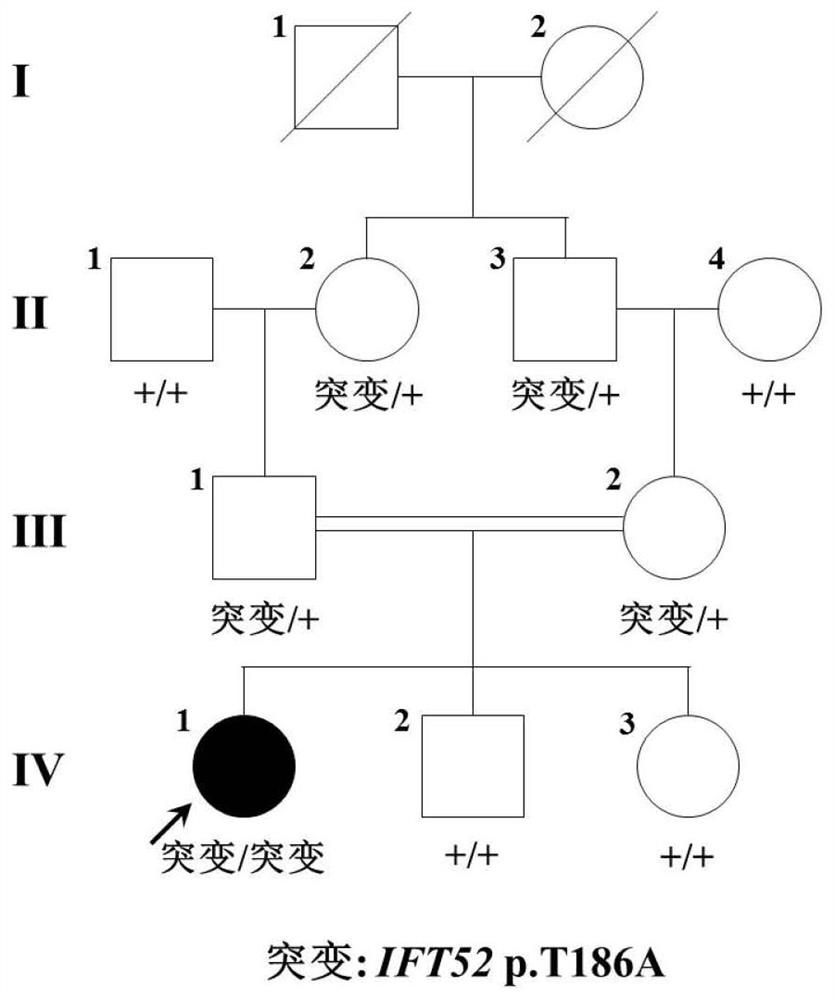
Figure 1 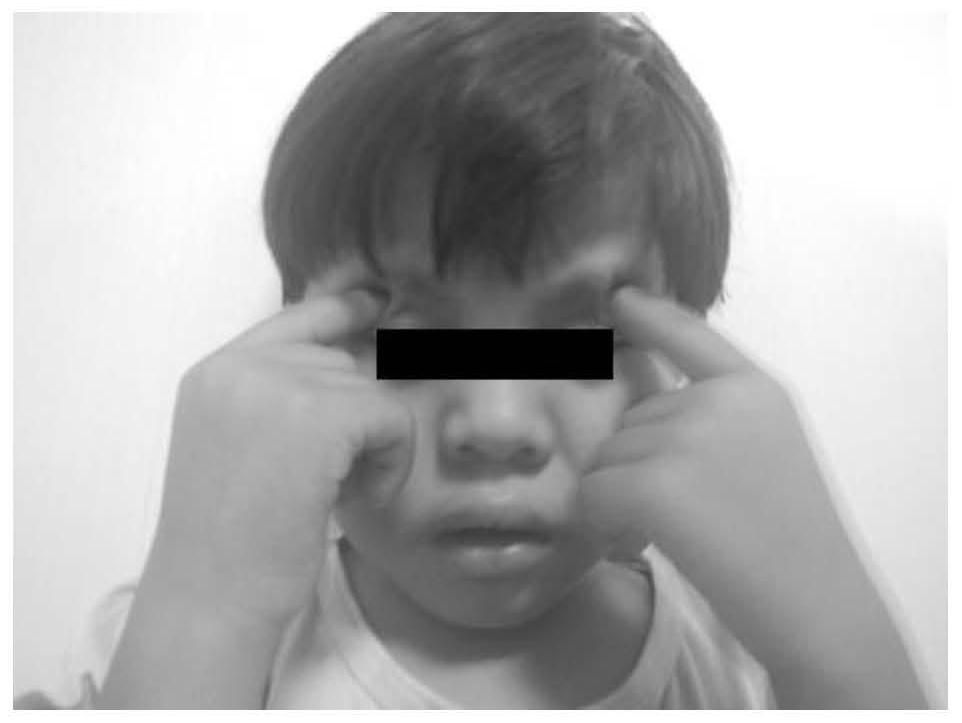
Figure 2 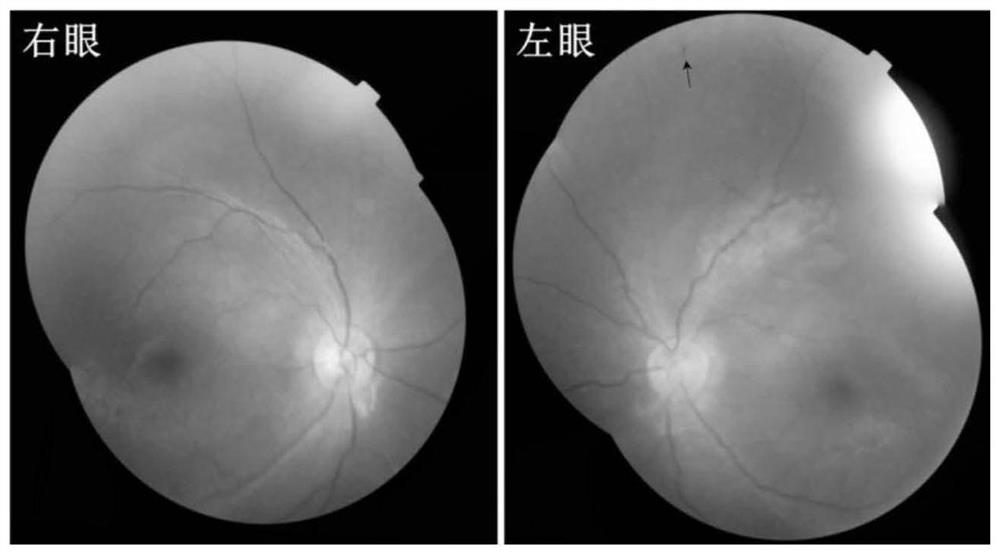
Figure 3
Abstract
Description
technical field
[0001] The invention belongs to the field of biomedicine and relates to a pathogenic mutation of Leber's congenital amaurosis and a detection reagent thereof. Background technique
[0002] Leber congenital amaurosis (LCA) is a group of congenital blinding retinal degenerative diseases caused by genetic defects. LCA is one of the important causes of blindness in infants under 1 year old, and has a high incidence in my country and even in the world. According to statistics, LCA accounts for 20% of the blindness of blind school children in the world, and accounts for 5% of all hereditary retinal degenerative diseases. However, the fundus changes of LCA patients are very diverse. In the early stage, there may be no abnormalities in the fundus, but pigmentation, retinal vascular thinning, and macular defects may also appear. LCA patients can also be accompanied by other ocular phenotypes such as high refractive error, keratoconus, congenital cataract, and system...
Examples
Embodiment 1
[0055] A family with Leber congenital amaurosis (LCA) with a history of consanguineous marriage was tested for mutations in the IFT52 gene.
[0056] experimental method:
[0057] 1. Collection of clinical resources of the family and establishment of a genetic resource bank:
[0058] The clinical data and blood samples of each member of the family were collected, see the family diagram figure 1 . Clinical data mainly include personal medical history, family history, best corrected visual acuity (BCVA), slit lamp examination, fundus photography, optical coherence tomography (OCT), full field electrophysiological examination (full field field electroretinography (ERG), fundus fluoresceinangiography (FFA), oral panoramic X-ray film, pure tone audiometry, cranial magnetic resonance, etc. The blood genome DNA of each family member was extracted with a blood genome DNA extraction kit (Qiagen, Hilden, Germany).
[0059] 2. Discover the pathogenic mutations in this family with the ...
Embodiment 2
[0089] A functional study was conducted on the pathogenic mutation IFT52 p.T186A detected in Example 1.
[0090] experimental method:
[0091] 1. Conservative analysis:
[0092] Using NCBI HomoloGene database ( http: / / www.ncbi.nlm.nih.gov / homologene ) Conservative evaluation and prediction of the screened mutations in multiple species.
[0093] 2. Predict the pathogenicity of mutations based on SIFT and PolyPhen values:
[0094] Two mainstream online prediction software are used: SIFT Human Protein DB (http: / / sift.bii.a-star.edu.sg / ) and PolyPhen-2 (Polymorphism Phenotyping, version 2; http: / / genetics.bwh.harvard.edu / pph2 / ), to predict the impact of missense mutations on protein levels, thereby predicting the pathogenicity of mutations.
[0095] 3. Research on protein crystal structure changes:
[0096] SWISS MODEL (http: / / swissmodel.expasy.org / ) prediction software was used to predict the structures of the IFT52 wild-type protein and the mutant protein carrying the...