
Application of oleanolic acid in preparation of drugs for treatment of autoimmune diseases
An autoimmune disease, oleanolic acid technology, applied in the field of biomedicine, can solve problems such as uncertainty, and achieve the effect of obviously inhibiting function, inhibiting secretion, and reducing the degree of kidney damage
Patent Information
- Authority / Receiving Office
- CN · China
- Patent Type
- Applications(China)
- Current Assignee / Owner
- Publication Date
- 2019-01-18
- Estimated Expiration
- Not applicable · inactive patent
Smart Images
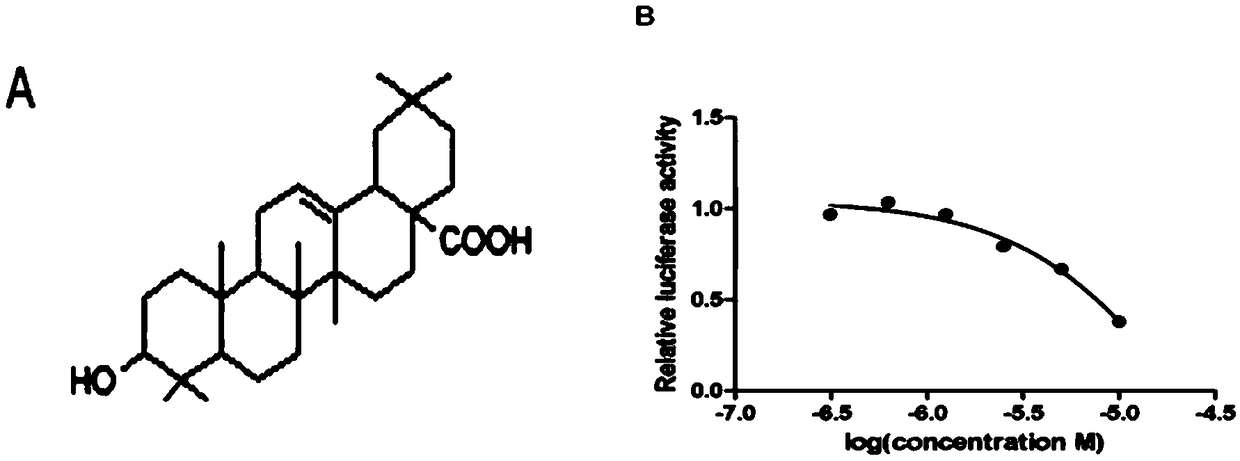
Figure 1 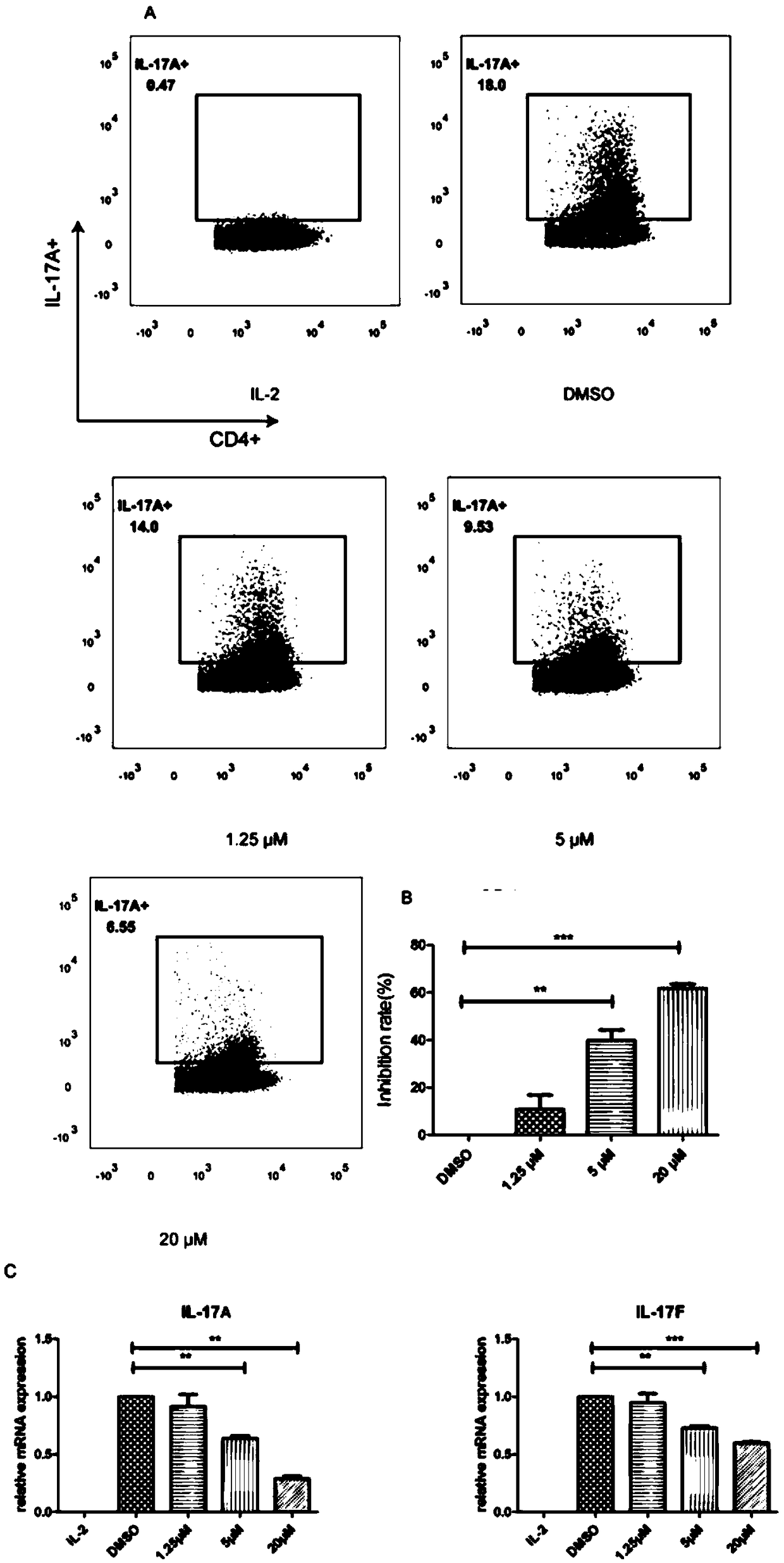
Figure 2 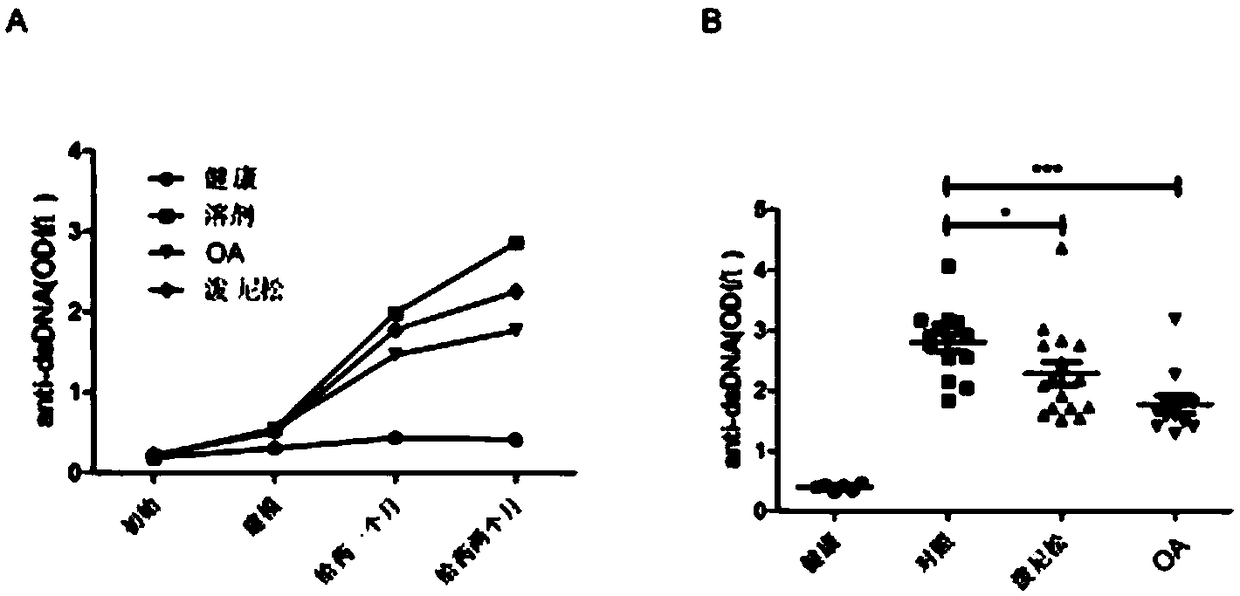
Figure 3
Abstract
Description
technical field
[0001] The invention relates to the application of oleanolic acid in the preparation of medicines for treating autoimmune diseases, and belongs to the technical field of biomedicine. Background technique
[0002] Autoimmune diseases affect approximately 5% of the population, and more than 70 human diseases, including psoriasis, multiple sclerosis, rheumatoid arthritis, asthma, and inflammatory bowel disease, are associated with autoimmune disorders. At present, the treatment of autoimmune diseases mainly relies on some non-selective immunosuppressants, which have limited curative effect and large side effects, so there is no very effective drug for the treatment of autoimmune diseases in clinical practice. Therefore, it is an urgent clinical need to develop novel autoimmune drugs with high efficacy and low side effects. Recent studies have shown that a new T cell subset, Th17 cells, is associated with the occurrence of human autoimmune diseases and related a...
Examples
Embodiment 1
[0021] Example 1 The EC of oleanolic acid in RORγt--Jurkat cells 50 test
[0022] 1. The luciferase activity screening system based on transcription factor activity is constructed as follows:
[0023] Material:
[0024] The cell line Jurkat was preserved in our laboratory; the DH5α bacterial strain was donated by Professor Ma Runlin, Institute of Genetics, Chinese Academy of Sciences, Beijing; the restriction endonuclease was purchased from Fermentas Company of the United States; the DNA ligase was purchased from NEB Company of the United States; the reporter gene sequence IRES-GFP was invented Preserved by people themselves (other existing reporter gene sequences can also be used); reporter plasmid pGL4.31[luc2P / GAL4UAS / Hygro] plasmid and pBIND plasmid were purchased from Promega Company in the United States; DMEM medium, RPMI1640 medium and cultured cells were used Sodium pyruvate, glutamine, β-mercaptoethanol, non-essential amino acids, and double antibodies were purchase...
Embodiment 2
[0033] Example 2 Test of oleanolic acid's inhibitory effect on Th17 cells, IL-17A, IL-17F
[0034] Through in vitro Th17 cell differentiation experiments, it was verified that oleanolic acid has the function of inhibiting Th17 differentiation. The inhibitory effect of oleanolic acid on Th17 cells, IL-17A, and IL-17F was studied by flow cytometry detection, and the detection results were as follows: figure 2 A. figure 2 B. figure 2 C shown.
[0035] Experimental operation: The night before the experiment, a 12-well plate was coated with a PBS solution containing 5 μg / mL CD3 antibody and 1 μg / mL CD28 antibody, 0.5 mL per well, and coated overnight at 4°C. The experiment was carried out on the second day. First, the CD4+ T cells in the mouse spleen were sorted with Miltenyi magnetic beads, and the sorted cells were divided into 1×10 6 Resuspend the cells at a cell density of 1 / mL, add 1 mL of cell suspension to each well of the coated 12-well plate, and add hTGF-β at a fin...
Embodiment 3
[0040] Example 3 Oleanolic acid inhibits serum anti-dsDNA antibodies in a mouse model of lupus nephritis and the therapeutic effect of nephritis
[0041] To establish the lupus nephritis model induced by pristane, a single injection of 500 μL pristane was administered intraperitoneally, and a single injection of 500 μL normal saline was used as the control. Oleanolic acid was compared with the solvent control and the positive drug prednisone. The drugs were all dissolved in 25% dehydrated alcohol and 75% hydroxypropyl beta-cyclodextrin (30% content), and 100 μL was administered intragastrically. Administered twice a week for 2 consecutive months. Oleanolic acid was compared with solvent control and positive drug prednisone to study the inhibitory effect of oleanolic acid on anti-dsDNA antibody in mouse serum.
[0042] Operation of ELISA detection of anti-dsDNA antibodies in serum: (1) Pretreatment plate: poly-lys (2 μg / mL), 100 μL / well, incubate at 37°C for 1 h; wash plate: w...