
A kind of preparation method of lead-carbon composite material
A composite material, lead-carbon technology, used in electrode manufacturing, lead-acid batteries, electrode rolling/calendering, etc., can solve the problem of not being able to give full play to the advantages of carbon's high conductivity and large capacitance, and achieve mass production. The effect of negative electrode life and simple process
Patent Information
- Authority / Receiving Office
- CN · China
- Patent Type
- Patents(China)
- Current Assignee / Owner
- Publication Date
- 2022-03-01
Smart Images
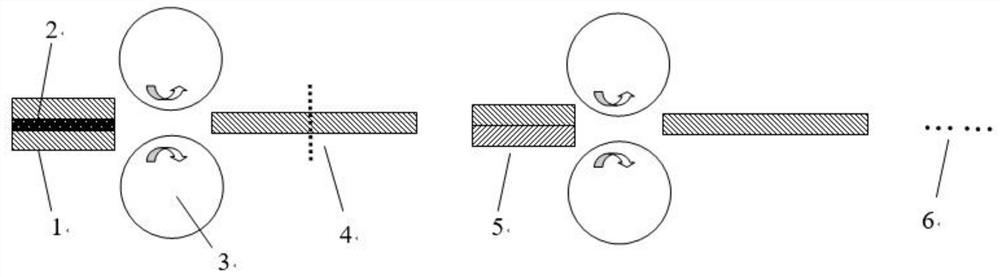
Figure 1
Abstract
Description
technical field
[0001] The invention relates to a preparation method of a lead-carbon composite material, belonging to the technical field of battery materials. Background technique
[0002] With the increasing shortage of traditional energy sources, new energy technologies are getting more and more attention. At present, the commonly used secondary chemical power sources mainly include lead-acid batteries, lithium-ion batteries, nickel-metal hydride batteries, fuel cells, nickel-cadmium batteries and supercapacitors. However, due to some safety and price considerations, it is difficult for lithium-ion batteries and nickel-hydrogen batteries to be applied on a large scale in a short period of time. Lead-acid batteries have the advantages of mature technology, high cost performance, large capacity, good safety performance, and good circular economic benefits. They have become the battery with the largest output and the widest range of applications in the world. However, whe...
Examples
Embodiment 1
[0025] A preparation method of a lead-carbon composite material, comprising the steps of:
[0026] 1) Preparation of carbon solution: Add 2 grams of graphite into absolute ethanol, then place it in an ultrasonic cleaner at 50°C with an ultrasonic frequency of 80 Hz, and process it for 50 minutes to obtain a uniformly dispersed carbon solution;
[0027] 2) Pretreatment of the surface of the lead plate: the surface of the lead plate is pretreated by degreasing treatment, grinding treatment and acid solution cleaning in sequence; the specific steps of the degreasing treatment are: put the lead plate in a degreasing agent, and heat Soak for 20 minutes, then wash away the residual solution on the surface with deionized water; wherein, the degreasing agent is a tetrasodium solution, and its composition is: 20g / L NaOH, 20g / L NaOH 3 PO 4 , 10g / L Na 2 CO 3 , 4g / L Na 4 SiO 4 . The concrete steps of acid solution cleaning are: acidic solution impregnates the lead plate with smooth ...
Embodiment 2
[0033] A preparation method of a lead-carbon composite material, comprising the steps of:
[0034] 1) Preparation of carbon solution: 0.5 g of graphene was added to acetone, and then placed in an ultrasonic cleaner at 50° C., with an ultrasonic frequency of 80 Hz, and ultrasonically treated for 50 minutes to obtain a uniformly dispersed carbon solution;
[0035] 2) Pretreatment of the surface of the lead plate: the surface of the lead plate is pretreated by degreasing treatment, grinding treatment and acid solution cleaning in sequence; Soak for 10 minutes, then wash away the residual solution on the surface with deionized water; wherein, the degreasing agent is a tetrasodium solution, and its composition is: 20g / L NaOH, 20g / L NaOH 3 PO 4 , 10g / L Na 2 CO 3 , 4g / L Na 4 SiO 4 . The concrete steps of acid solution cleaning are: acidic solution impregnates the lead plate with smooth surface for 5-10 seconds and rinses lead plate with deionized water; acidic solution is made ...
Embodiment 3
[0041] A preparation method of a lead-carbon composite material, comprising the steps of:
[0042] 1) Preparation of carbon solution: Add 33 mg of carbon black to DMF, then place it in an ultrasonic cleaner at 50°C with an ultrasonic frequency of 80 Hz, and process it for 50 minutes to obtain a uniformly dispersed carbon solution;
[0043] 2) Pretreatment of the surface of the lead plate: the surface of the lead plate is pretreated by degreasing treatment, grinding treatment and acid solution cleaning in sequence; the specific steps of the degreasing treatment are: put the lead plate in a degreasing agent, and heat Soak for 20 minutes, then wash away the residual solution on the surface with deionized water; wherein, the degreasing agent is a tetrasodium solution, and its composition is: 20g / L NaOH, 20g / L NaOH 3 PO 4 , 10g / L Na 2 CO 3 , 4g / L Na 4 SiO 4 . The concrete steps of acid solution cleaning are: acidic solution impregnates the lead plate with smooth surface for 5-1...