
A kind of preparation method of dihydrogenation 9-phenanthrene amine compound and the chiral product thereof
A compound, dihydrogenation technology, applied in the preparation of organic compounds, the preparation of amino compounds, the preparation of amino hydroxyl compounds, etc., can solve the problem of catalyst poisoning and deactivation
Patent Information
- Authority / Receiving Office
- CN · China
- Patent Type
- Patents(China)
- Current Assignee / Owner
- Publication Date
- 2021-11-16
Smart Images
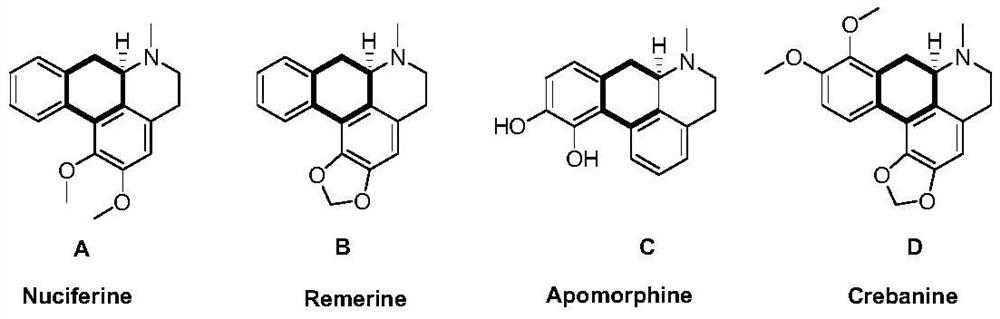
Figure 1 
Figure 2 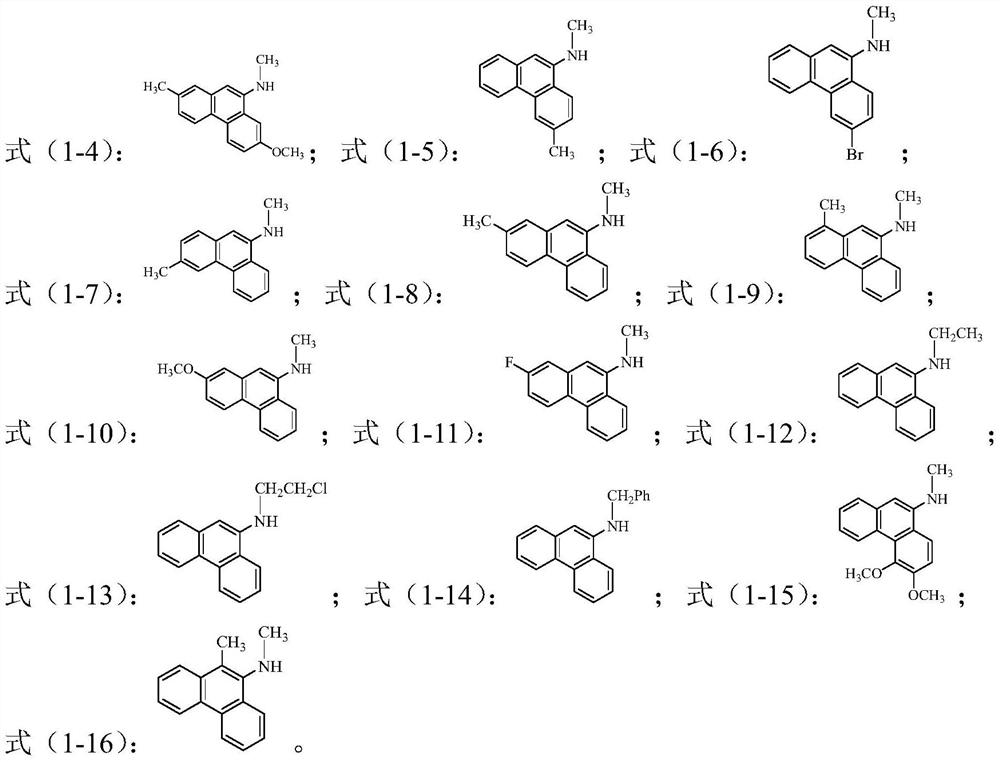
Figure 3
Abstract
Description
technical field
[0001] The invention belongs to the field of catalytic hydrogenation, and in particular relates to a preparation method of a dihydrogenated 9-phenanthrenamine compound and a chiral product thereof. Background technique
[0002] At present, the R&D, production and sales of chiral drugs have become the mainstream of the development of the global pharmaceutical industry (A.M.Rouhi, "Chiral Chemistry", Chem. Eng. News 2004, 82, 47). Chiral amine compounds widely exist in many biologically active substances and chiral drugs, and have high research value and application prospects. The high-efficiency asymmetric synthesis of chiral amine compounds has attracted great attention from the pharmaceutical community and organic synthetic chemists, and a variety of asymmetric synthesis methods have been reported. Among them, nitrogen-containing aromatic heterocyclic compounds or aromatic amine compounds Asymmetric catalytic hydrogenation to prepare chiral amines is one of...
Examples
preparation example Construction
[0020] The present invention provides a method for preparing dihydrogenated 9-phenanthrenamine compounds, wherein the method comprises: in the presence of a chiral catalyst, performing an addition reaction of the compound represented by the formula (1) with hydrogen, wherein the Described chiral catalyst is the compound of structure shown in formula (2);
[0021] Formula 1) where R 1 , R 2 , R 3 , R 4 , R 5 , R 6 , R 7 , R 8 and R 9 each independently hydrogen, halogen, nitro, hydroxyl, amino, amido, substituted or unsubstituted C1-C10 alkyl, substituted or unsubstituted C1-C10 alkoxy, substituted or unsubstituted Aryl or substituted or unsubstituted arylbenzyl, and, R 10 is a substituted or unsubstituted C1-C10 alkyl group, a substituted or unsubstituted C1-C10 alkoxy group, a substituted or unsubstituted aryl group or a substituted or unsubstituted arylbenzyl group; wherein, for The substituents of substituted alkyl and substituted alkoxy are independently select...
preparation example 1
[0125] (1) Dissolve (R,R)-1,2-diphenyl-ethylenediamine (20mmol, purchased from Bailingwei Technology Co., Ltd. 24694 brand) in dichloromethane (30mL), and dissolve in P-methylphenylsulfonyl chloride (20mmol, purchased from Bailingwei Technology Co., Ltd. 283322 brand) in dichloroethane (30mL) was added dropwise (dropped within 30 minutes), and the reaction was continued at 0°C for 1 hour. The solvent was removed under reduced pressure, and the solid crude product was separated and purified by column chromatography (the eluent was dichloromethane / methanol with a volume ratio of 10:1) to obtain 15 mmol of the formula (R, R)-(3-1-1 The chiral diamine shown in -1) has a yield of 75%, and the identification data of this chiral diamine is: 1 H NMR (300MHz, CDCl 3 ): δ7.31(d, J=8.3Hz, 2H), 7.18-7.09(m, 10H), 6.97(d, J=8.3Hz, 2H), 4.37(d, J=5.2Hz, 1H), 4.12 (d,J=5.2Hz,1H),2.32(s,3H),1.49(br,3H); 13 CNMR (75MHz, CDCl 3 ): δ142.5, 139.2, 137.2, 129.1, 128.4, 128.2, 127.5, 127.4, 127...
preparation example 2
[0129] (1) According to the method of step (1) in Preparation Example 1, the difference is that methanesulfonyl chloride (20mmol, purchased from Alfa Aisha Chemical Co., Ltd. A13383 brand) is used instead of p-methylphenylsulfonyl chloride, and Reaction at 0°C for 1 hour to obtain 14.6 mmol of chiral diamine represented by the formula (R, R)-(3-1-1-2), with a yield of 73%. The identification of the chiral diamine The data is: 1 H NMR (300MHz, CDCl 3 ): δ7.34-7.26(m, 10H), 4.56(d, J=5.1Hz, 2H), 4.21(d, J=5.1Hz, 2H), 2.26(s, 3H); 13 C NMR (75MHz, CDCl 3 ): δ141.9, 139.7, 128.7, 128.6, 127.9, 127.8, 126.9, 126.7, 63.4, 60.2, 40.7.
[0130] (2) According to the method of step (2) in Preparation Example 1, the difference is that the chiral diamine used is the chiral diamine shown in the above formula (R, R)-(3-1-1-2) (145 mg, 0.5 mmol), recrystallized to obtain 275 mg of a red solid (ie, the complex shown in formula (R, R)-4j);
[0131] (3) According to the method of step (3) ...