
Production process method of aluminum-coated wooden building template
A technology for building formwork and production process, which is applied in the joining of wooden veneers, manufacturing tools, wood processing appliances, etc., can solve the problems of increased construction technical difficulty, high cost of aluminum alloy formwork, low compressive strength, etc. No on-site sawing, overcoming expensive effects
Patent Information
- Authority / Receiving Office
- CN · China
- Patent Type
- Applications(China)
- Current Assignee / Owner
- Publication Date
- 2021-02-02
- Estimated Expiration
- Not applicable · inactive patent
Smart Images
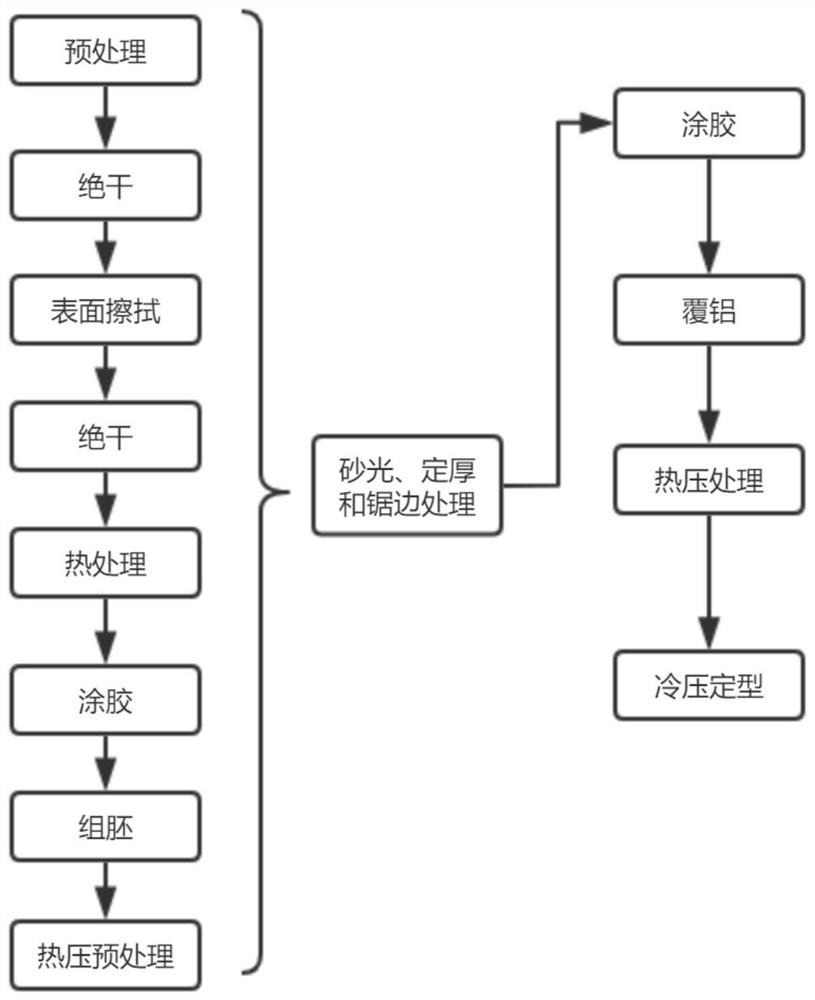
Figure 1 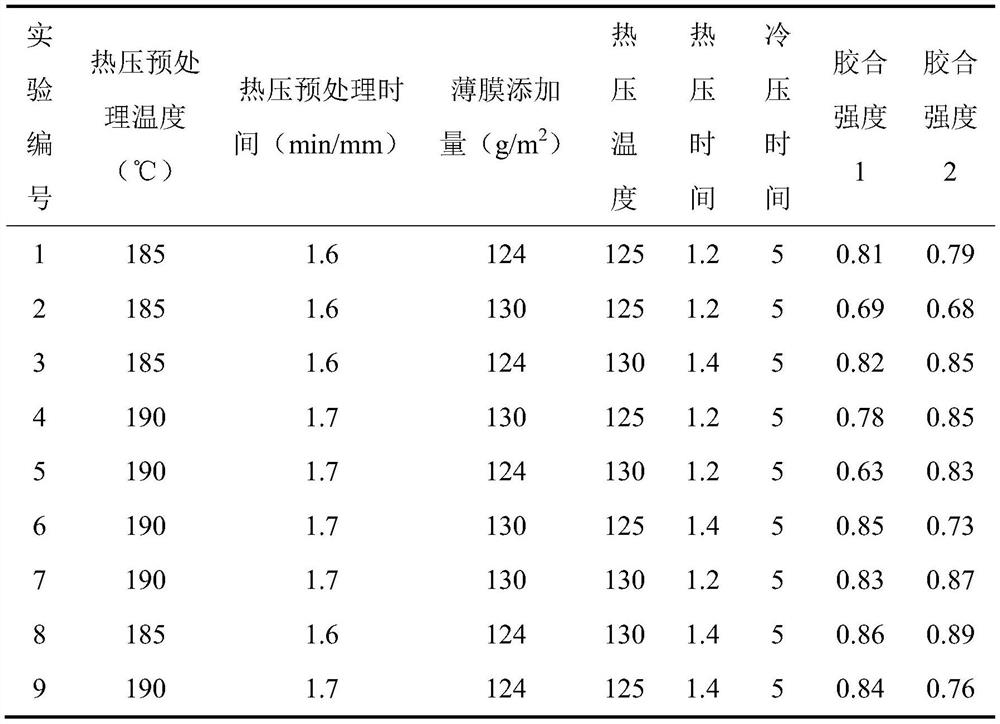
Figure 2 
Figure 3
Abstract
Description
technical field
[0001] The invention relates to the field of aluminum-clad wooden building templates, in particular to a production process method of aluminum-clad wooden building templates. Background technique
[0002] Wooden building formwork is a slab made of glued veneers criss-crossing according to the direction of wood grain, which is pressed under heating or non-heating conditions. The building material formed by the geometrical size of the position; the aluminum alloy formwork is made of aluminum alloy profile as the main material, and is suitable for concrete engineering after machining and welding;
[0003] However, due to the low compressive strength and poor surface smoothness of the existing wooden building templates; the high cost of aluminum alloy templates cannot be modified after processing, and the difficulty of construction technology increases;
[0004] This application combines the advantages of traditional wooden building templates and aluminum templa...
Examples
Embodiment 1
[0026] refer to figure 1 , a method for producing aluminum-clad wooden building formwork, comprising the following steps:
[0027] S1, pretreating the wooden veneer, placing the pretreated wooden veneer in a ventilated drying box for dry treatment;
[0028] S2, taking out the wooden veneer after the drying treatment in S1 after soaking it in a flame retardant for 24 hours, and wiping the surface of the wooden veneer;
[0029] S3. Put the wooden veneer after the surface wiping treatment in S2 into a ventilated drying box, set the temperature at 75-85° C., and dry to absolutely dry;
[0030] S4. Carry out heat treatment to the wooden veneer after the absolute dry treatment in S3, carry out glue coating treatment on the surface of the wooden veneer after the heat treatment, then carry out embryo formation with 5 wooden veneers after the glue coating treatment, heat the rough embryo Press pretreatment, set the temperature at 185°C, 1.6min / mm, sanding, thickness-setting and sawin...
Embodiment 2
[0036] Embodiment 2: According to the steps and methods in Embodiment 1, but different from Embodiment 1, the hot-pressing pretreatment temperature is set to 190 ° C, and the experimental results are as follows in Table 1;
Embodiment 3
[0037] Embodiment 3: according to the step method in embodiment 1, but different from embodiment 1 is that setting film addition amount is 130, and experimental result is as follows table 1;