

Preparation method of 3, 5-difluorophenol
A technology of difluorophenol and difluorobromobenzene is applied in the field of preparation of compound 3,5-difluorophenol, can solve problems such as few synthetic routes, and achieve the effects of short steps and high yield
Patent Information
- Authority / Receiving Office
- CN · China
- Current Assignee / Owner
- Publication Date
- 2021-05-11
Smart Images
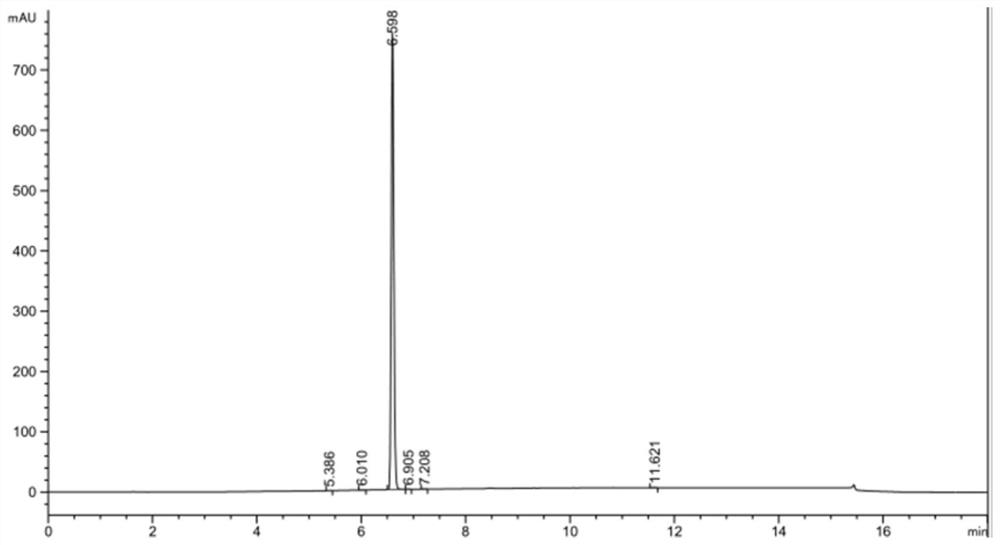
Figure 1 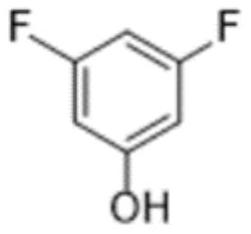
Figure 2 
Figure 3
Abstract
Description
Technical field
[0001] The invention relates to the technical field of organic compound synthesis, and specifically relates to a preparation method of compound 3,5-difluorophenol. Background technique
[0002] Organofluorine compounds are widely used in the pharmaceutical industry. About 15% to 20% of new drugs currently on the market each year are organofluorine compounds.
[0003] In fluorine-containing drug molecules, the fluorine content is usually relatively low, and each fluorine atom or fluorine-containing group introduced has its specific purpose. The main effects of fluorine atoms on drug molecules are as follows: 1. The introduction of fluorine will not significantly change the three-dimensional configuration of the molecule, but will greatly change its electronic properties. 2. In the case of aromatic ring fluorination, ortho fluorination of π system and perfluoroalkyl chain, the introduction of fluorine is beneficial to the lipophilicity of the molecule. 3. Hig...
Examples
preparation example Construction
[0030] Its preparation method comprises the following steps:
[0031] Q1. Synthesis of 3,5-difluorophenylboronic acid: 3,5-difluorobromobenzene is used as raw material, and under the protection of an inert gas, a bromine extraction agent is added dropwise to extract bromine, and then reacted with boric acid to obtain 3,5-difluorobenzene boric acid.
[0032] Q2. Synthesis of 3,5-difluorophenol: Under suitable solvent conditions, 3,5-difluorophenylboronic acid is oxidized by an oxidant and catalyzed by iodine to obtain the final product 3,5-difluorophenol.
Embodiment 1
[0035] Synthesis of 3,5-difluorophenylboronic acid
[0036] Under nitrogen protection, 193g of 3,5-difluorobromobenzene was added to a 2L dry three-necked flask, and then 1000ml of anhydrous tetrahydrofuran was added as a solvent, the temperature was lowered to -70°C, and 320g of n-butyl Lithium, after the dropwise addition is completed, keep warm for 2 hours, then add 92g boric acid and keep warm for 1h, slowly rise to room temperature, and use TLC to determine the reaction end point. After the reaction was completed, filter and dry under reduced pressure to remove the residual solvent to obtain 124.1 g of 3,5-difluorophenylboronic acid with a yield of 78.5%.
Embodiment 2
[0038] Synthesis of 3,5-difluorophenylboronic acid
[0039] Under nitrogen protection, 193g of 3,5-difluorobromobenzene was added to a 2L dry three-necked flask, and then 1000ml of anhydrous tetrahydrofuran was added as a solvent, the temperature was lowered to -60°C, and 320g of n-butyl Lithium, after the dropwise addition is completed, keep warm for 2 hours, then add 92g boric acid and keep warm for 1h, slowly rise to room temperature, and use TLC to determine the reaction end point. After the reaction was completed, it was filtered and dried under reduced pressure to remove the residual solvent to obtain 135.6 g of 3,5-difluorophenylboronic acid with a yield of 85.8%.