
Anti-pollution topical composition
a topical composition and anti-pollution technology, applied in the field of anti-pollution topical composition, to achieve the effect of preventing the adhesion of these pollutants, avoiding degradation of cell respiration, and effective combating harmful effects
Patent Information
- Authority / Receiving Office
- US · United States
- Patent Type
- Applications(United States)
- Current Assignee / Owner
- Publication Date
- 2002-10-31
- Estimated Expiration
- Not applicable · inactive patent
Smart Images
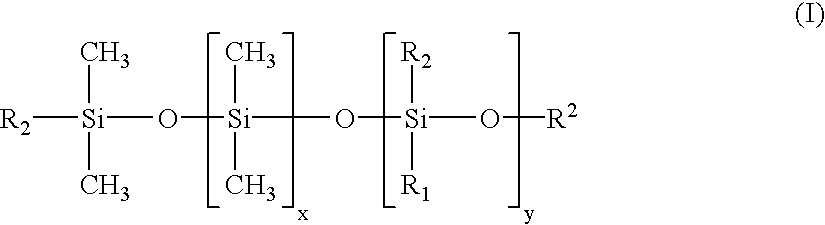
Figure 1 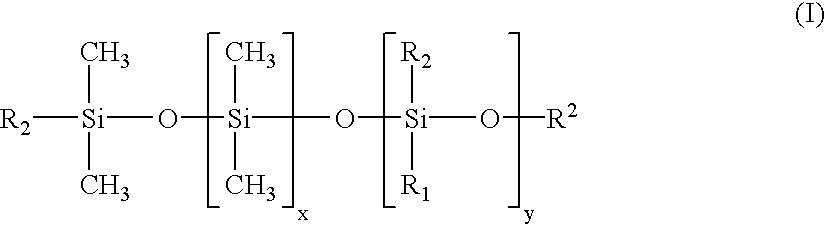
Figure 2 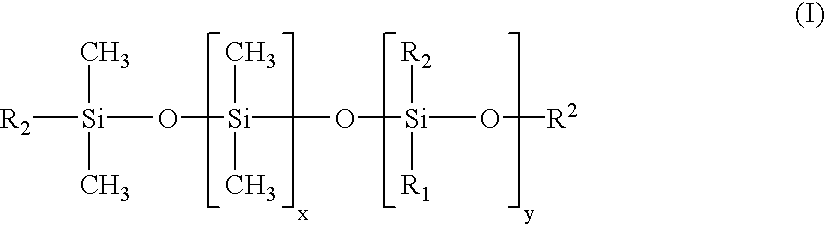
Figure 3
Abstract
Description
[0001] 1. Field of the Invention
[0002] The present application relates to the use for example, in topical application, of starch as an antipollution agent, and to a cosmetic treatment process for protecting the body against the effects of pollution, for example by applying to keratin materials a composition containing an effective amount of starch in a physiologically acceptable medium.
[0003] The application also relates to an antipollution composition for topical application containing, in a physiologically acceptable medium, at least one starch and at least one silicone gum, and to its uses in cosmetics and dermatology.
[0004] 2. Discussion of the Background
[0005] Urban environments are regularly subjected to peaks of pollution. An individual in his daily environment, and particularly in an urban zone, may be subjected to a whole range of factors attacking keratin materials, and in particular the skin, the scalp and the hair, by various airborne pollutants. Atmospheric pollutants w...
Examples
example 1
[0091]
1 Oily phase (phase A) Apricot oil 3% Silicone oil 5% Karite oil 3% Pentaerythrityl tetraoctanoate 3% Glyceryl stearate / PEG-40 stearate (Arlacel 165) 3% Stearyl alcohol 1% Screening agents (Parsol MCX and Benzopbenone-3) 9.5% Phase B Starch 0.5% Silicone gum containing 12% A.M. (DC2-9085) 0.2% (i.e. 0.024% dimethiconol and 0.176% dimethicone) Gelling agents (phase C) Hydroxyethylcellulose 0.1% Carbomer (carbopol) 0.6% Aqueous phase (phase D) Preserving agent qs Glycerol 5% Water qs 100% Phase E Triethanolamine (neutralizer) qs pH 6
[0092] Procedure:
[0093] The oily and aqueous phases are prepared separately at 70.degree. C. and the oily phase is poured into the aqueous phase with stirring. The mixture is stirred for 10 minutes to produce the emulsion, phase C is then added, followed by phase B and finally phase E to neutralize the carbopol.
[0094] A cream is obtained, which can be applied to the skin to protect it against the effects of pollution and especially to limit the ad...
example 2
[0095]
2 Oily phase (phase A) Apricot oil 1% Silicone oil 5% Octyldodecanol (Eutanol G from the company Henkel) 1% Screening agents (Parsol MCX and Benzophenone-3) 9.5% Phase B Starch 0.5% Silicone gum containing 12% A.M. (DC2-9085) 0.2% (i.e. 0.024 dimethiconol and 0.176 dimethicone) Gelling agents (phase C) Hydroxyethylcellulose 0.1% Carbomer (carbopol) 0.7% Aqueous phase (phase D) Preserving agent qs Glycerol 5% Water qs 100% Phase E Triethanolamine (neutralizer) qs pH 6
[0096] Procedure:
[0097] The oily and aqueous phases are prepared separately at 70.degree. C. and the oily phase is poured into the aqueous phase with stirring. The mixture is stirred for 10 minutes to produce the emulsion, phase C is then added, followed by phase B and finally phase E to neutralize the carbopol.
[0098] A cream is obtained, which can be applied to the skin to protect it against the effects of pollution and especially to limit the adhesion of pollutant particles to the skin.
example 3
[0099]
3 Oily phase (phase A) Apricot oil 1% Silicone oil 5% Octyldodecanol (Eutanol G from the company Henkel) 1% Screening agents (Parsol MCX, Mexoryl SX and Eusolex 232) 9.5% Phase B Starch 0.5% Silicone gum containing 12% A.M. (DC2-9085) 0.2% (i.e. 0.024% dimethiconol and 0.176% dimethicone) Gelling agents (phase C) Hydroxyethylcellulose 0.1% Carbomer (carbopol) 0.7% Aqueous phase (phase D) Preserving agent qs Glycerol 5% Water qs 100% Phase E Triethanolamine (neutralizer) qs pH 6
[0100] Procedure:
[0101] The oily and aqueous phases are prepared separately at 70.degree. C. and the oily phase is poured into the aqueous phase with stirring. The mixture is stirred for 10 minutes to produce the emulsion, phase C is then added, followed by phase B and finally phase E to neutralize the carbopol.
[0102] A cream is obtained, which can be applied to the skin to protect it against the effects of pollution and especially to limit the adhesion of pollutant particles to the skin.