Self-condensing pH sensor and catheter apparatus

US20060270940A1Active Publication Date: 2006-11-30SIERRA MEDICAL TECH
11 Cites 39 Cited by

Patent Information

Authority / Receiving Office
US · United States
Current Assignee / Owner
Publication Date
2006-11-30

Smart Images

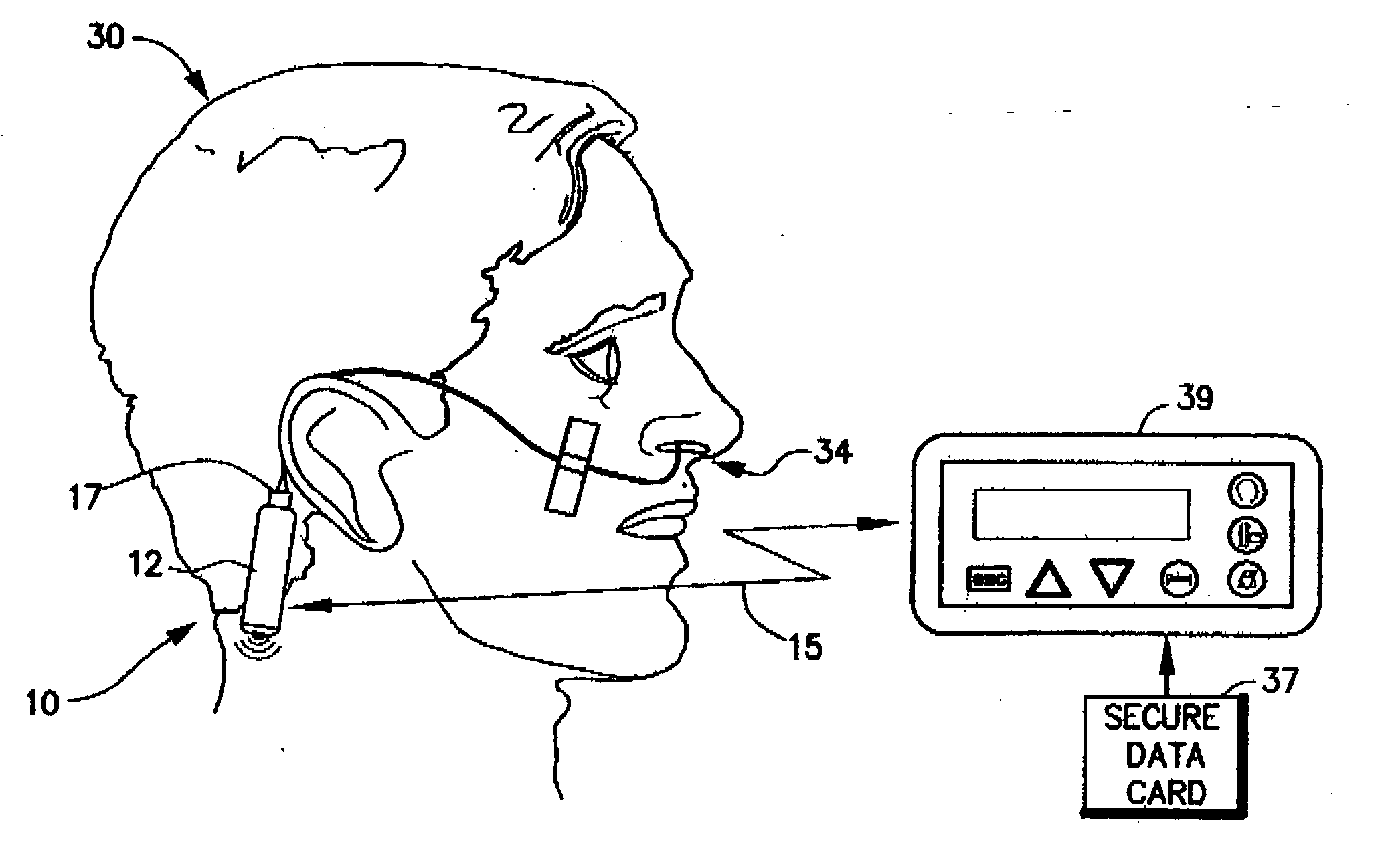
  • Figure 1
    Figure 1
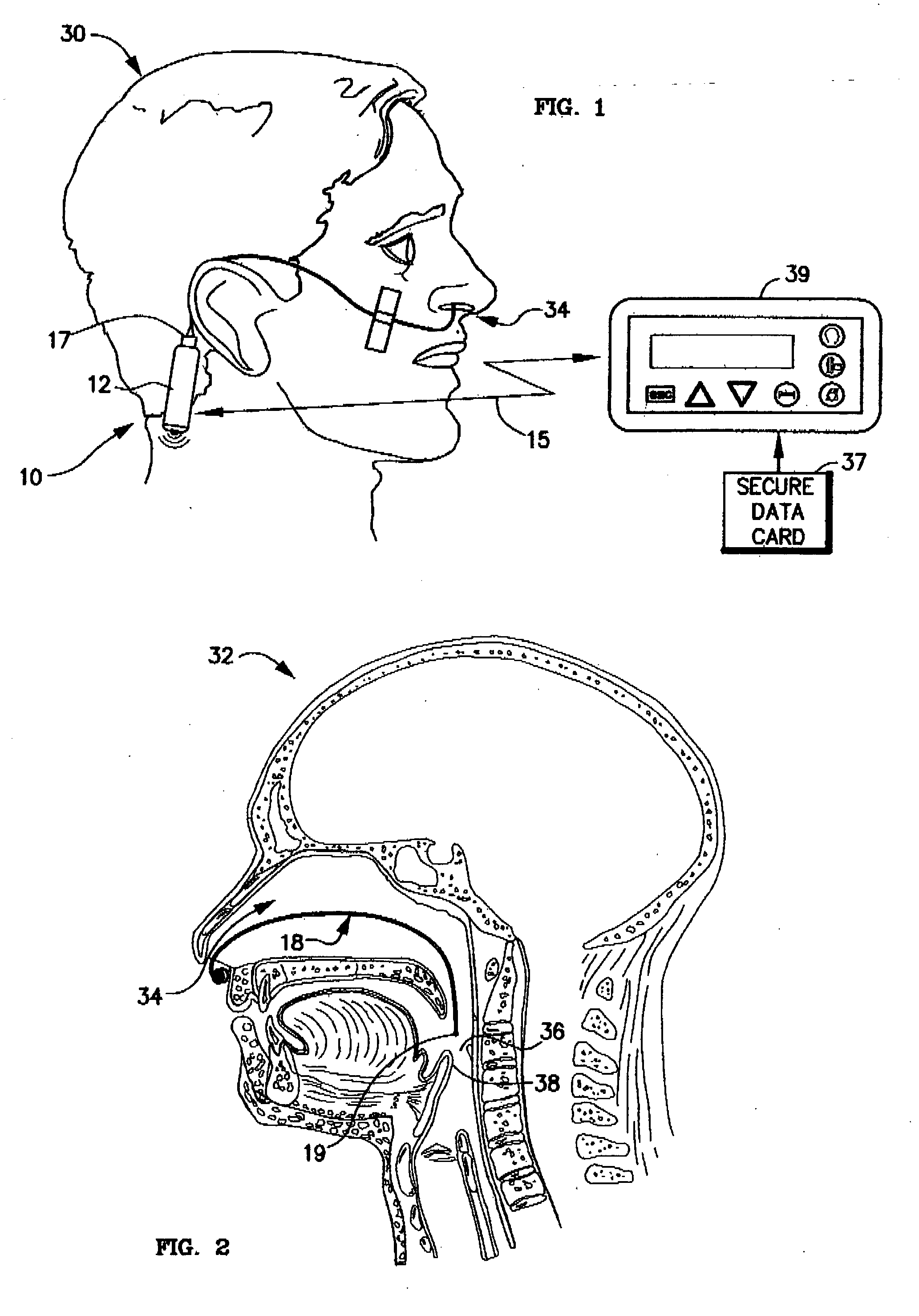
  • Figure 2
    Figure 2
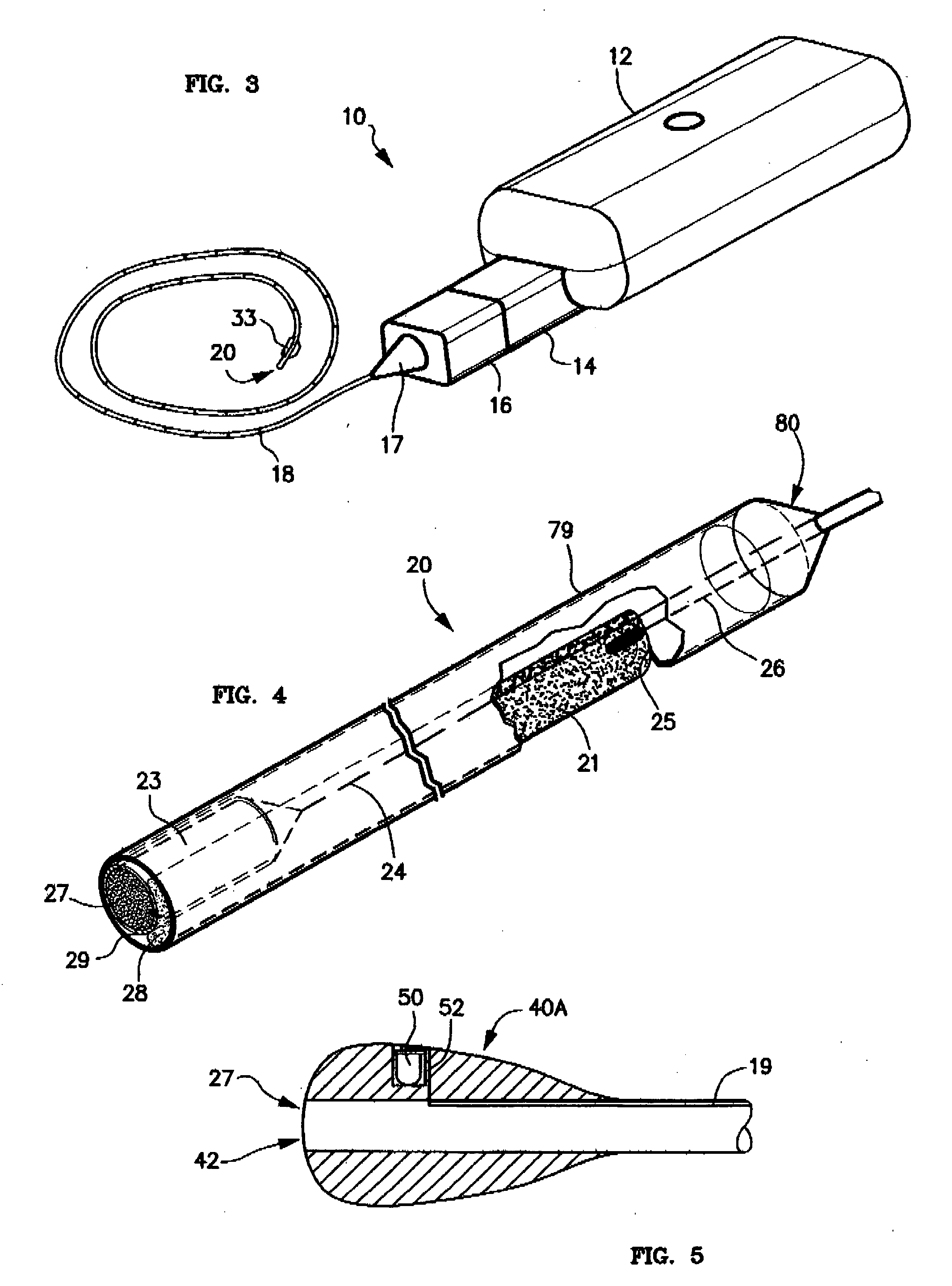
  • Figure 3
    Figure 3
Patent Text Reader

Abstract

The present invention is a system for monitoring a patient's breath chemistry comprising a plurality of components, including a self-condensing pH sensor distally mounted on a catheter, a transmitter with hydration sensing circuitry for the pH sensor, and processing receiver / data recorder. A specially designed self-condensing pH sensor is located on the distal end of a tubular catheter which is designed to be inserted into the patient's airway. Monitoring of a patient's breath pH is accomplished by using the miniaturized self-condensing pH sensor, providing for real-time monitoring of patient airway pH values. The self-condensing pH sensor comprises a multi-tubular design with the catheter tubular member housing a silver chloride reference element, an ion conducting path, and an antimony sensor element isolated within an inner tubular member that is co-linearly or coaxially configured with the outer catheter tubular member. A separation means may be employed in close proximity to the pH sensor to keep the pH sensor from direct mucosal contact along the wall of the patient's airway which could possibly affect the sensor's ability to accurately measure breath pH. Centimeter markings imprinted on the catheter body and an optional light source located near the distal tip of the catheter is used to aid in proper positioning. A transmitter with an antenna is engaged to the proximal end of the catheter and transfers the observed pH data by employing one of many wireless methods, such as radio-frequency (RF) energy. Alternately, the transfer of observed pH data is accomplished by direct wire methods. A processing receiver / data recorder receives the data and provides a means for storing and retrieving the data for study by a physician. The transmitter also includes a means to evaluate the signal strength of the sensor, which comprises of periodically sending a low voltage signal to the pH sensor and reviewing the resulting wave forms. The signal strength system can detect if the pH sensor is non-hydrated, partially hydrated, or fully hydrated. The pH data is transferred or updated at specific intervals, which can be varied according to the patient's needs, to the processing receiver / data recorder that can include an alarming means for predetermined pH values.
Need to check novelty before this filing date? Find Prior Art

Description

FIELD OF THE INVENTION

[0001] The field of art to which this invention relates is in the monitoring of breath chemistry in a patient's airway to provide information that enables physicians to diagnose certain respiratory diseases associated with gastroesophageal reflux (GER). More specifically, the present invention measures the pH level of a patient's breath and provides for real time monitoring. BACKGROUND OF THE INVENTION

[0002] Recently, it has been reported that the monitoring of acidity or pH of a patient's breath could help physicians in estimating the potential for and occurrence of asthma, laryngopharyngeal reflux disease (LPRD), aspiration-related lung diseases, chronic obstructive pulmonary disease (COPD), and sleep related breathing disorders such as obstructive sleep apnea (OSA).

[0003] Gastroesophageal reflux in the airway is associated with, and known to exacerbate, widespread respiratory diseases such as asthma, laryngopharyngeal reflux disease (LPRD), aspiration-rel...

Examples

Embodiment Construction

[0025] The present invention is a system comprising a plurality of components, including a self-condensing pH sensor distally mounted on a catheter, a transmitter with hydration sensing circuitry for the pH sensor, and processing receiver / data recorder. Referring to FIG. 1, a perspective representation of the present invention system 10 is shown where the catheter 18 is exiting one nostril 34 and draped over the ear of a typical patient 30. The proximal end 17 of the catheter 18 is connected to a transmitting device 12, which communicates with a processing receiver with data recording capability 39 (herein referred to the “processing receiver / data recorder”39). The preferred method of communication is by wireless means 15, however, it is anticipated by the Applicants that the transmitting device can communicate with the processing receiver / data recorder 39 by a direct wired means. The wireless transmitter device 12 incorporates an antenna that transfers the measured pH data by emplo...