
Selective hydrogenation of functional groups in substrates and partially hydrogenated fatty acids and fatty acid derivatives
a functional group and hydrogenation technology, applied in the preparation of carboxylic compounds, fatty acid chemical modifications, organic chemistry, etc., can solve the problems of high reaction rate, low mass transport of triglyceride, and extra-hard to obtain selective hydrogenation of the different fatty acids in the molecule, so as to minimise reduce the formation of trans-bonds , the effect of reducing the formation of trans-fatty acids
Patent Information
- Authority / Receiving Office
- US · United States
- Patent Type
- Applications(United States)
- Current Assignee / Owner
- Publication Date
- 2007-04-19
- Estimated Expiration
- Not applicable · inactive patent
Smart Images
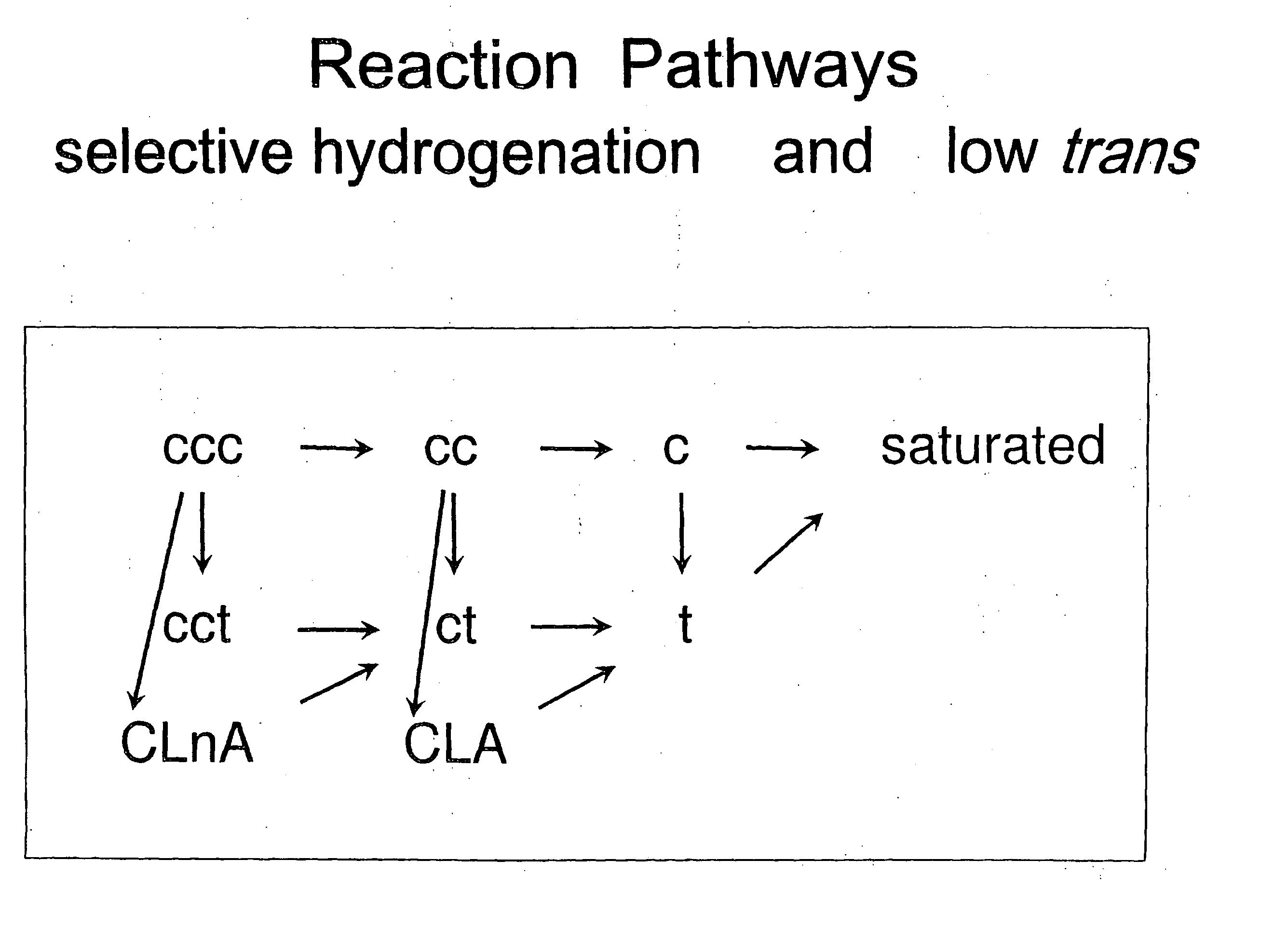
Figure 1 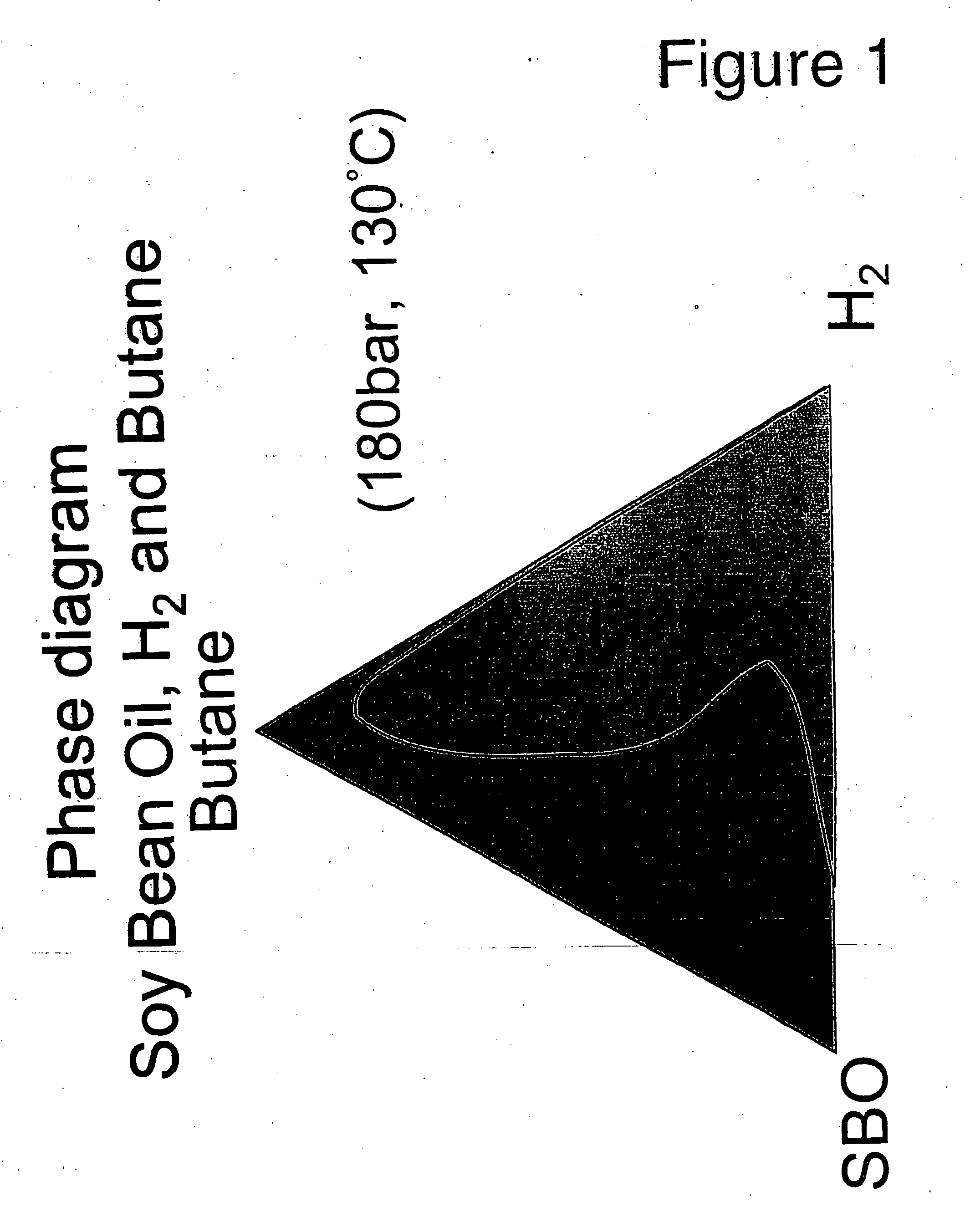
Figure 2 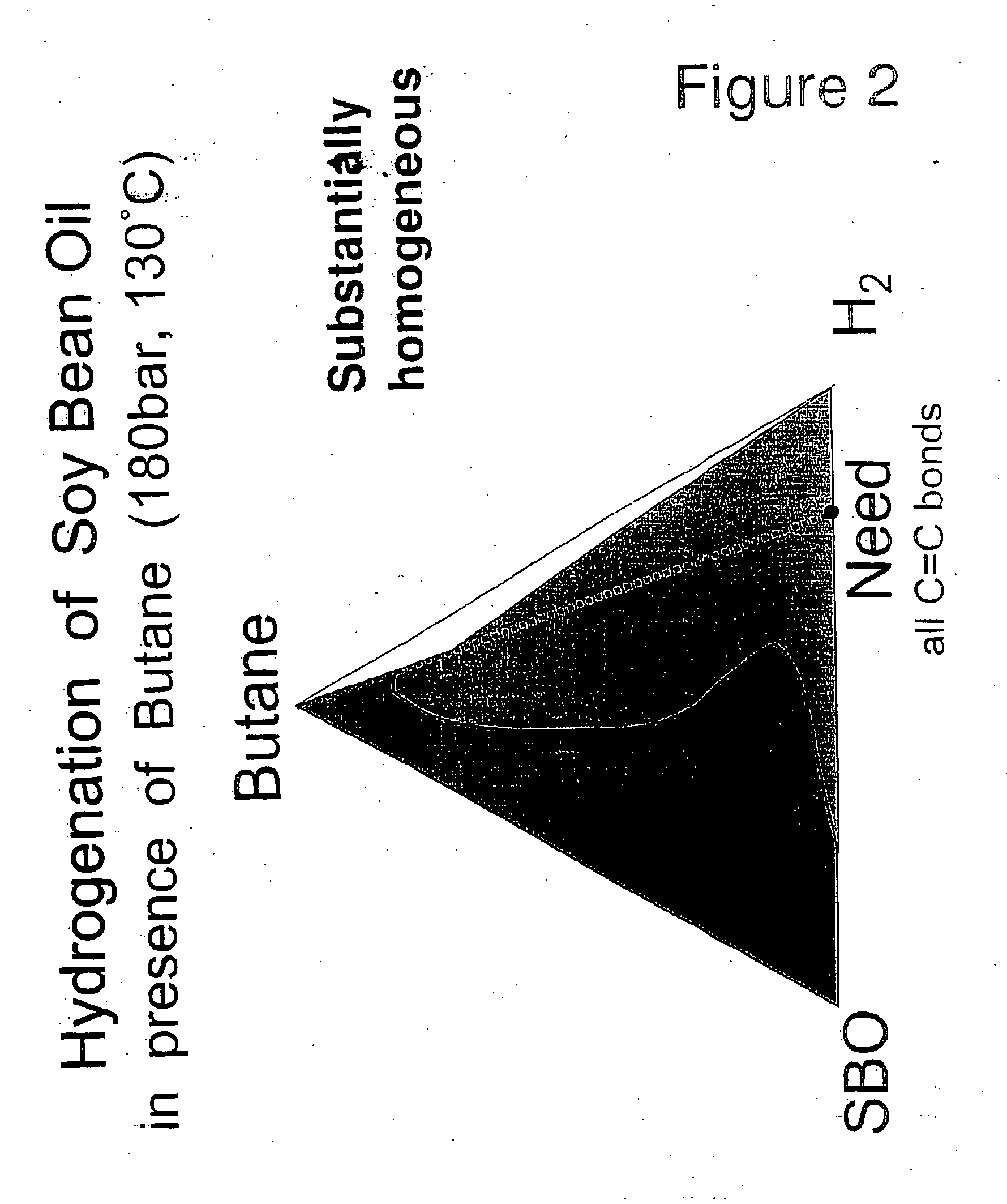
Figure 3
Abstract
Description
TECHNICAL FIELD
[0001] The present invention concerns a process for the hydrogenation of functional groups in hydrogenatable substrates especially in the form of lipids, primarily fatty acids and fatty acid derivatives, e.g. triglycerides and methyl fatty acids, wherein hydrogen gas is mixed with a solvent and the substrate in the presence of a catalyst, and the reaction is carried out under predetermined conditions of pressure, time, temperature and concentration, so that the reaction reaches maximum selectivity. Selectivity is obtained under substantially homogeneous conditions by reaching a very favourable balance between mass transport (addition of substrate and removal of product) and reaction rate. To provide this, supercritical solvents are especially suitable.
[0002] By this technique, one can control the reactions so that one obtains completely unique selectivities. In the case of fatty acids, we can, for example, selectively hydrogenate fatty acids with 3 double bonds, wit...
Examples
Embodiment Construction
[0167] The experiments are carried out using the same equipment and in the same way as described in our literature publications (van den Hark et al 1999, Macher 2001, van den Hark 2000).
[0168] Hydrogenation is initiated by adding a known amount of hydrogen to a continuous flow of solvent, dimethylether (DME) or butane, and then adding a flow of substrate (rapeseed oil from the local store). The total system pressure was usually 200 bar. The entire reaction mixture is warmed to the desired temperature and passes through a solid catalyst bed which is warmed to the same temperature.
[0169] Samples are taken at regular intervals from the reactor outlet for triglyceride analysis by HPLC. Under certain chosen periods, a large amount of produce is collected for methylation and analysis of fatty acid composition by HPLC. Both HPLC methods are based on silver ion chromatography. The triglyceride method is described in Macher, 2001 and Macher Holmqvist 2001 and the meth...