
Methods for treating hyperuricemia and related diseases
a hyperuricemia and related disease technology, applied in the field of methods for treating hyperuricemia and related diseases, to achieve the effect of reducing the level of serum uric acid
Patent Information
- Authority / Receiving Office
- US · United States
- Patent Type
- Applications(United States)
- Current Assignee / Owner
- Publication Date
- 2013-11-07
- Estimated Expiration
- Not applicable · inactive patent
Smart Images
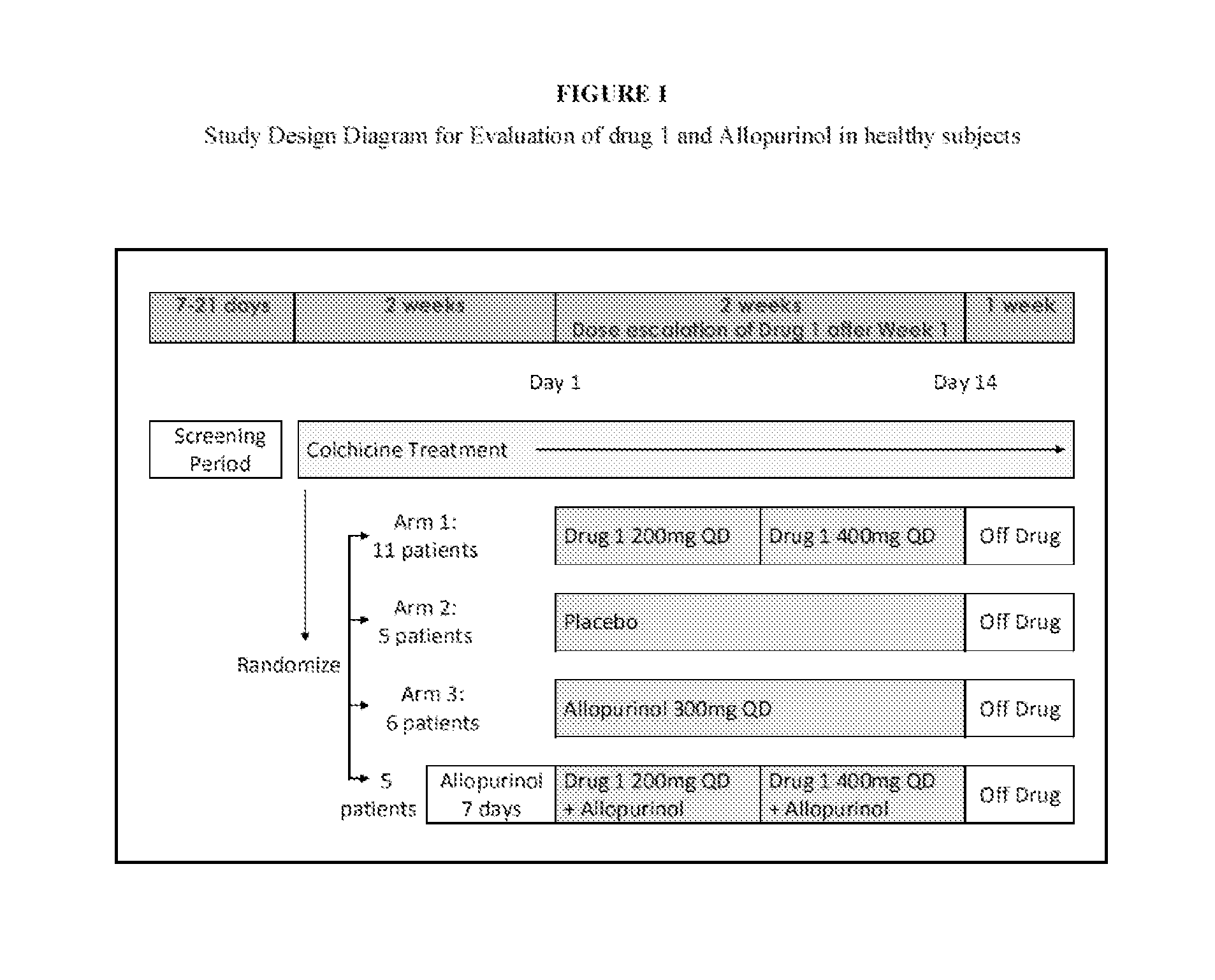
Figure 1 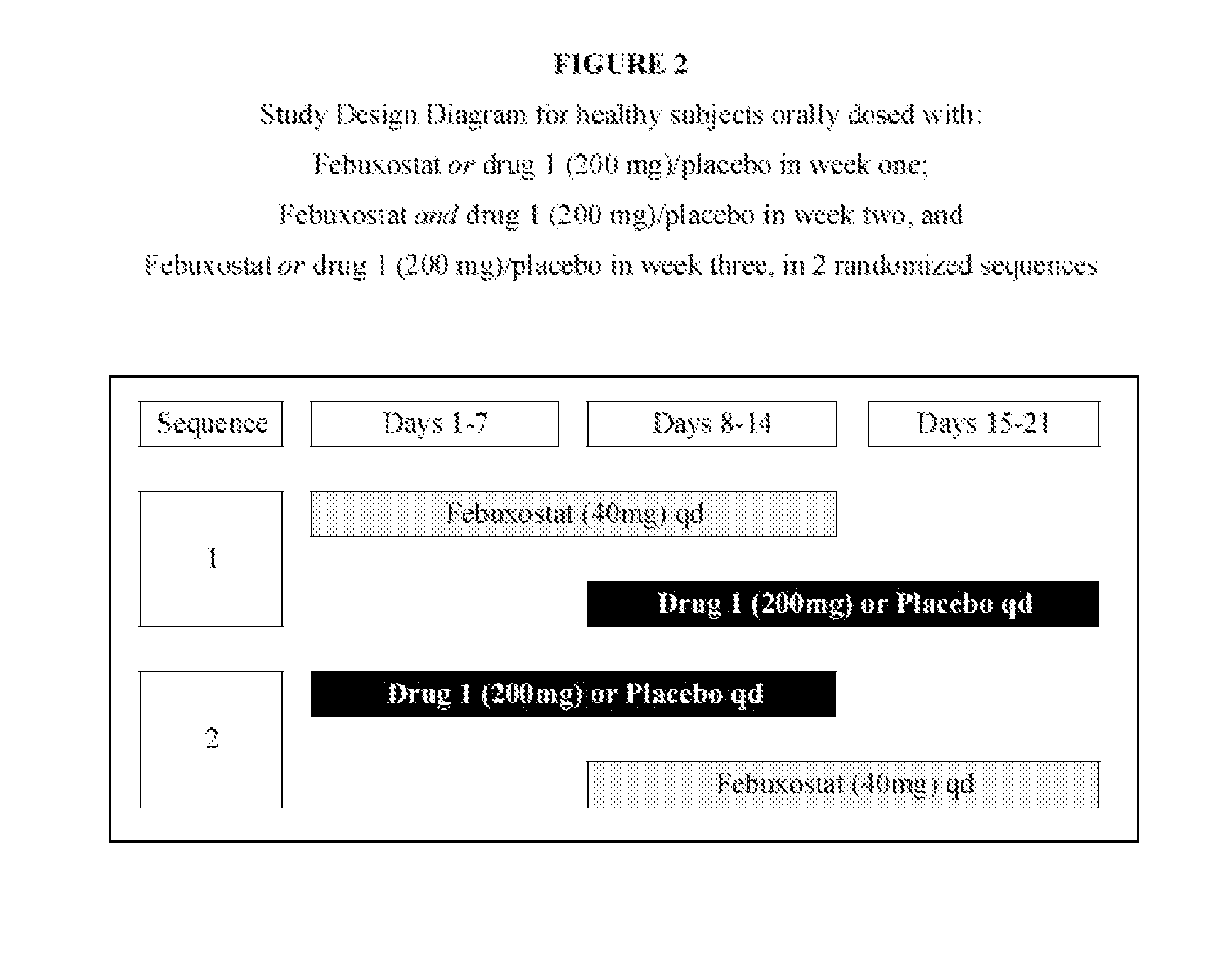
Figure 2 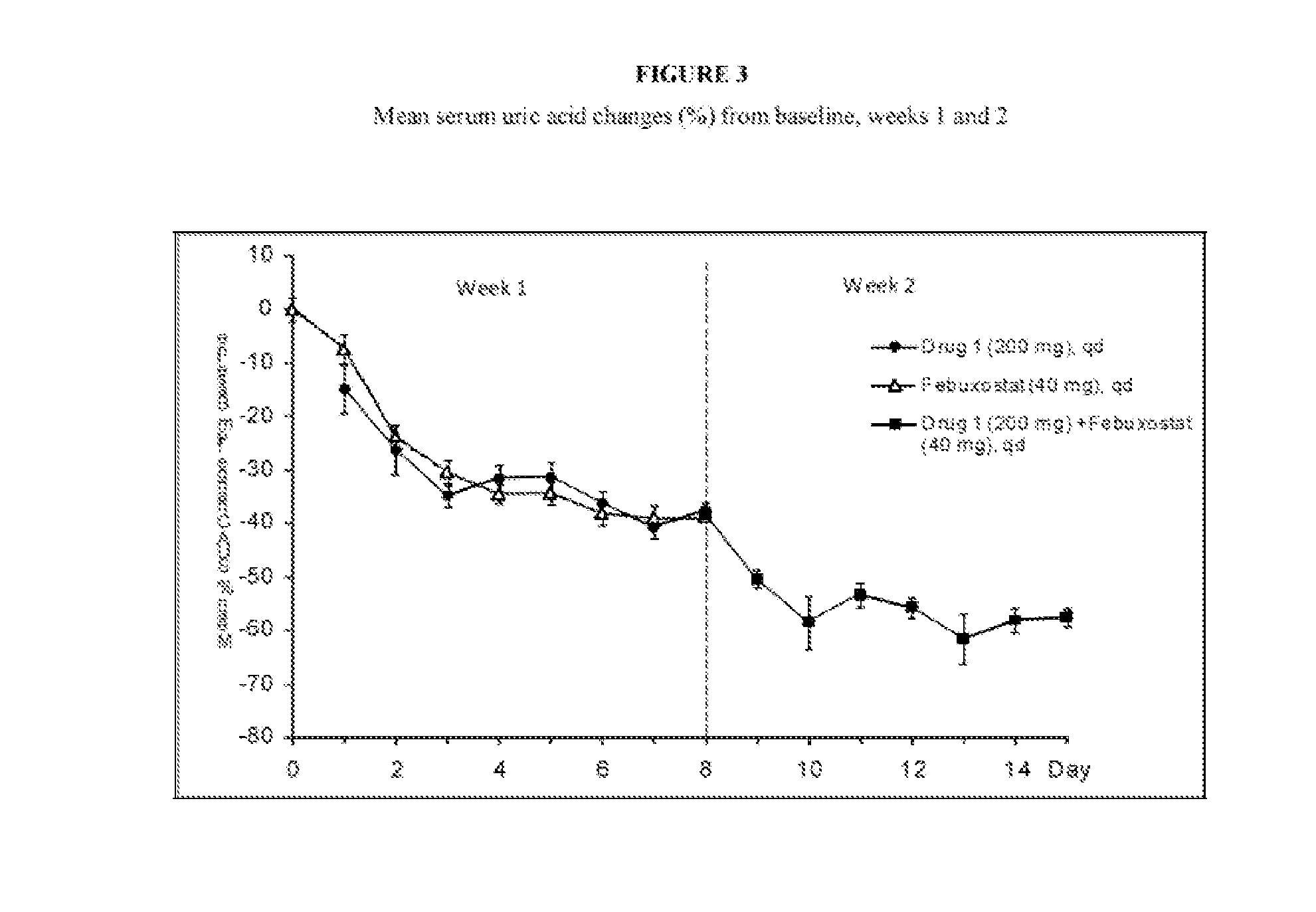
Figure 3
Abstract
Description
BACKGROUND OF THE INVENTION
[0001] Gout is a condition that results from uric acid crystals depositing in tissues of the body. It is often related to an inherited abnormality in the body's ability to process uric acid, but may also be exacerbated by a diet high in purines. Defective uric acid processing may lead to elevated levels of uric acid in the blood causing recurring attacks of joint inflammation (arthritis), uric acid deposits in and around the joints, decreased kidney function, and kidney stones. Approximately 3-5 million people in the United States suffer from attacks of gout with attacks 6 to 9 times more common in men than in women (see Sanders and Wortmann, “Harrison's Principles of Internal Medicine”, 16th Edition; 2005; Food and Drug Administration (FDA) Advisory Committee Meeting, Terkeltaub presentation, June 2004; Terkeltaub, “Gout”, N Engl J Med., 349, 1647-55, 2003).SUMMARY OF THE INVENTION
[0002] Provided in certain embodiments herein is a method of treating gout or...
Examples
example 1
Study Objectives
[0121]To compare the proportion of subjects whose sUA level is [0122]To evaluate the percent reduction from baseline in sUA levels following 2 weeks of continuous treatment with drug 1 in combination with allopurinol.[0123]To evaluate the proportion of subjects whose sUA levels are [0124]To evaluate the absolute and percent reduction from baseline in sUA levels at each visit.[0125]To evaluate the maximum percent reduction in sUA levels from baseline during the entire treatment period.[0126]To evaluate percent change in 24-hour urine uric acid level from baseline to Day 15.[0127]To evaluate the safety and tolerability of drug 1 in subjects with gout.[0128]To evaluate the pharmacokinetics, safety and tolerability of drug 1 in combination with allopurinol in subjects with gout.
Study Details
[0129]A randomized, double-blind, placebo-controlled, dose titration, safety and pharmacodynamics pilot study, in approximately 26 hyperuricemic subjects with symptomatic gout enrolle...
example 2
[0272]Drug 1 was tested according to the clinical trial protocol described in example 1. Actual enrollment was as follows:
Cohort 1: 21 subjects −11 randomized to Drug 1[0273]−5 randomized to placebo[0274]−5 randomized to open-label allopurinol
Cohort 2: 6 subjects −5 randomized to Drug 1+allopurinol[0275]−1 to placebo+allopurinol
Preliminary Safety Summary (Cohort 1 Only)
[0276]Drug 1 was well tolerated in this study, with no SAEs, deaths or discontinuations due to adverse events and no clinically significant changes in physical exam findings or vital signs. No clinically significant ECG findings including interval measurements, and no dose-related increase in adverse events (all events were transient and mild to moderate in severity).
[0277]Two patients had >30% increase in serum creatinine (SCr) while on 400 mg QD (Grade 1 AE) with no associated increase in BUN levels and no significant abnormality in urinalysis; SCr quickly fell back to normal limits after patients finished the study...
example 3
[0279]Drug 1 is evaluated according to the clinical trial protocol described in example 1, using BCX4208 (is 7-(((3R,4R)-3-hydroxy-4-(hydroxymethyl)pyrrolidin-1-yl)methyl)-3H-pyrrolo[3,2-d]pyrimidin-4(5H)-one) in place of allopurinol.