
Sulfonium salt-containing polymer, resist composition, patterning process, and sulfonium salt monomer and making method
a technology of sulfonium salt and polymer, which is applied in the field of sulfonium salt-containing polymer, resist composition, patterning process, and sulfonium salt monomer and making method, can solve the problems of insufficient euv exposure sensitivity, damage to the exposure system, and inability to form a satisfactory pattern profile, etc., to achieve low cost, low cost, and high sensitivity
Patent Information
- Authority / Receiving Office
- US · United States
- Patent Type
- Applications(United States)
- Current Assignee / Owner
- Publication Date
- 2014-10-02
Smart Images
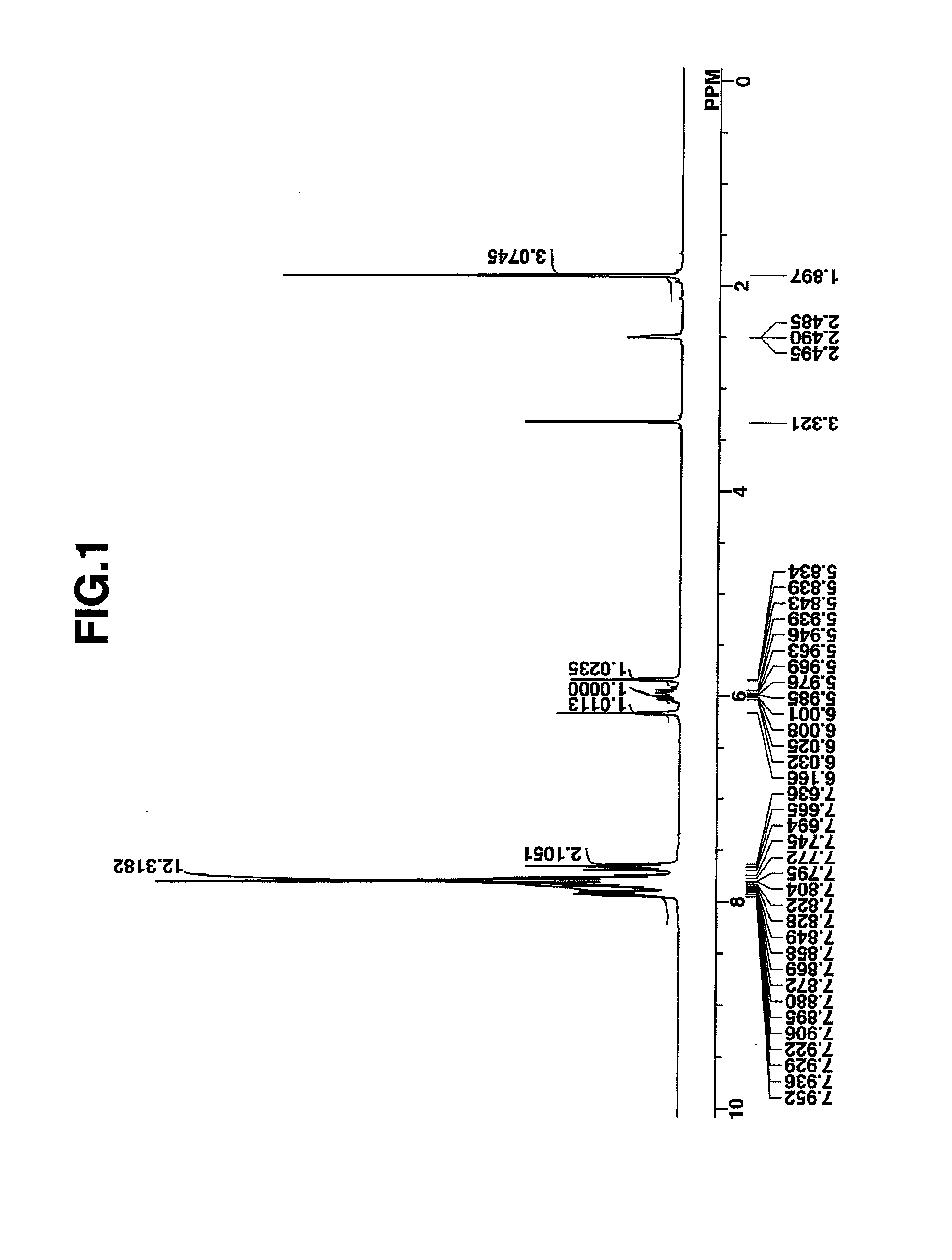
Figure 1 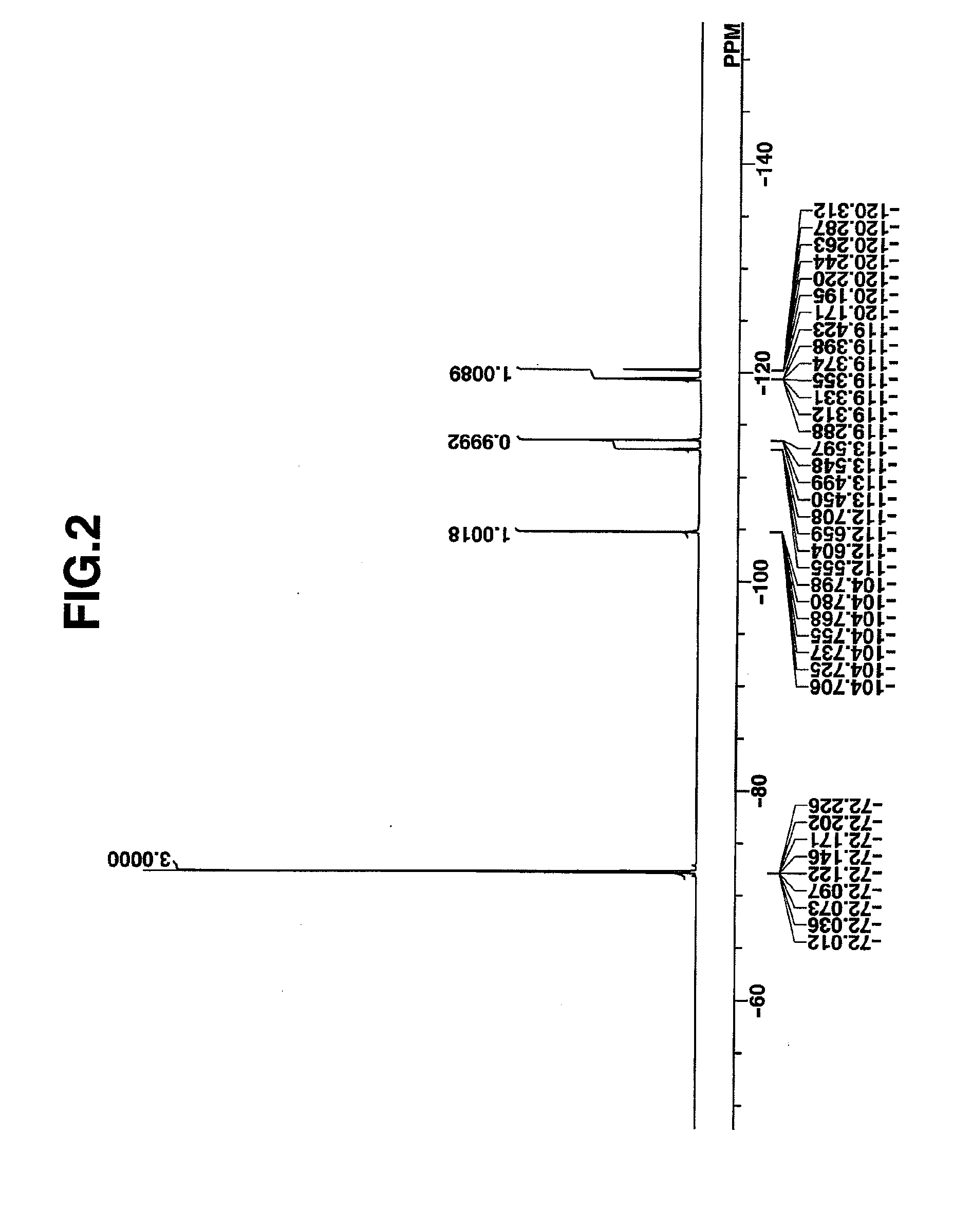
Figure 2 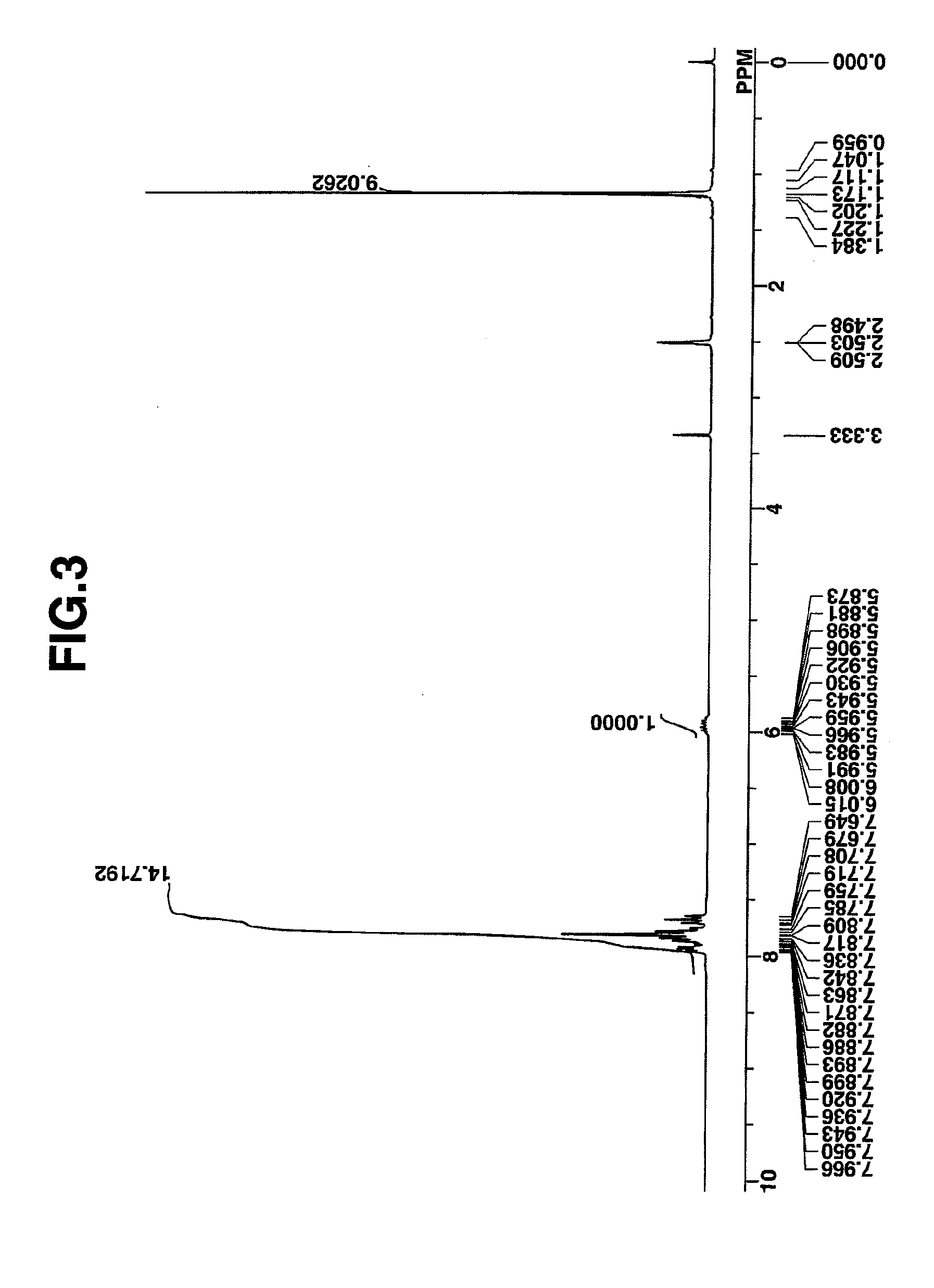
Figure 3
Abstract
Description
CROSS-REFERENCE TO RELATED APPLICATION
[0001] The present application is a 37 C.F.R. §1.53(b) divisional of, and claims priority to, U.S. application Ser. No. 13 / 292,127, filed Nov. 9, 2011. Priority is also claimed to Japanese Application No. 2010-258496 filed on Nov. 19, 2010. The entire contents of each of these applications is hereby incorporated by reference.TECHNICAL FIELD
[0002] This invention relates to (1) a polymerizable sulfonium salt comprising a fluorinated sulfonium cation and an anion having a polymerizable unit, (2) a polymer comprising units of the sulfonium salt, (3) a resist composition comprising the polymer, and (4) a process for patterning the resist composition using high-energy radiation.BACKGROUND ART
[0003] While a number of recent efforts are being made to achieve a finer pattern rule in the drive for higher integration densities and operating speeds in LSI devices, DUV and EUV lithography is thought to hold particular promise as the next generation in microfabr...
Examples
synthesis example 1
Synthesis of 4-fluorophenyldiphenylsulfonium bromide
[0171]Diphenyl sulfoxide, 40 g (0.2 mole), was dissolved in 400 g of dichloromethane, which was stirred under ice cooling. At a temperature below 20° C., 65 g (0.6 mole) of trimethylsilyl chloride was added dropwise to the solution, which was aged for 30 minutes at the temperature. Then, a Grignard reagent which had been prepared from 14.6 g (0.6 mole) of metallic magnesium, 105 g (0.6 mole) of 4-fluorobromobenzene and 300 g of tetrahydrofuran (THF) was added dropwise at a temperature below 20° C. The reaction solution was aged for one hour, after which 50 g of water at a temperature below 20° C. was added to quench the reaction. To this solution, 300 g of water, 10 g of 12N hydrochloric acid, and 200 g of diethyl ether were further added. The water layer was separated and washed with 100 g of diethyl ether, yielding an aqueous solution of 4-fluorophenyldiphenylsulfonium bromide. The compound in aqueous solution form was used in th...
synthesis example 2
Synthesis of benzyltrimethylammonium 1,1,3,3,3-pentafluoro-2-pivaloyloxypropane-1-sulfonate
[0172]In 325 g of water was dispersed 46.4 g (0.2 mole) of 1,1,3,3,3-pentafluoro-2-propan-2-yl pivalate which had been synthesized by the standard method. 41.6 g (0.4 mole) of sodium hydrogen sulfite was added to the dispersion, whereupon reaction took place at 100° C. for 48 hours. After the reaction solution was allowed to cool down, toluene was added for separatory operation. The water layer was separated, and 37.1 g (0.2 mole) of benzyltrimethylammonium chloride and 300 g of dichloromethane were added thereto, whereby the desired compound was extracted into the organic layer. By washing the organic layer with water, removing the solvent, adding diisopropyl ether to the residue for crystallization, filtration and drying, the target compound was obtained. White crystals, 77 g, yield 83%.
synthesis example 3
Synthesis of benzyltrimethylammonium 1,1,3,3,3-pentafluoro-2-hydroxypropane-1-sulfonate
[0173]In 139 g of methanol was dissolved 46.3 g (0.1 mole) of benzyltrimethylammonium 1,1,3,3,3-pentafluoro-2-pivaloyloxypropane-1-sulfonate in Synthesis Example 2. The solution was stirred under ice cooling, to which a solution of 8.0 g (0.2 mole) of sodium hydroxide in 24 g of water was added dropwise at a temperature below 20° C. The solution was stirred overnight at room temperature, after which 21 g of conc. hydrochloric acid and 60 g of water were added to quench the reaction. Methanol was removed in vacuum from the reaction solution, dichloromethane and water were added to the residue, and the organic layer was separated and concentrated again. To the residue containing some white crystals, 150 g of diisopropyl ether was added for crystallization. Filtration and drying gave the target compound. White crystals, 37 g, yield 98%.