
Self-triggering superconducting fault current limiter
a fault current limiter and superconducting technology, applied in the direction of emergency protective circuit arrangements, emergency protective arrangements for limiting excess voltage/current, electrical equipment, etc., to achieve the effect of significant flexibility and fast quenching
Patent Information
- Authority / Receiving Office
- US · United States
- Patent Type
- Patents(United States)
- Current Assignee / Owner
- Publication Date
- 2008-10-21
- Estimated Expiration
- Not applicable · inactive patent
Smart Images
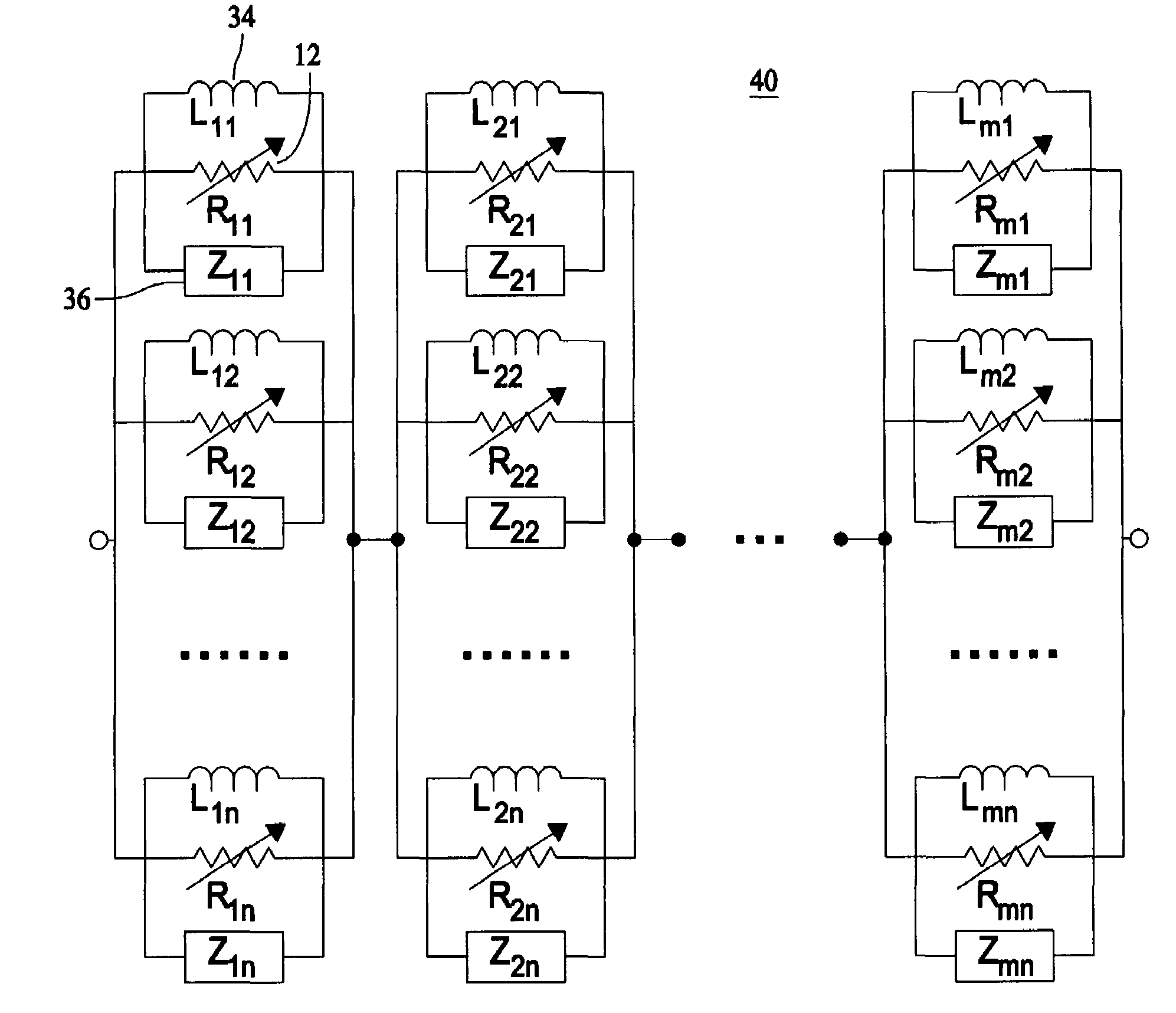
Figure 1 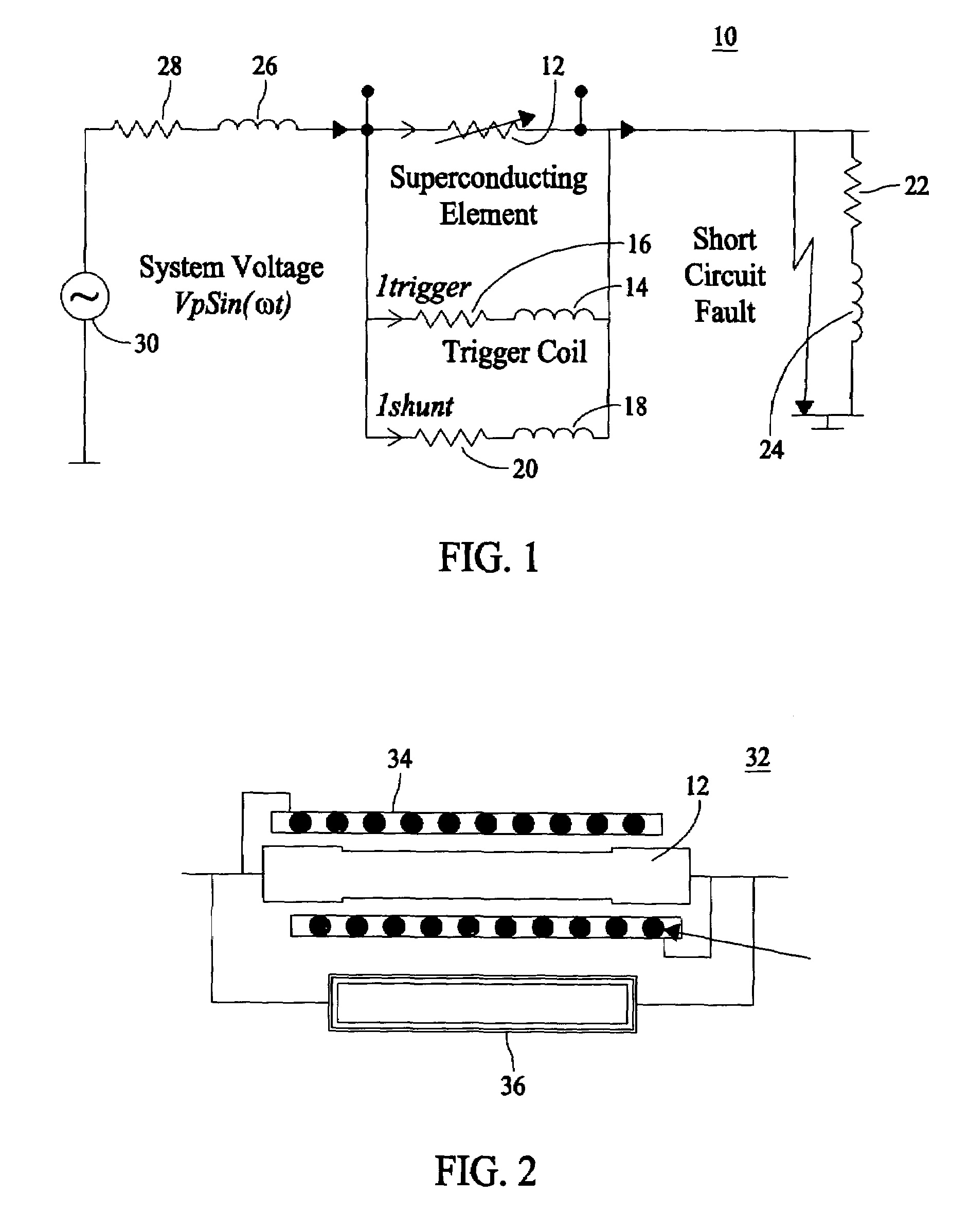
Figure 2 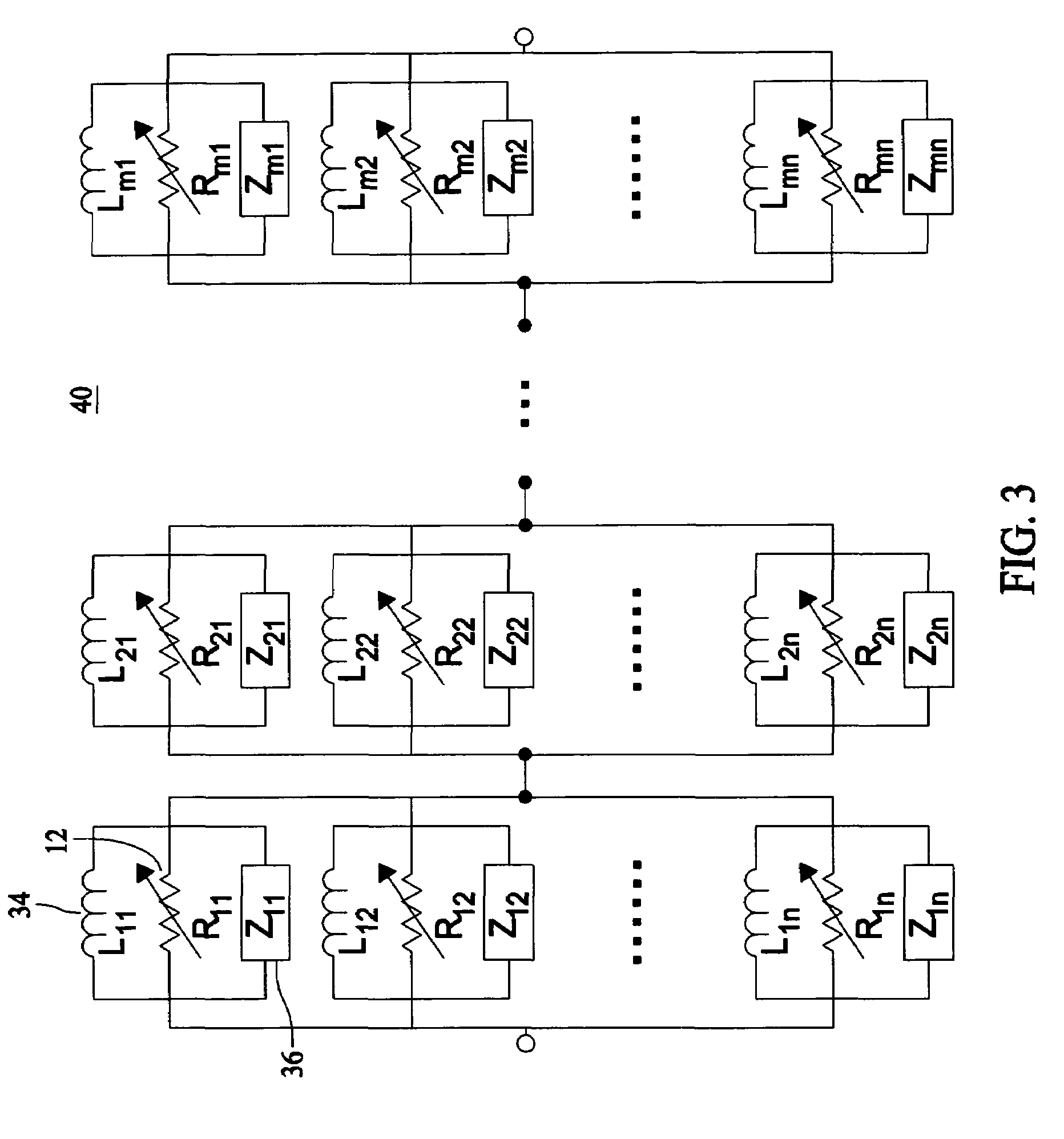
Figure 3
Abstract
Description
[0001] The U.S. government has a paid-up license in this invention and the right in limited circumstances to require to the patent owner to license others on reasonable terms as provided for in the terms of Contract No. DE-FC36-03G013033 awarded by the Department of Energy.BACKGROUND
[0002] The invention relates generally to a current limiter and more specifically to a superconducting fault current limiter.
[0003] Current limiting devices are critical in electric power transmission and distribution systems. For various reasons such as lightening strikes, short circuit conditions can develop in various sections of a power grid causing sharp surge in current. If this surge of current, which is often referred to as fault current, exceeds the protective capabilities of the switchgear equipment deployed throughout the grid system, it could cause catastrophic damage to the grid equipment and customer loads that are connected to the system.
[0004] Superconductors, especially high-temperature supe...
Examples
Embodiment Construction
[0020]U.S. patent application Ser. No. 10 / 877,838, entitled “Superconducting Matrix Fault Current Limiter With Current-Driven Trigger Mechanism”, filed on Jun. 25, 2004, assigned to the assignee of the present invention, which is a Continuation-In-Part of U.S. patent application Ser. No. 10 / 609,969, filed on Jun. 30, 2003, are both herein incorporated by reference in their entirety. These applications describe MFCL designs which are modular and scalable that functions as a “variable impedance” using components made of superconducting as well as conventional electrically conductive materials.
[0021]FIG. 1 is a simplified schematic single phase line diagram of a three-phased alternating current (AC) electrical power system 10 of the present invention under a short circuit fault condition. This diagram illustrates the system power source 30, line resistance 28, line inductance 26, and load impedance which usually comprises a resistance 22 and / or an inductance 24. In series with system p...