Closed wood working planar

A woodworking planer and gantry-type technology, which is used in wood processing appliances, manufacturing tools, and processing machines for manufacturing flat surfaces, etc., can solve the problems of low work efficiency, the worktable can only move up and down but not back and forth, and the material consumption is high.

CN100387410CInactive Publication Date: 2008-05-14贾灯喜
8 Cites 0 Cited by

Patent Information

Authority / Receiving Office
CN · China
Patent Type
Patents(China)
Current Assignee / Owner
Publication Date
2008-05-14
Estimated Expiration
Not applicable · inactive patent

Smart Images

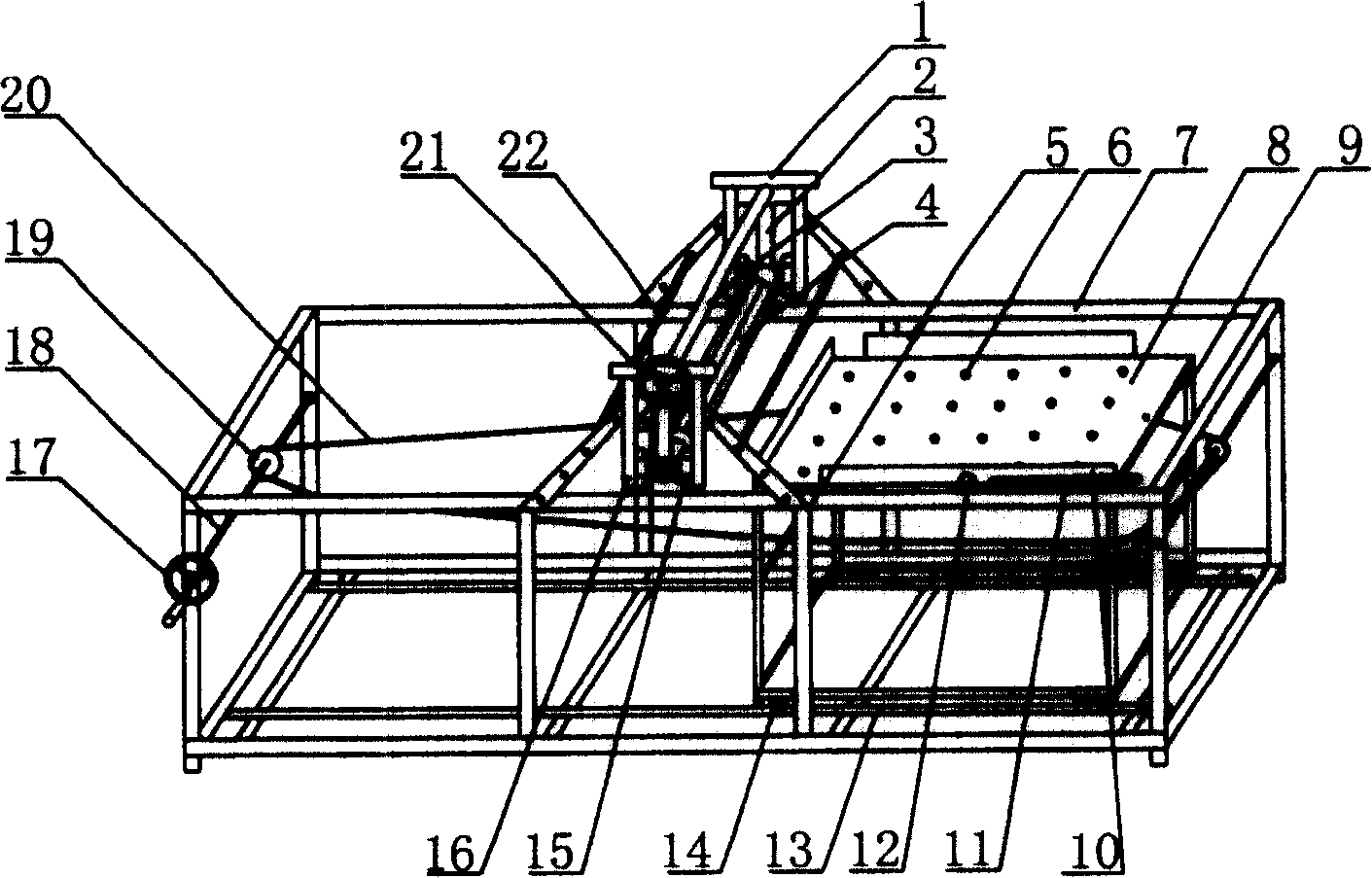
  • Figure 1
    Figure 1
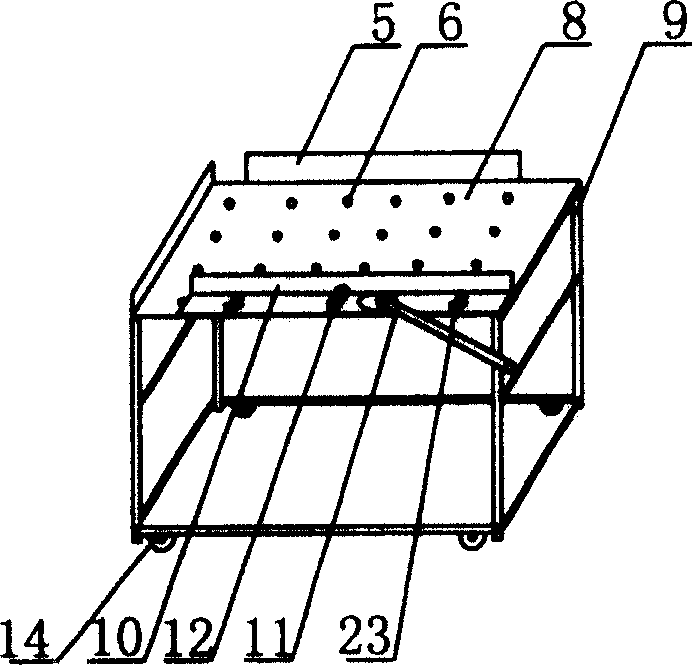
  • Figure 2
    Figure 2
Patent Text Reader

Abstract

The closed wood working planer as one kind of wood working machine has the main body structure including frame, cutter shaft holders fixed on two sides over the frame, cutter shaft capable of shifting up and down set between the cutter shaft holders, and horizontally shifting worktable under the cutter shaft and inside the frame. Outside the worktable fastening plate, there is a eccentric holding unit comprising eccentric hand rod, spring and slide way matching the work plate. The closed wood working planer has simple structure, and safe and convenient operation, and can plane wood board as wide as 450 cm in once operation with less timber loss, high work efficiency, low power consumption and low production cost.
Need to check novelty before this filing date? Find Prior Art

Description

Technical field

[0001] The invention belongs to the technical field of woodworking machinery, and is specifically a gantry-type woodworking planer. Background technique

[0002] In recent years, with the development of the construction and installation industries, the demand for wood panels has increased, and the requirements for the quality of wood processing have also continued to increase. Woodworking planers are widely used for single-sided or multi-sided planing of wood, door and window frames and other wood materials. The worktable of the existing woodworking planer can only move up and down but not back and forth. The knife shaft is also fixed, and it uses a clamping device that cooperates with a screw and a hand wheel. The clamping operation is labor-intensive and is For wood planks, only a single piece of planing can be driven manually, which consumes a lot of materials, requires high technical requirements for operators, and has low work efficiency, high production cost...

Examples

Embodiment Construction

[0016] As shown in the figure, a knife shaft holder 1 is fixedly arranged on both sides of the upper part of the frame 7, and a knife shaft 4 that can move up and down is matched between the knife shaft holders 1. The two ends of the cutter shaft 4 are fixedly connected to the sliding block 15, and the corresponding sliding block rail 16 is provided on the cutter shaft frame 1 matched with the sliding block 15. A connecting rod 3 and two symmetrical fixed rods 21 are arranged between the tool shaft holder 1. The fixed rod 21 functions as a fixed connection, and can make the feed of the planer more stable. The knife shaft holder 1 on one side is provided with a knife shaft adjusting handwheel 22 that is matched with the connecting rod 3. The two ends of the connecting rod 3 are respectively connected with the upper end of the connecting rod 2 on both sides, and the lower end of the connecting rod 2 is connected with the knife. The shaft 4 is fixedly connected. Rotating the knife sh...