Method of constructing steel house for uniformizing hot environment therein

A technology for steel structures and buildings, applied in building structures, buildings, building components, etc., can solve problems such as short residential life, moisture on wooden components, and rust on metal components, and achieve the purpose of suppressing temperature unevenness and eliminating temperature differences. The effect of averaging and reducing the likelihood

CN101059003AInactive Publication Date: 2007-10-24NIPPON STEEL CORP
0 Cites 0 Cited by

Patent Information

Authority / Receiving Office
CN · China
Patent Type
Applications(China)
Current Assignee / Owner
Publication Date
2007-10-24
Estimated Expiration
Not applicable · inactive patent

Smart Images

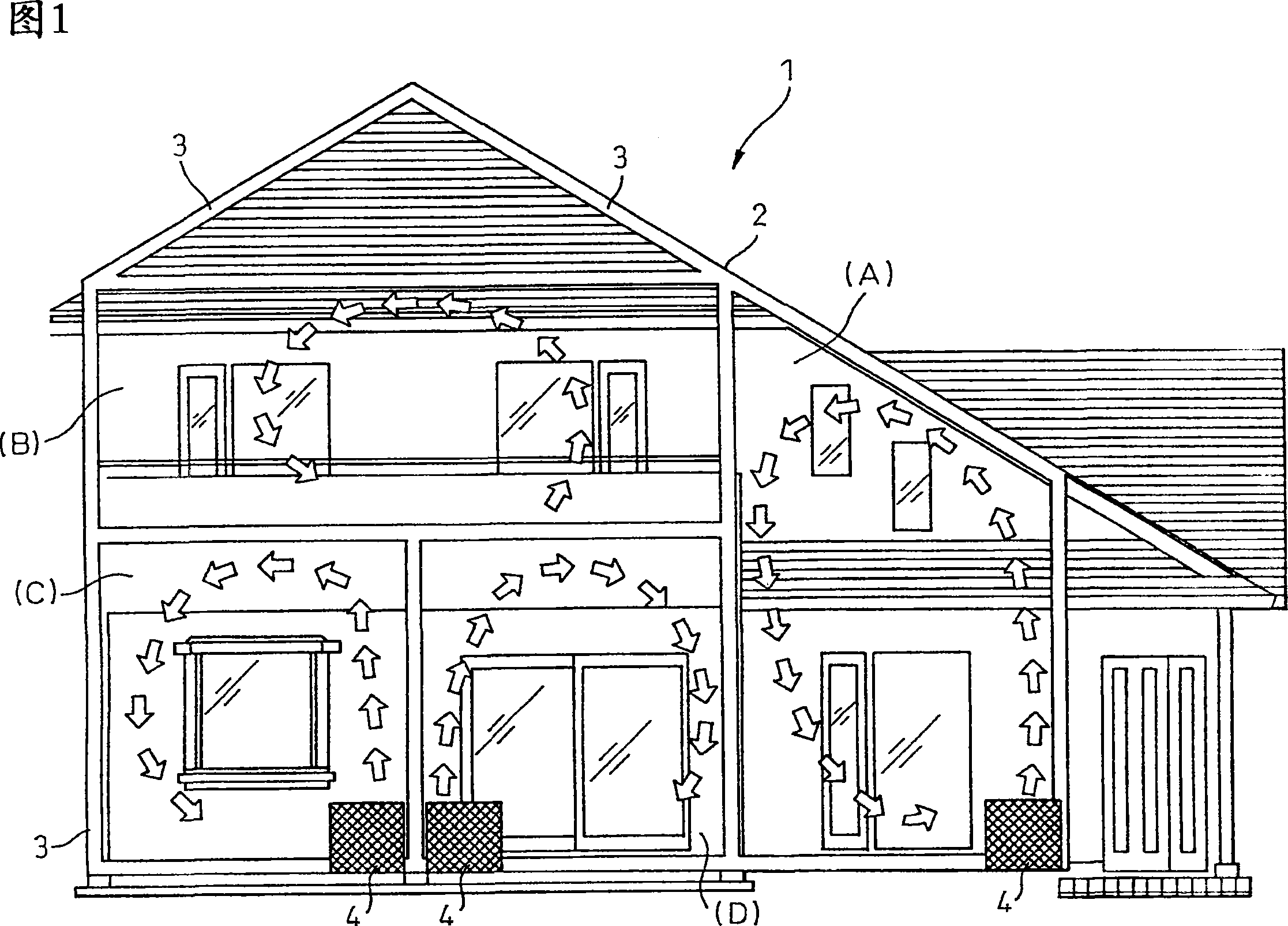
  • Figure 1
    Figure 1
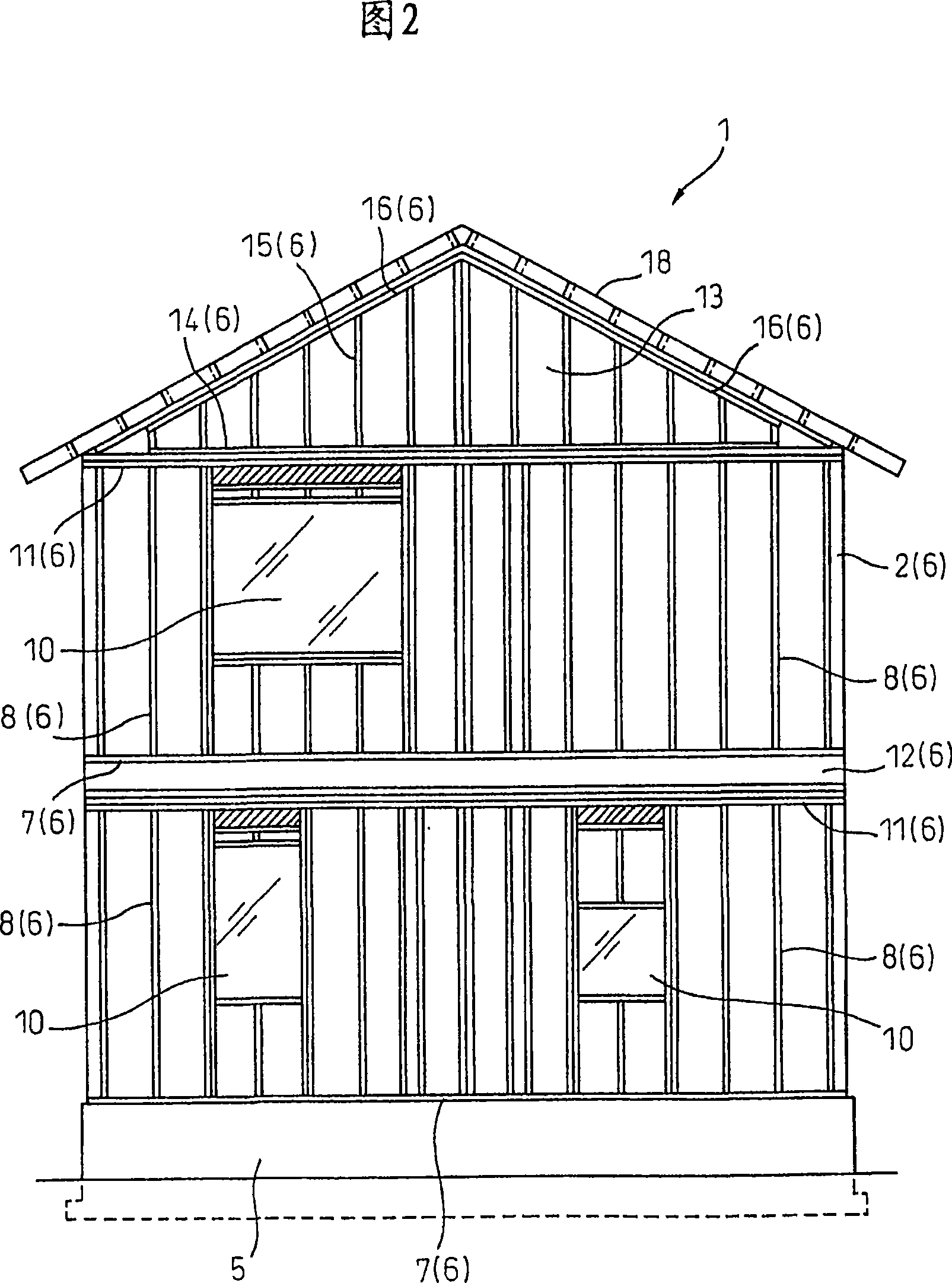
  • Figure 2
    Figure 2
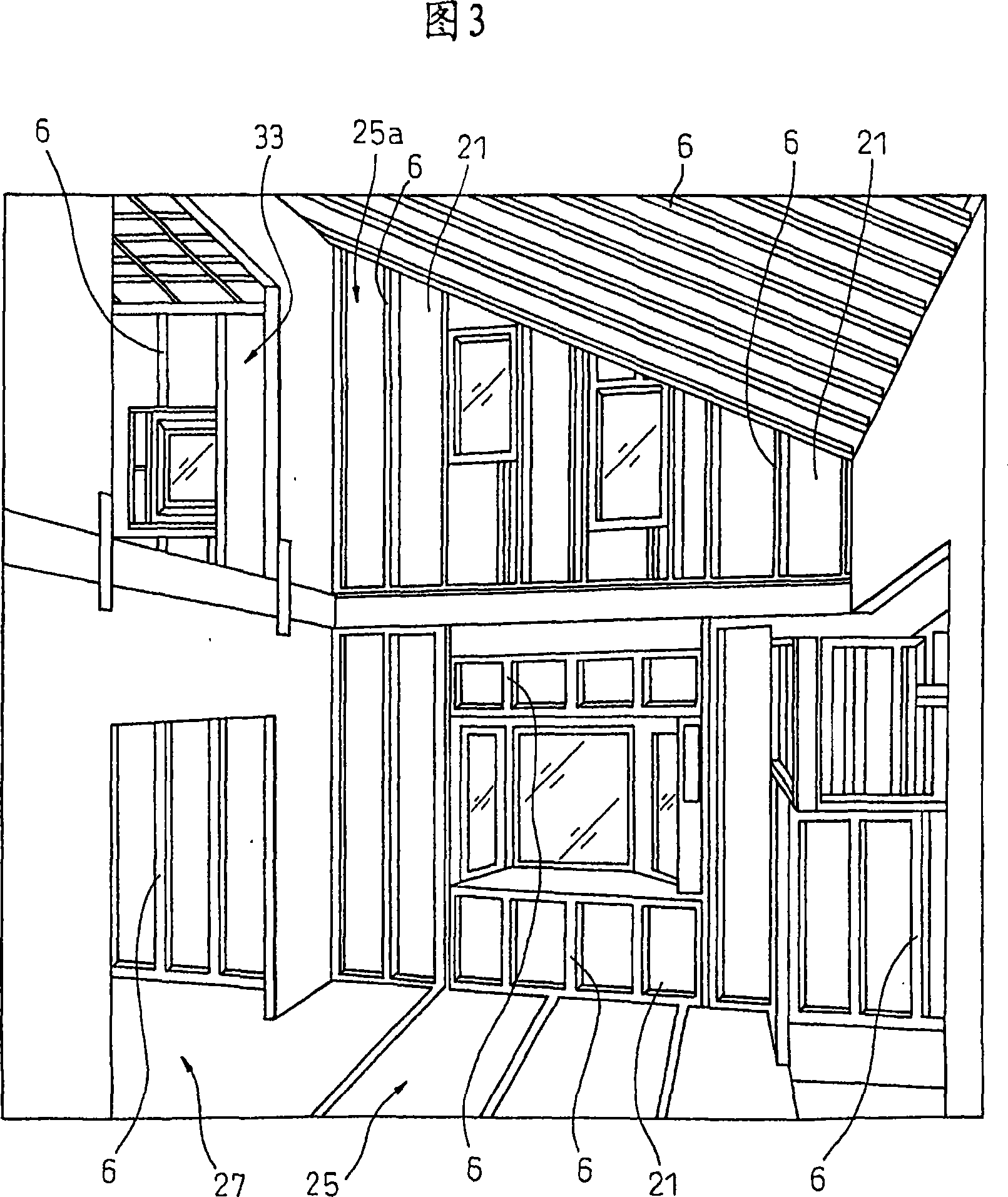
  • Figure 3
    Figure 3
Patent Text Reader

Abstract

A method of constructing a steel house formed of frame members of thin lightweight section steels and structural surface materials installed thereon and capable of achieving the lowering of occurrence of dew condensation, remarkable deceleration of deterioration rate of the house, remarkable increase in service life, realization of healthy environment, the reduction in the number of heaters, reduction of heating space, and increase in energy efficiency by uniformizing the hot environment inside the house, comprising the steps of, to promote the uniformization of the thermal temperature environment, forming the frame materials having thin lightweight section steels 6 with a high heat conductivity and a specified plate thickness in such a range that the upper and lower limit ratios of the surface area of in-house thin lightweight section steels to a construction area (m<2> / m<2>) are 10 to 20 and that the upper and lower limit areas of the weight of the thin lightweight section steels 6 to the construction area (kg / m<2>) in the range of the upper and lower limit ratios of the surface area of 10 to 20 are 35.0 to 115.0, and constructing the steel house (1) by an outer siding thermal insulation method.
Need to check novelty before this filing date? Find Prior Art

Description

[0001] The application number is 02829085.2, the application date is May 20, 2002, the date of entering the national phase is December 3, 2004, and the invention title is "Construction Method for Homogenizing the Thermal Environment of Steel Structure Residential Buildings" The divisional application of the invention patent application. technical field

[0002] The present invention relates to a house construction method for realizing the homogenization of the heat and temperature environment inside the building of a steel structure house using thin-plate lightweight section steel.

[0003] As a representative example of a house using thin-plate lightweight steel for the frame (skeleton structure) of a building, there is a steel structure house construction method. Here, the steel structure house is defined as the frame material (frame material) and plywood (plywood) and other structural surfaces made of light-weight steel with a plate thickness of 0.4mm to less than 2.3mm, mo...

Examples

Embodiment Construction

[0036] Embodiments of the present invention will be described below with reference to the drawings.

[0037] In residential buildings, the main body of the structure, such as walls, floors, and roofs, generally adopts a heat-insulating structure that uses heat-insulating materials in the middle layer so that the indoor temperature can be kept as much as possible without being affected by the temperature of the outside air. The heat insulation structure includes an interior heat insulation structure and an exterior heat insulation structure, but the interior heat insulation structure is mostly used in existing building structures. However, when a heat insulating structure is formed, a temperature difference occurs on both sides of the heat insulating layer, and dew condensation occurs. In this case, if the interior insulation structure is adopted, since the insulation layer is located inside the structure main body, and the interior wall members constituting the room are direct...