
Combustion-resisting electrolyte of lithium secondary cell and its lithium cell
A lithium secondary battery and electrolyte technology, applied in the field of electrochemical and chemical power products, can solve the problems of not being able to be used as a solvent alone, having a great influence on battery performance, low solubility of lithium salt, etc., achieving good electrochemical compatibility and transportation. And use process safety, low viscosity effect
- Summary
- Abstract
- Description
- Claims
- Application Information
AI Technical Summary
Problems solved by technology
Method used
Image

Examples
Embodiment 1
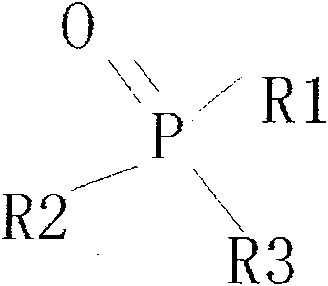
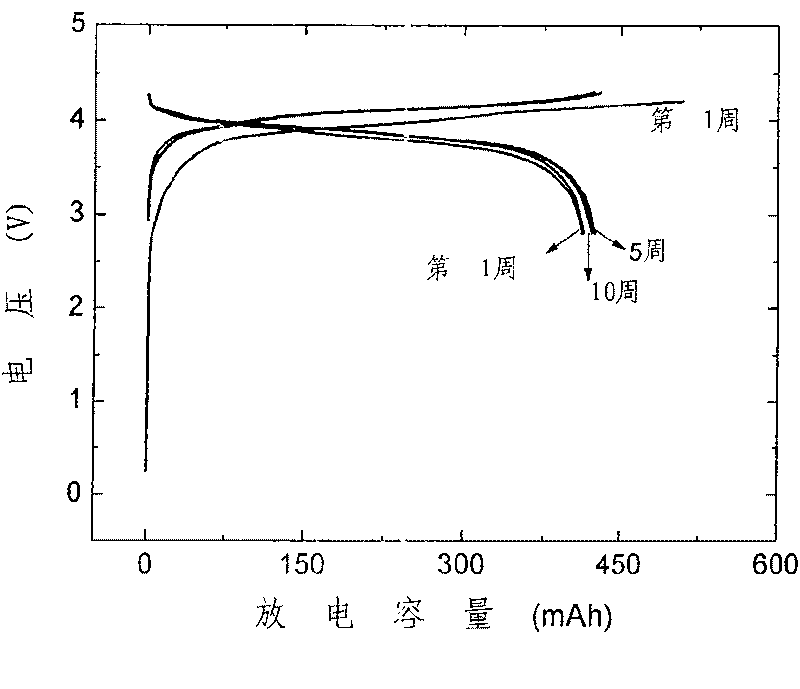
[0034] Lithium bisoxalate borate (LiBOB) and 10% VC were added to dimethyl methyl phosphate (DMMP) to form a 0.6M LiBOB+DMMP solution. Inject the electrolyte into graphite / LiCoO 2 Charge and discharge experiments were carried out in the battery (as attached figure 2 ). It can be seen from the figure that the efficiency in the first week can reach 86%, which is close to the initial efficiency of the traditional carbonate electrolyte, and the cycle performance is good.
Embodiment 2
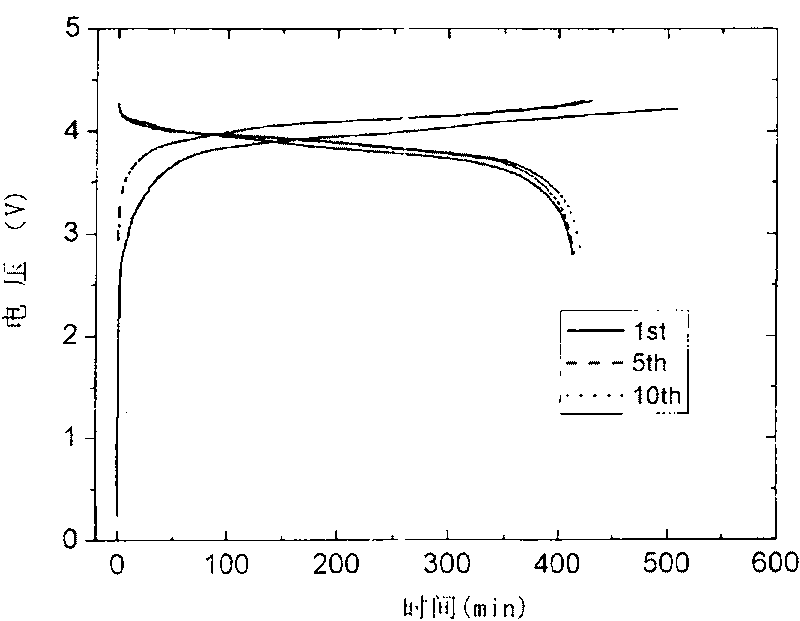
[0036] At 1M LiPF 6 / EC-DMC (1:1) solution was added with 20% diethyl ethyl phosphate. The electrolyte solution was added to a commercial LiMn204-C lithium-ion battery. Depend on image 3 It can be seen that, except for a slight decrease in the charge and discharge efficiency of the battery in the first week (~84%), the charge and discharge efficiency of the battery subsequently rises rapidly to ~100%, and the charge and discharge voltage platform is exactly the same as that without the flame retardant, indicating that this Flame retardants can also be used as safety additives in practical batteries.
Embodiment 3
[0037] Example 3: Lithium hexafluorophosphate (LiPF 6 ) into 0.6M Li LiPF 6 +DMMP+DEMP solution. Inject the electrolyte into commercial graphite / LiCoO 2 In batteries, the prepared commercial graphite / LiCoO 2 Initial efficiency was -84%.
PUM
 Login to View More
 Abstract
Description
Claims
Application Information
 Login to View More