
Display control method and device
A display control and pulse width modulation technology, applied to static indicators, instruments, etc., can solve problems such as partial display distortion, achieve high refresh rate, high display control, and simple scheme
- Summary
- Abstract
- Description
- Claims
- Application Information
AI Technical Summary
Problems solved by technology
Method used
Image


Examples
Embodiment Construction
[0031] Embodiments of the present invention are described in detail below, examples of which are shown in the drawings, wherein the same or similar reference numerals designate the same or similar elements or elements having the same or similar functions throughout. The embodiments described below by referring to the figures are exemplary only for explaining the present invention and should not be construed as limiting the present invention.
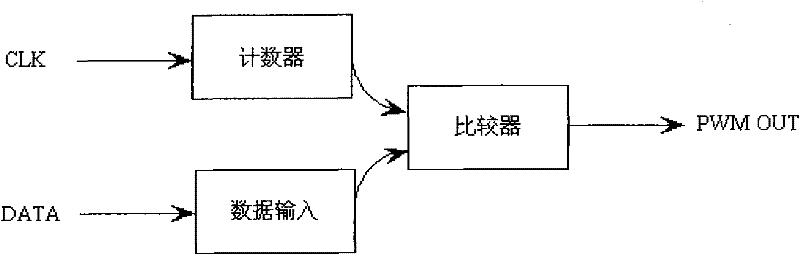
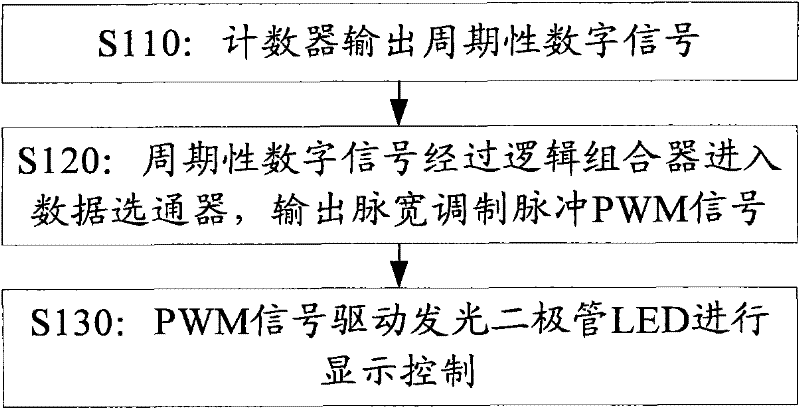
[0032] Now people require that the display screen becomes clearer and clearer, and the content of the screen becomes more and more complex. That is to say, the data volume of the picture is getting larger and larger, and at the same time, a higher refresh rate of the flat panel display is required. Therefore, it is required that the flat panel display chip can generate a pulse width modulation pulse signal at a higher frequency without affecting the accuracy of the original data. The implementation of the traditional pulse width modulat...
PUM
 Login to View More
 Abstract
Description
Claims
Application Information
 Login to View More