
Quality factor spectrum of stratum and solving method thereof
A quality factor and formation technology, applied in seismic signal processing and other directions, can solve problems such as large differences and achieve the effect of increasing utilization
- Summary
- Abstract
- Description
- Claims
- Application Information
AI Technical Summary
Problems solved by technology
Method used
Image



Examples
Embodiment Construction
[0028] The quality factor Q of the formation is an important parameter to characterize the attenuation of the formation. It describes the incomplete elastic characteristics of the medium and is the internal essential characteristic of the formation.
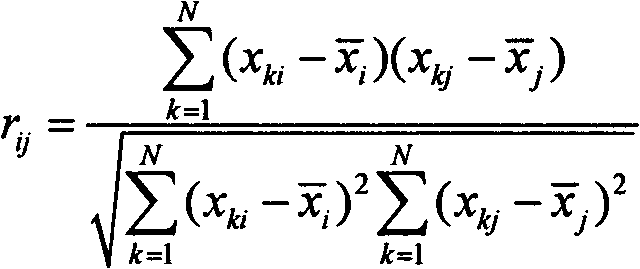
[0029] The present invention proposes the concept of quality factor spectrum (Q spectrum). Using zero-bias VSP data, through reasonable first-arrival picking and time-window selection, the spectrum peaks in the effective frequency band are compared, and trend smoothing is performed on the basis of the obtained data, and the smoothing trend is added to the normalized original In the spectrum; then use the concept of spectrum ratio to compare adjacent channels, combine the logarithmic ratio obtained from the comparison, and combine different data, and then perform the quality factor calculation according to the slope of the straight line obtained by fitting each group of combined data Find, or according to the concept of similarity...
PUM
 Login to View More
 Abstract
Description
Claims
Application Information
 Login to View More