Rehabilitation robot system for the elderly after stroke

A rehabilitation robot, technology for middle-aged and elderly people, applied in the field of rehabilitation robots, can solve the problems of high price, large volume, and no report on the distribution and wearing method.

CN104434466BInactive Publication Date: 2016-08-31济南鲁智电子科技有限公司
10 Cites 5 Cited by

Patent Information

Authority / Receiving Office
CN · China
Patent Type
Patents(China)
Current Assignee / Owner
Publication Date
2016-08-31
Estimated Expiration
Not applicable · inactive patent

Smart Images

  • Figure 1
    Figure 1
  • Figure 2
    Figure 2
  • Figure 3
    Figure 3
Patent Text Reader

Abstract

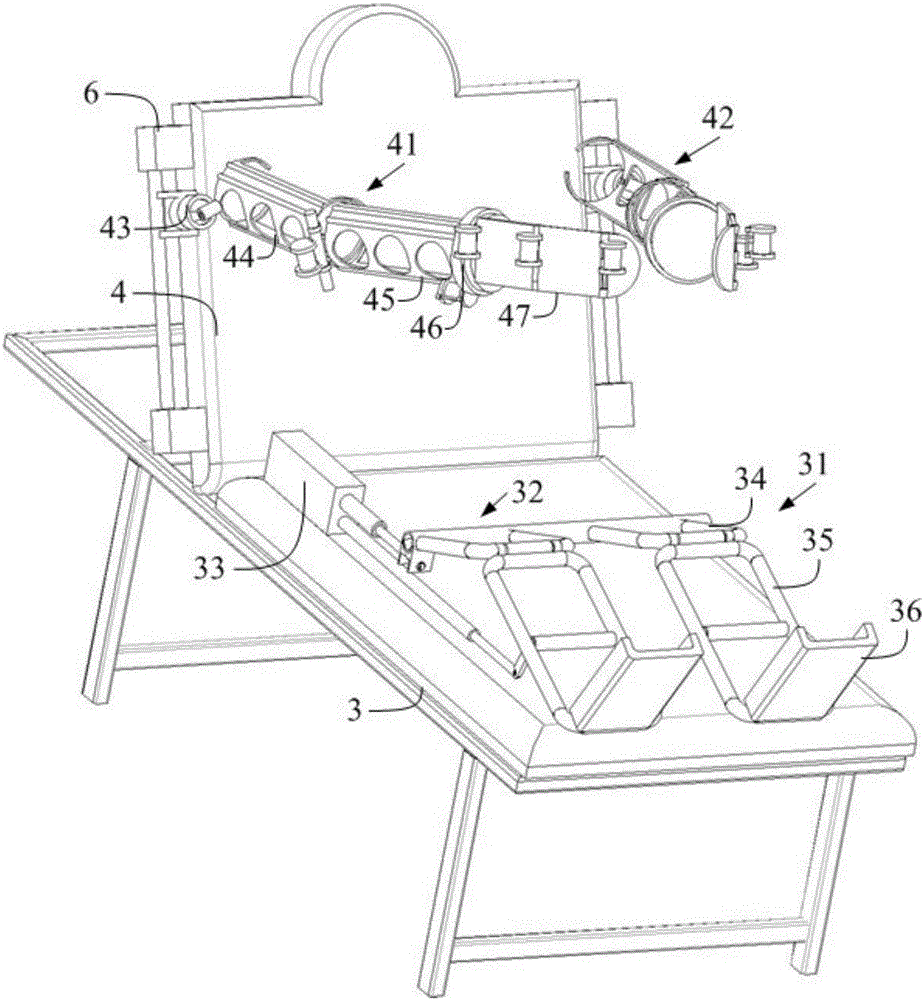
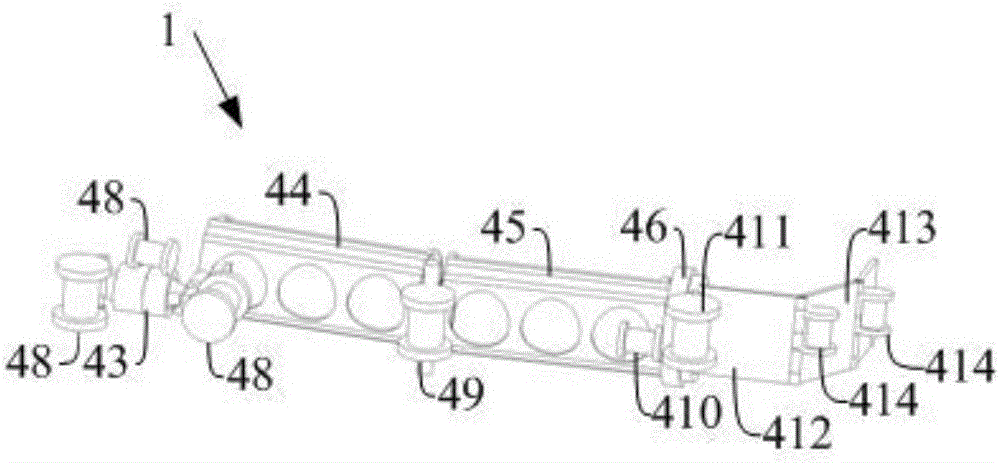
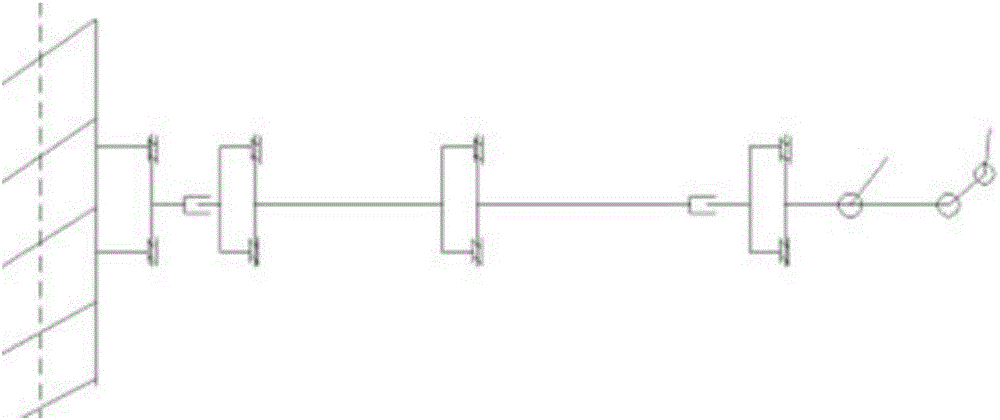
The invention discloses a rehabilitation robot system for old people with cerebral apoplexy, and belongs to the technical field of rehabilitation robots. The rehabilitation robot system comprises a rehabilitation robot, the rehabilitation robot comprises an upper limb rehabilitation system and a lower limb rehabilitation system of a master-slave mode two-arm exoskeleton structure, the lower limb rehabilitation system comprises a seat, a first master arm and a first slave arm, the first master arm and the first slave arm are arranged on the seat, the first master arm and the first slave arm each comprise a control box, a thigh supporting structure, a crus supporting structure and a foot sole supporting plate, the control boxes, the thigh supporting structures, the crus supporting structures and the foot sole supporting plates are sequentially connected on the seat, and first leg supporting rods and second leg supporting rods are connected among the control boxes, the thigh supporting structures and the crus supporting structures respectively. The upper limb rehabilitation system comprises a seat back arranged on the seat, a second master arm and a second slave arm, the second master arm and the second slave arm are arranged on the seat back, and the second master arm and the second slave arm each comprise a shoulder rotating system, an upper arm auxiliary motion mechanism, a forearm auxiliary motion mechanism, a wrist rotating system and a palm part auxiliary motion mechanism, wherein the shoulder rotating systems, the upper arm auxiliary motion mechanisms, the forearm auxiliary motion mechanisms, the wrist rotating systems and the palm part auxiliary motion mechanisms are connected in sequence. The rehabilitation robot system is low in cost, and multiple freedom degrees are achieved in the use process.
Need to check novelty before this filing date? Find Prior Art

Description

technical field

[0001] The invention relates to the technical field of rehabilitation robots, in particular to a rehabilitation robot system for the elderly after stroke. Background technique

[0002] As countries around the world enter into aging countries one after another, there are more and more stroke patients. Usually stroke patients have a variety of residual sequelae, including hemiplegia, speech impairment, mental disturbance, facial paralysis, incontinence, etc., among which hemiplegia ranks first. In addition, clinical observations have found that most stroke patients have obvious emotional disorders. Current studies have confirmed that depression and anxiety directly affect the quality of life, physical function and cognitive function recovery of stroke patients, and can even cause stroke recurrence. . Early detection and early treatment of emotional disorders in stroke patients play a vital role in their overall recovery.

[0003] The long treatment cycle of ...

Examples

Embodiment Construction

[0028] In order to make the technical problems, technical solutions and advantages to be solved by the present invention clearer, the following will describe in detail with reference to the drawings and specific embodiments.

[0029] The present invention provides a rehabilitation robot system for the elderly after stroke, which may include one or more of rehabilitation robots, emotional control systems, machine vision systems, in-body physiological parameter detection modules, and comprehensive rehabilitation and health care service platforms. The structures of these parts are introduced as follows.

[0030] rehabilitation robot

[0031] Such as Figure 1 to Figure 6 As shown, the rehabilitation robot includes an upper limb rehabilitation system 1 and a lower limb rehabilitation system 2, both of which are master-slave dual-arm exoskeleton structures, wherein:

[0032] The lower limb rehabilitation system 2 includes a seat 3 and a first master arm 31 and a first slave arm 3...