
A multi-degree-of-freedom thumb rehabilitation training device for hemiplegic patients
A technology of rehabilitation training and degree of freedom, which is applied in the field of medical equipment, can solve the problems of only holding and clapping, which affect the rehabilitation effect, and achieve the effect of improving the quality of recovery
- Summary
- Abstract
- Description
- Claims
- Application Information
AI Technical Summary
Problems solved by technology
Method used
Image

Examples
Embodiment Construction
[0017] The technical solutions of the present invention will be further described below in conjunction with the accompanying drawings, but the scope of protection claimed by the present invention is not limited thereto.
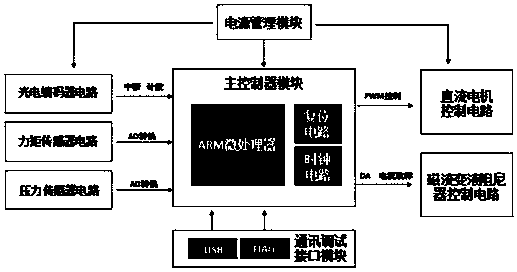
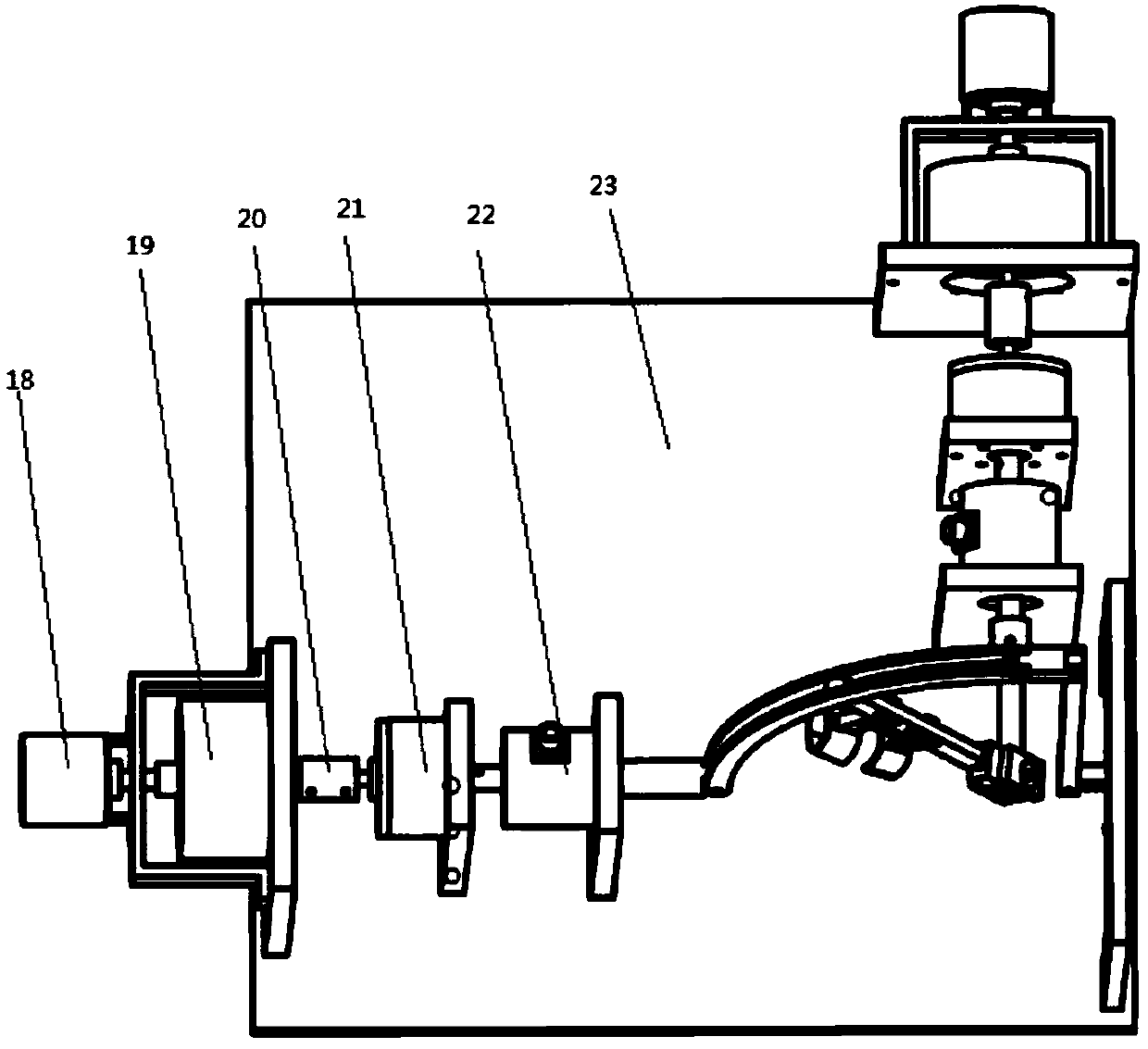
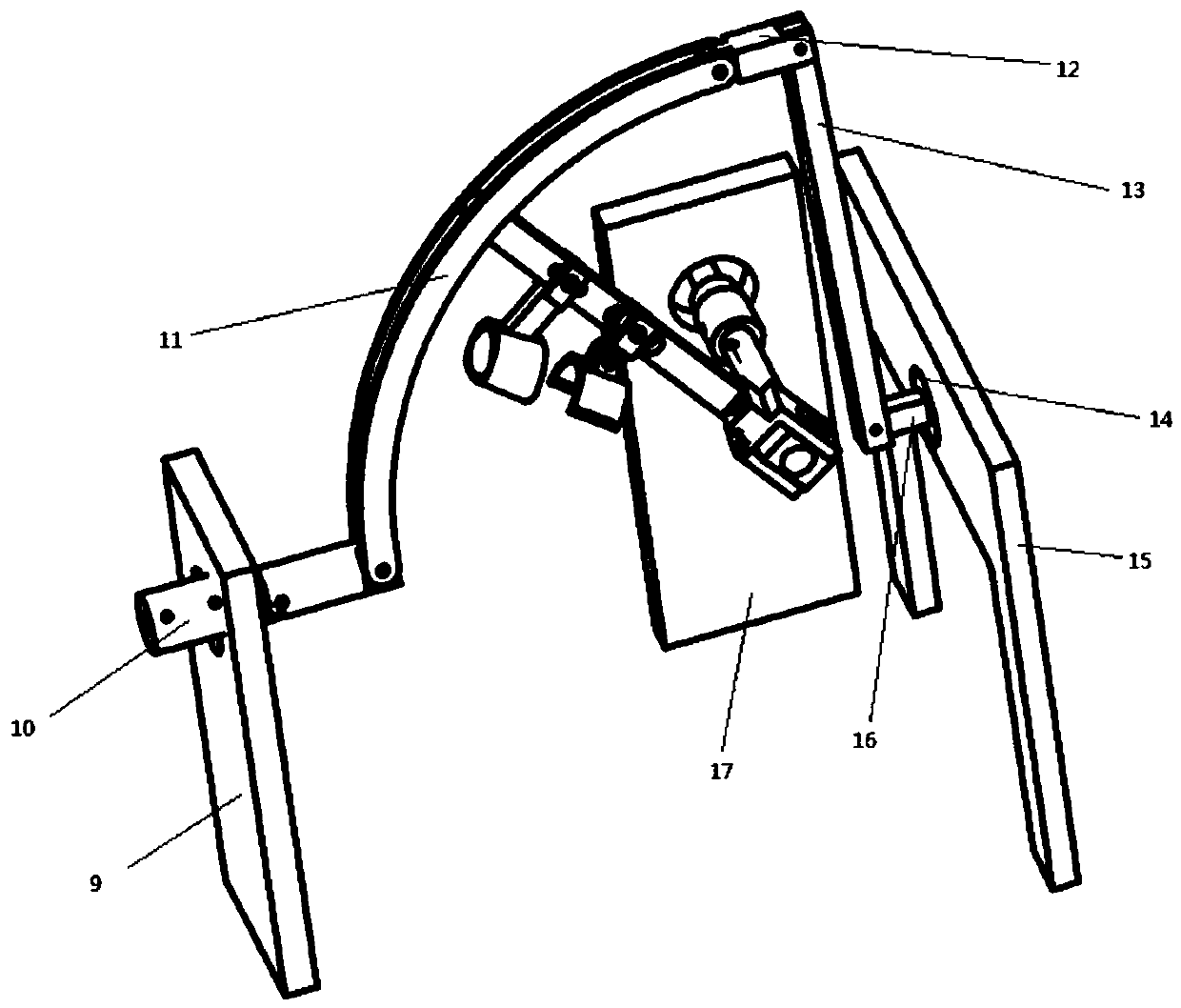
[0018] Such as Figure 1~3 As shown, the present invention is used for the multi-degree-of-freedom thumb rehabilitation training device for hemiplegic patients, including a support base 23 and a driving sensing mechanism I and a driving sensing mechanism II fixed on the supporting base 23, and a driving sensing mechanism I and a driving sensing mechanism. The sensing mechanisms II are arranged vertically to each other, and the driving sensing mechanism I and the driving sensing mechanism II are sequentially composed of a coaxial photoelectric encoder 18, a DC torque motor 19, a shaft coupling 20, a magneto-rheological fluid damper 21, and a torque sensor. sensor 22; where one end of the DC torque motor 19 is connected to the photoelectric encoder 18, the othe...
PUM
 Login to View More
 Abstract
Description
Claims
Application Information
 Login to View More