

Application of thermophilic bacteria in fertility improvement and potassium fertilizer and magnesium fertilizer content increase
A technology of fungi and soil fertilizers, applied in the direction of organic fertilizers, etc., can solve the problems of soil acidification, reduction of soil organic matter content, damage to soil structure, etc.
Patent Information
- Authority / Receiving Office
- CN · China
- Patent Type
- Applications(China)
- Current Assignee / Owner
- Publication Date
- 2018-03-23
Smart Images
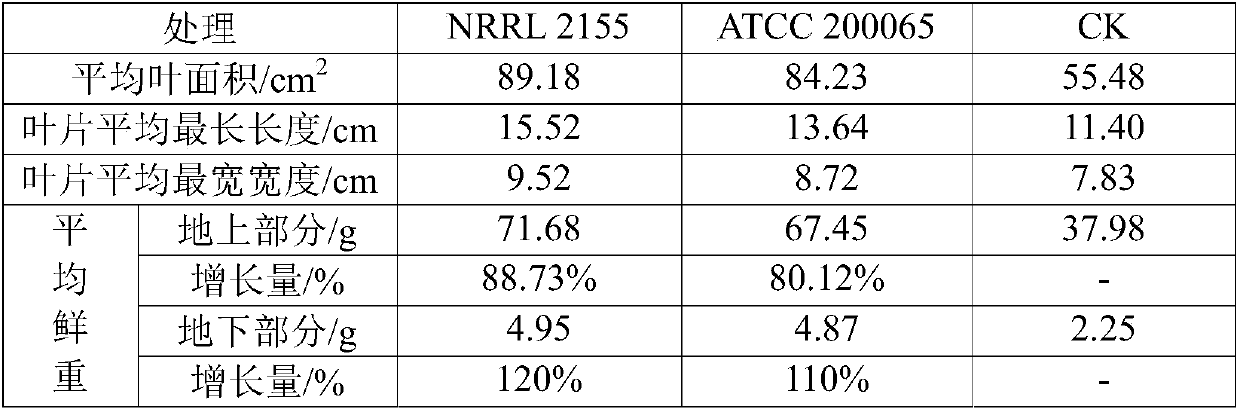
Figure 1 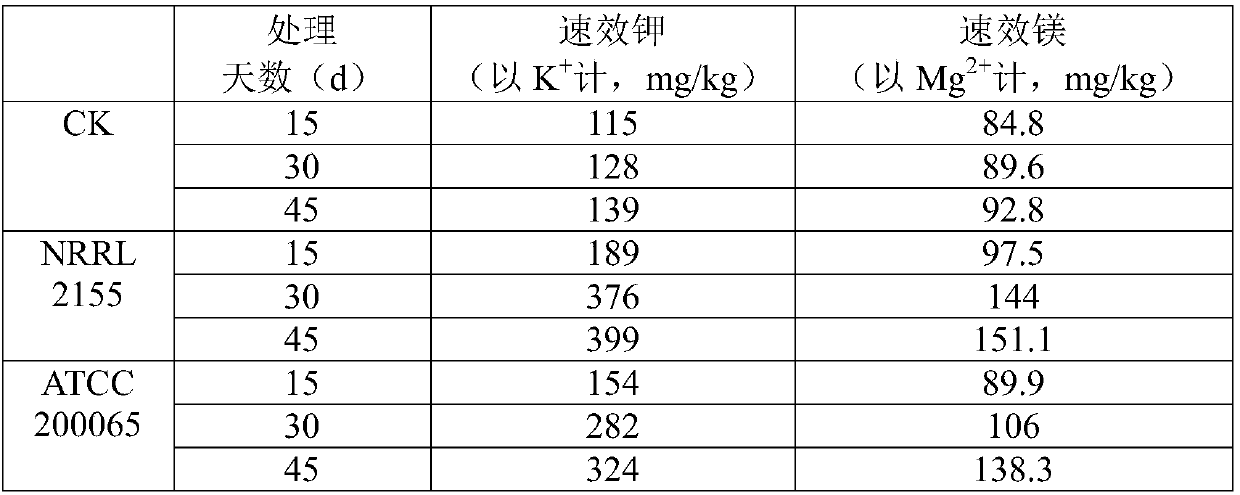
Figure 2 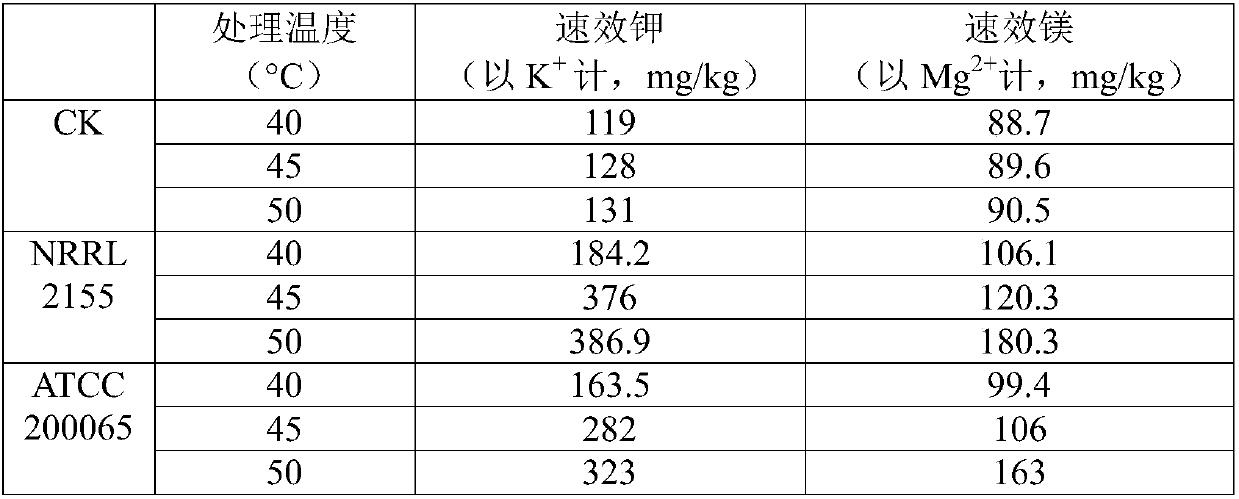
Figure 3
Abstract
Description
technical field
[0001] The application relates to the application of thermophilic genus (Thermomyces) fungi in improving the fertility of humus soil, and the application in improving the content of elements potassium and magnesium required for plant growth in humus soil. Background technique
[0002] Potassium is an important nutrient that limits plant growth after nitrogen and phosphorus. Potassium is an essential nutrient and the most abundant cation in plants. Intracellular K + The concentration is maintained between 100mM and 200mM, while extracellular K + Concentrations vary between 10 mM and 200 mM, with the highest concentration being able to reach 500 mM. Potassium plays an important role in the process of plant growth and metabolism: 1. The influence of potassium on photosynthesis. The influence of potassium on photosynthesis includes the following two aspects: one is to affect the activity of the photosynthetic system, and the other is to affect the photosynthe...
Examples
Embodiment 1
[0037] Cultivation of Example 1 The Cultivation of Thermomyces dupontii NRRL 2155 and Thermomyces lanuginosus ATCC 200065
[0038] Thermomyces dupontii NRRL 2155 and Thermomyceslanuginosus ATCC 200065 were respectively activated in PDA solid medium at 45°C for 3 days. 2 Bacterial blocks of different sizes were inoculated into 500mL Erlenmeyer flasks filled with 250mL PDB medium, 45°C, 160r min -1 Cultivate on a shaking table for 7 days to obtain Dupont thermophilic spore liquid and cotton chamomile thermophilic spore liquid.
Embodiment 2
[0039] The composting treatment of embodiment 2 high-temperature fungus
[0040] The above two spore liquids that have been fermented are mixed with humus respectively and composted, and 1g of humus is added to 100 μL of the fermentation broth of the two bacterial strains in Example 1, namely, 100 μL of 10 8 cfu mL -1 The spore suspension was placed in an incubator at 45°C for 15d, 30d and 45d respectively. During the whole process, 500μl of deionized water was added to 1g of the humus soil mixture at intervals of 24h to maintain the water content. Add the same amount of PDB medium to the humus soil and treat it for different days under the same conditions as the negative control group.
Embodiment 3
[0041] The composting treatment of embodiment 3 high-temperature fungus
[0042] The above two spore liquids that have been fermented are mixed with humus respectively and composted, and 1g of humus is added to 100 μL of the fermentation broth of the two bacterial strains in Example 1, namely, 100 μL of 10 9 cfu mL -1 The spore suspension was placed in an incubator at 40°C, 45°C and 50°C for 30 days. During the whole process, at intervals of 48 hours, 750 μl of deionized water was added to 1 g of humus soil mixture to maintain the water content. Add the same amount of PDB medium to the humus soil and treat it at different culture temperatures for 30 days as a negative control group.