
Design method of low-frequency multi-sine signal for power system
A sinusoidal signal and power system technology, which is applied in the cross-field of power system identification and signal processing, can solve problems such as the reduction of the signal-to-noise ratio of the response signal, the insufficient concentration of input signal energy, and the impact on the identification accuracy of the state space model of the power system. small effect
- Summary
- Abstract
- Description
- Claims
- Application Information
AI Technical Summary
Problems solved by technology
Method used
Image

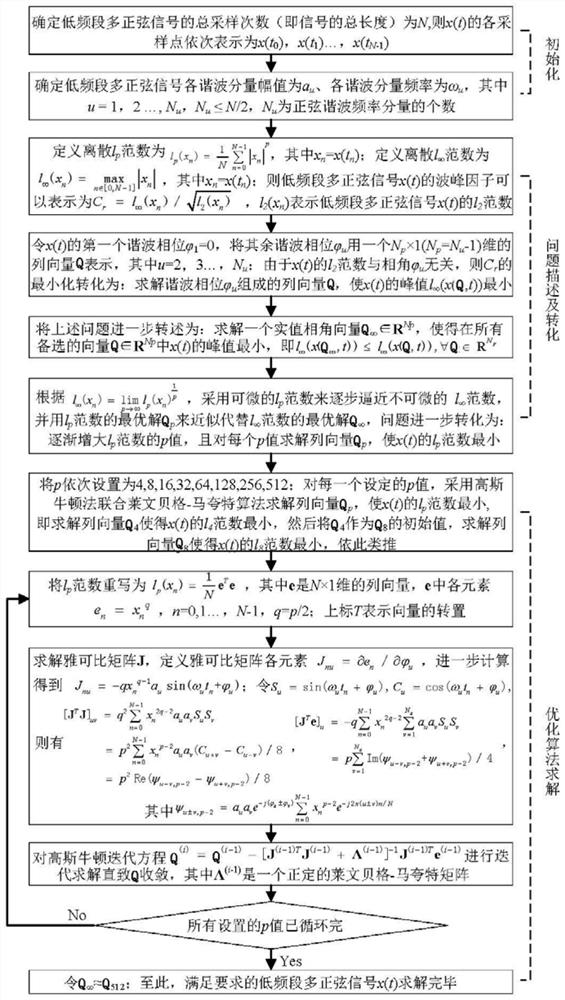
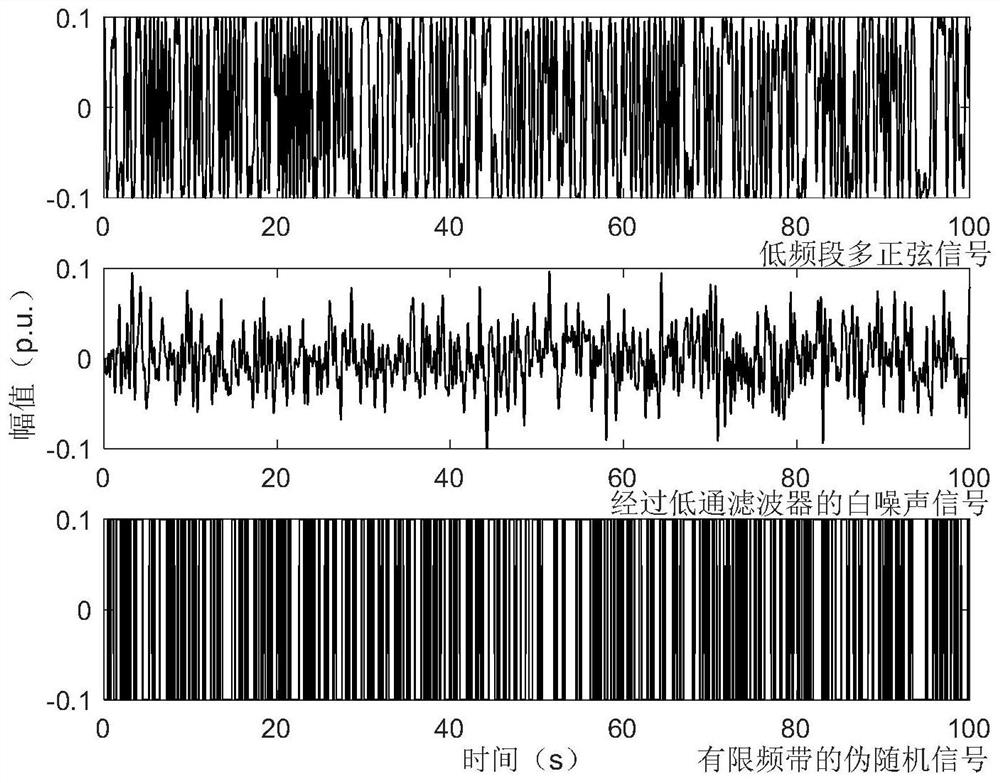
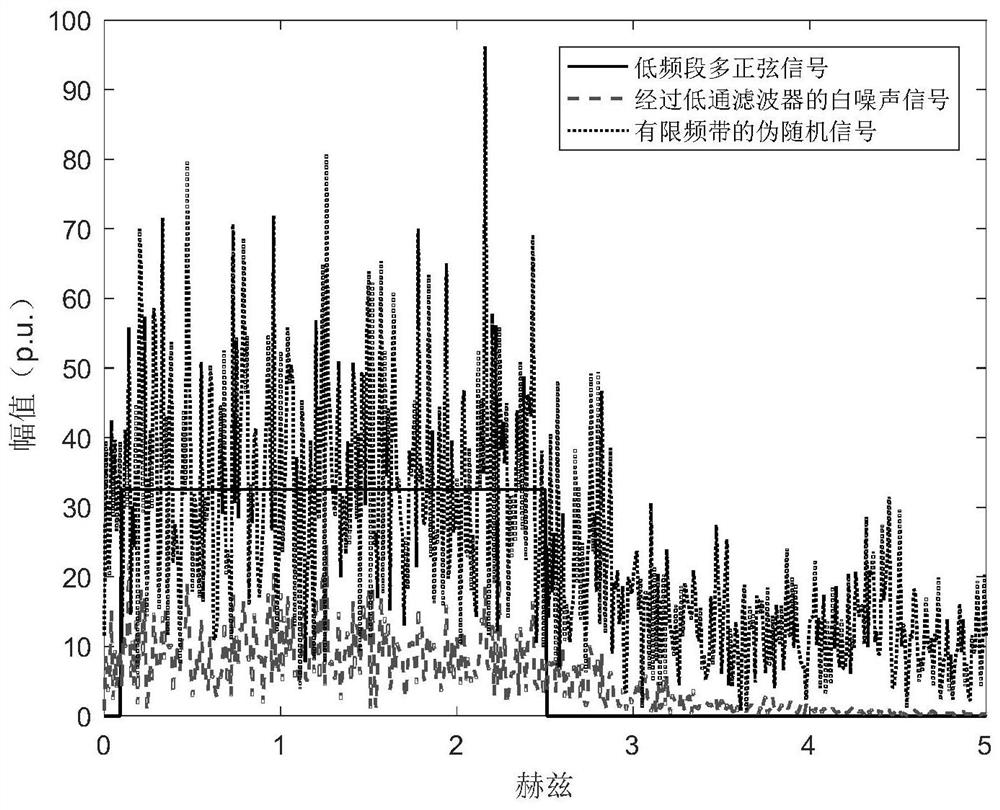
Examples
Embodiment
[0035] In this embodiment, the time-domain expression of the low-frequency multi-sine signal is: where t is time, a u , ω u and are the amplitude, frequency and phase of the uth sine harmonic component, N u is the number of sine harmonic frequency components.
[0036] Define the crest factor of the multi-sine signal in the low frequency band as: Among them, t is the sampling time, N is the total number of samples of the low-frequency multi-sine signal (that is, the total length of the signal), and max() represents the maximum value of the array in parentheses; obviously, C r The magnitude of reflects the fluctuation of the signal in the time domain: given the frequency domain characteristics of the signal x(t), the smaller the time domain fluctuation of the signal x(t), the C r smaller.
[0037] Low-frequency multi-sine signal design refers to the a u , ω u , N u And the sampling length N, use the algorithm to solve to obtain a set of parameters of the signal whe...
PUM
 Login to View More
 Abstract
Description
Claims
Application Information
 Login to View More