Overhanging ventilation energy-saving structure

A technology of overhanging and ventilation grills, which is applied in the field of building structures, can solve problems such as human discomfort, ventilation form, and single structure, and achieve the effects of reducing electrical energy consumption, promoting temperature regulation, and slowing down heat exchange

CN111189146APending Publication Date: 2020-05-22FOSHAN UNIVERSITY
0 Cites 0 Cited by

Patent Information

Authority / Receiving Office
CN · China
Patent Type
Applications(China)
Current Assignee / Owner
Publication Date
2020-05-22

Smart Images

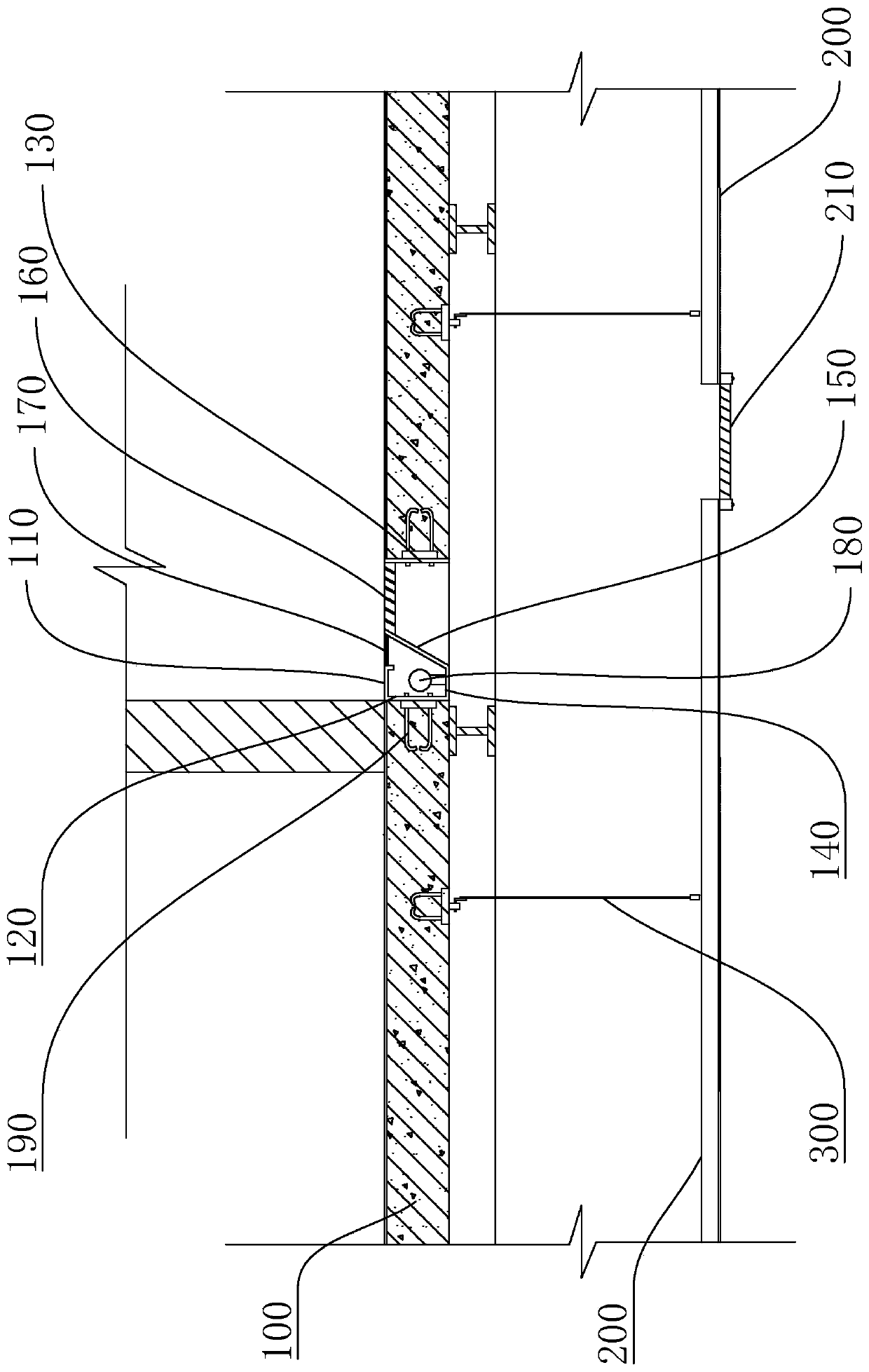
  • Figure 1
    Figure 1
Patent Text Reader

Abstract

The invention discloses an overhanging ventilation energy-saving structure. The structure comprises a suspended ceiling surface layer, a floor layer and bearing members, wherein an air transition gapis formed between the floor layer and the suspended ceiling surface layer; a first air inlet is formed in the floor layer; a top plate is arranged in the first air inlet; a first side plate is arranged on one side of the top plate, and a second side plate is arranged on the other side of the top plate; embedded parts are arranged in the positions, directly opposite to the first side plate and thesecond side plate, in the floor layer; the first side plate and the second side plate are fixedly connected with the embedded parts directly opposite to the first side plate and the second side platerespectively; a first opening is formed in the top plate; a ventilation grille is arranged in the first opening; a second air inlet is formed in the suspended ceiling surface layer; a ventilation louver is arranged in the second air inlet; and the ventilation grille and the ventilation louver are mutually staggered in the vertical direction. According to the overhanging ventilation energy-saving structure, the indoor temperature regulation is favorably promoted, so that the energy consumption of electric appliances for temperature regulation in buildings is reduced, and the functions of energyconservation and emission reduction are achieved.
Need to check novelty before this filing date? Find Prior Art

Description

technical field

[0001] The invention relates to a building structure, in particular to a cantilevered ventilation and energy-saving structure. Background technique

[0002] At present, the natural air inlets of buildings are mainly installed on the vertical walls, and the wind pressure is used to realize natural ventilation, and the indoor and outdoor air directly form convection, and the heat exchange speed is fast. Cause the discomfort of the human body, it is difficult to meet the needs of modern society. Contents of the invention

[0003] The purpose of the present invention is to provide a cantilevered ventilation and energy-saving structure to solve one or more technical problems in the prior art, and at least provide a beneficial option or create conditions.

[0004] The solution that the present invention solves its technical problem is:

[0005] A cantilevered ventilation energy-saving structure, comprising a suspended ceiling surface layer, a floor layer arrang...

Examples

Embodiment Construction

[0016] The idea, specific structure and technical effects of the present invention will be clearly and completely described below in conjunction with the embodiments and accompanying drawings, so as to fully understand the purpose, features and effects of the present invention. Apparently, the described embodiments are only some of the embodiments of the present invention, rather than all of them. Based on the embodiments of the present invention, other embodiments obtained by those skilled in the art without creative efforts belong to The protection scope of the present invention. In addition, all connection relationships mentioned in this article do not refer to the direct connection of components, but mean that a better connection structure can be formed by adding or reducing connection accessories according to specific implementation conditions. The various technical features in the invention can be combined interactively on the premise of not conflicting with each other. ...