A kind of organic nano negative electrode based on intercalation type pseudocapacitance and its preparation method and application
What is AI technical title?
AI technical title is built by Patsnap AI team. It summarizes the technical point description of the patent document.
A pseudocapacitive, organic technology, applied in the field of energy devices, to achieve the effect of improving reversible capacity and good electronic conductivity
Active Publication Date: 2021-07-20
SUZHOU UNIV
View PDF2 Cites 0 Cited by
Summary
Abstract
Description
Claims
Application Information
AI Technical Summary
This helps you quickly interpret patents by identifying the three key elements:
Problems solved by technology
Method used
Benefits of technology
Problems solved by technology
But so far, there are few reports on the application of organic materials in the negative electrode of lithium-ion hybrid capacitors.
Method used
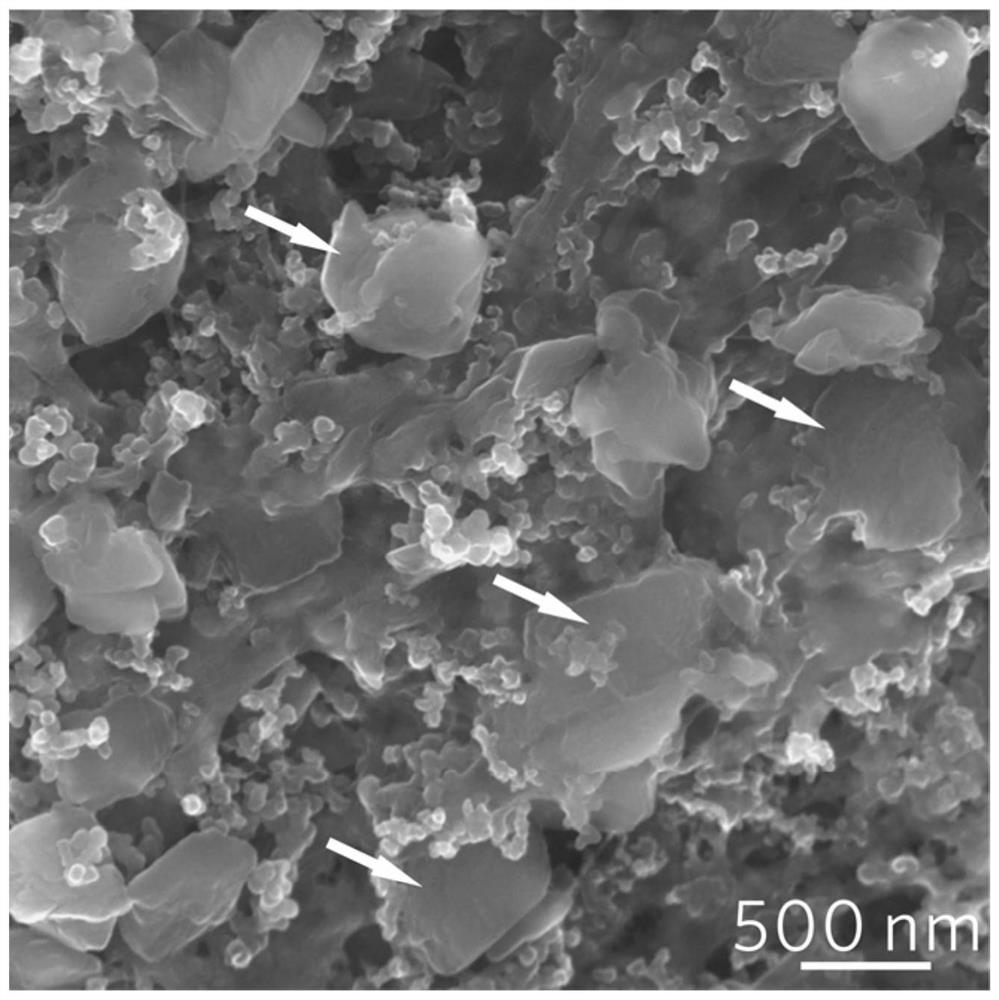
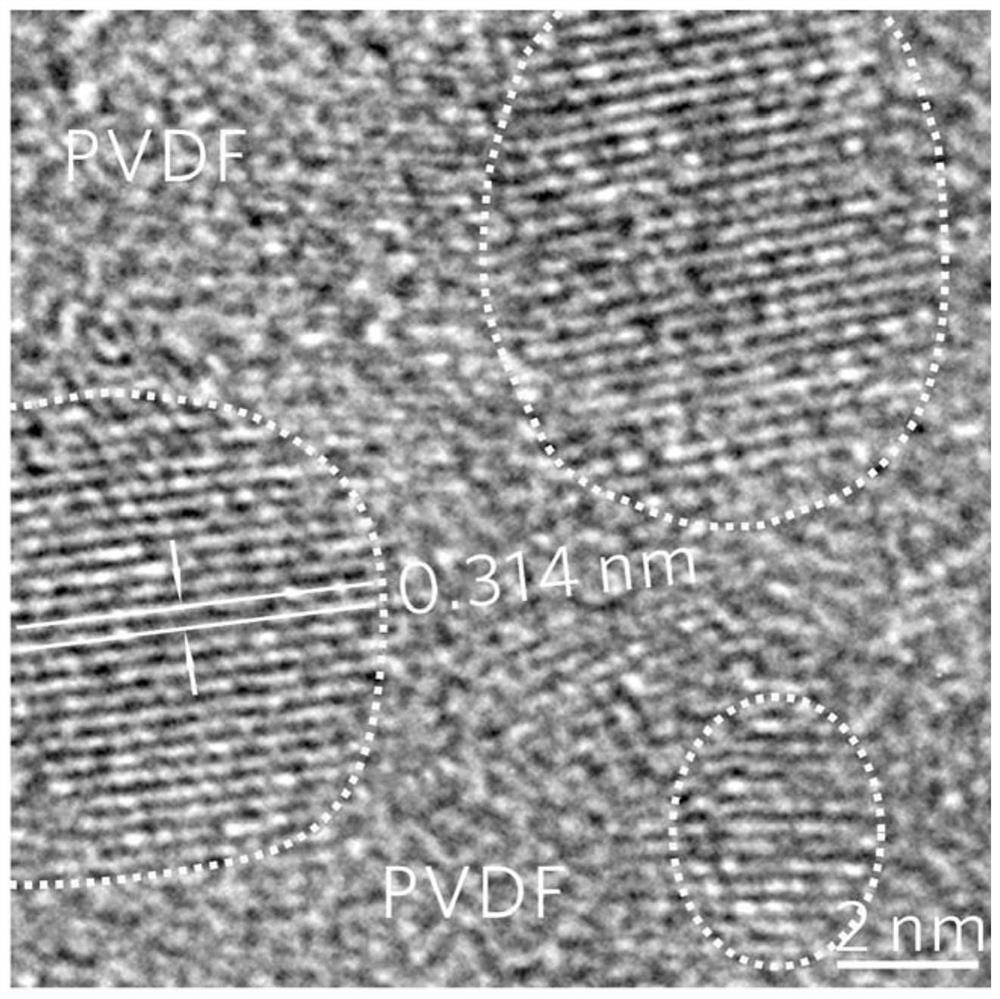
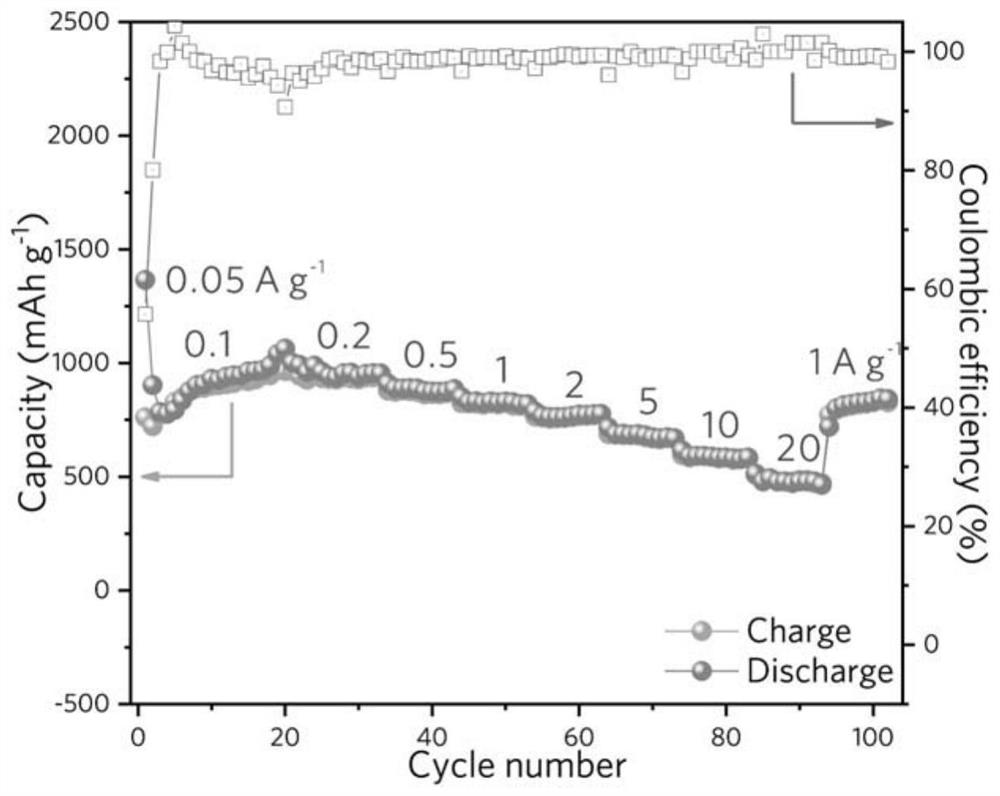
the structure of the environmentally friendly knitted fabric provided by the present invention; figure 2 Flow chart of the yarn wrapping machine for environmentally friendly knitted fabrics and storage devices; image 3 Is the parameter map of the yarn covering machine
View more
Image
Smart Image Click on the blue labels to locate them in the text.
Viewing Examples
Smart Image
Click on the blue label to locate the original text in one second.
Reading with bidirectional positioning of images and text.
Smart Image
Examples
Experimental program
Comparison scheme
Effect test
Embodiment 1
[0044] This embodiment provides an organic nano-anode based on an intercalated pseudocapacitance and its preparation method and application, specifically:
[0045] (1) Preparation of 2,2'-bipyridyl-4,4'-dicarboxylic acid electrode and performance test of lithium ion battery
[0046] (1) Place the 2,2'-bipyridyl-4,4'-dicarboxylic acid material in a blast drying oven and dry at 120°C for 8 hours;
[0047] (2) At room temperature, weigh 0.5g 2,2'-bipyridine-4,4'-dicarboxylic acid, 0.4g conductive carbon black and 0.1g binder (polyvinylidene fluoride, commercially available), grind 10 minutes, then add 20ml of solvent (N-methylpyrrolidone), stir well, grind by high-energy ball mill for 2 hours, and then evenly coat on copper foil;
[0048] (3) Drying at 60°C for 3 hours, followed by vacuum drying at 120°C to obtain 2,2'-bipyridyl-4,4'-dicarboxylic acid pole pieces;
[0049] (4) Use the 2,2'-bipyridyl-4,4'-dicarboxylic acid electrode obtained in step (3) as the negative electrode...
Embodiment 2
[0066] This embodiment provides an organic nano negative electrode based on an intercalation type pseudocapacitance and its preparation method and application, which is basically the same as that in Example 1, except that the organic electrode material is fumaric acid, and its full battery Table 1 shows the maximum energy density, maximum power density and battery voltage data.
Embodiment 3
[0068] This embodiment provides an organic nano negative electrode based on an intercalation type pseudocapacitance and its preparation method and application, which is basically the same as that in Example 1, except that the organic electrode material is sodium citrate, and the maximum capacity of the full battery is The energy density, maximum power density and battery voltage data are shown in Table 1.
the structure of the environmentally friendly knitted fabric provided by the present invention; figure 2 Flow chart of the yarn wrapping machine for environmentally friendly knitted fabrics and storage devices; image 3 Is the parameter map of the yarn covering machine
Login to View More
PUM
Login to View More
Abstract
The invention discloses an organic nano negative electrode based on an intercalation type pseudocapacitance, which comprises an active material, a conductive agent and a binding agent, and the active material is an organic molecular crystal material. The present invention uses nanometerized organic molecular crystal materials as negative electrode materials for lithium-ion batteries or lithium-ion hybrid capacitors, etc., so that organic nanocrystals can fully contact with the conductive agent in the electrode, have good electronic conductivity, and can significantly improve the performance of lithium-ion batteries. The reversible capacity and energy density of Li-ion hybrid capacitors.
Description
technical field [0001] The invention belongs to the field of energy devices and relates to an organic nano negative electrode, in particular to a nano organic negative electrode with an ultra-high intercalation type pseudocapacitive lithium ion storage specific capacity and a preparation method and application thereof. Background technique [0002] At present, electrochemical energy storage devices, such as lithium-ion batteries and supercapacitors, have been widely used in people's daily life and vehicles, and have also triggered people's further pursuit of high energy density / power density. Lithium-ion batteries are currently the system with the highest energy density in actual application batteries, but the power density is relatively low; on the contrary, supercapacitors have excellent power density and cycle life, but there is a serious shortcoming in energy density. The above-mentioned performance difference is mainly determined by the difference in the working mechani...
Claims
the structure of the environmentally friendly knitted fabric provided by the present invention; figure 2 Flow chart of the yarn wrapping machine for environmentally friendly knitted fabrics and storage devices; image 3 Is the parameter map of the yarn covering machine
Login to View More
Application Information
Patent Timeline
Application Date:The date an application was filed.
Publication Date:The date a patent or application was officially published.
First Publication Date:The earliest publication date of a patent with the same application number.
Issue Date:Publication date of the patent grant document.
PCT Entry Date:The Entry date of PCT National Phase.
Estimated Expiry Date:The statutory expiry date of a patent right according to the Patent Law, and it is the longest term of protection that the patent right can achieve without the termination of the patent right due to other reasons(Term extension factor has been taken into account ).
Invalid Date:Actual expiry date is based on effective date or publication date of legal transaction data of invalid patent.


 Login to View More
  Login to View More