
Method for detecting pesticide carbaryl based on nano-gold etching
An etching detection, nano-gold technology, applied in measurement devices, material analysis, instruments and other directions by observing the impact on chemical indicators, can solve the problems of high professional technical requirements, expensive instruments, unstable enzymes, etc., to achieve identification and The effect of strong quantitative ability, rapid response and efficient measurement
- Summary
- Abstract
- Description
- Claims
- Application Information
AI Technical Summary
Problems solved by technology
Method used
Image

Examples
Embodiment 1
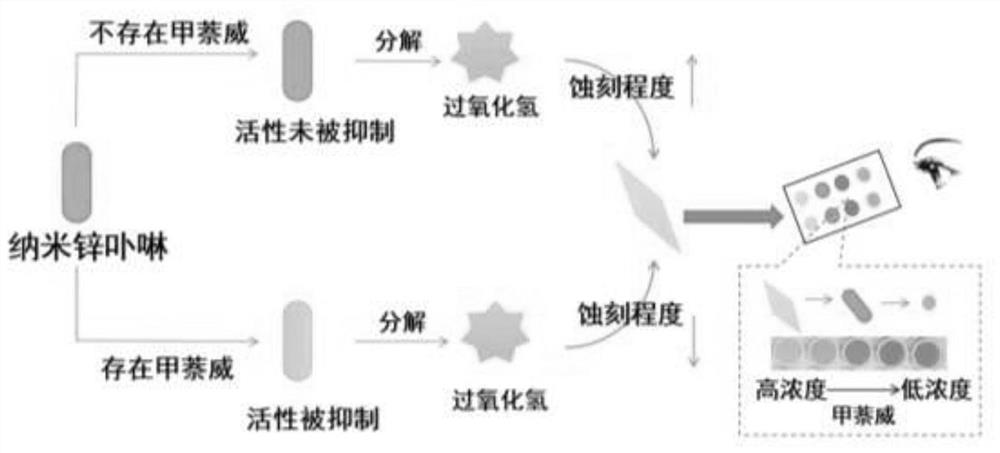
[0061] A method for the visual detection of the pesticide carbaryl based on nano-gold etching, the schematic diagram of the detection principle is shown in image 3 , including the following steps:
[0062] The carbaryl concentration was 5×10 -4 -5×10 -5 mol / L of 50 μL water matrix and 80 μL of the obtained nano-zinc porphyrin solution (the concentration of zinc porphyrin rods is 9.6×10 -6 mol / L) mixed evenly, the resulting mixed solution I was added to a 96-well plate containing 150 μL of the resulting biconical gold nanometer solution (0.9575 g / ml) and 20 μL of hydrogen peroxide (3mol / L) mixed solution, and supplemented with water Until the volume of the obtained solution system is 400 μL, react at 40°C for 45 minutes, use a smart phone to take pictures of the color changes of the solution in the 96-well plate before and after the introduction of different concentrations of carbaryl, and visually observe the addition of different concentrations of carbaryl. After the colo...
Embodiment 2
[0065] A method for quantitatively detecting the pesticide carbaryl in a water matrix based on nano-gold etching, specifically comprising the following steps:
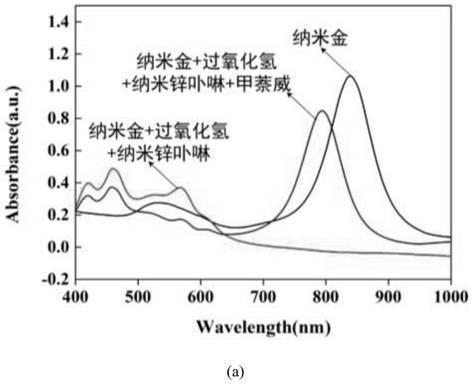
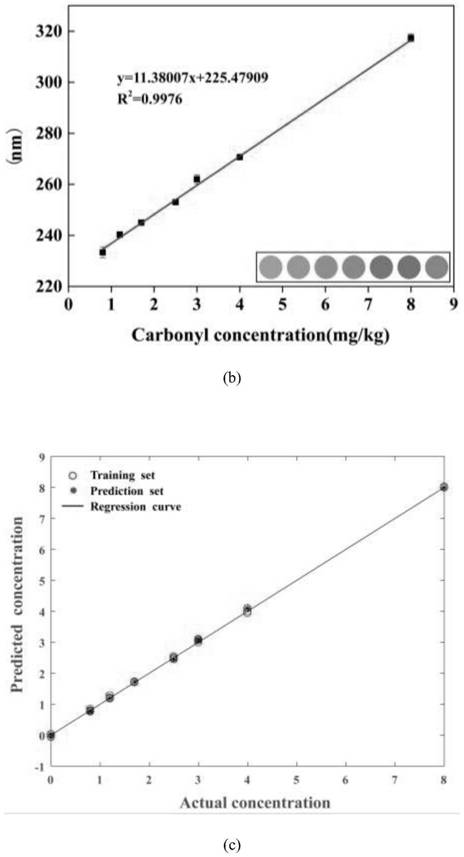
[0066] The carbaryl concentration was (5 × 10 -5 mol / L, 7×10 -5 mol / L, 1×10 -4 mol / L, 1.5×10 -4 mol / L, 2×10 -4 mol / L, 2.5×10 -4 mol / L, 5×10 -4 mol / L) of 50 μL water matrix and 100 μL of the resulting nano-zinc porphyrin solution (the concentration of zinc porphyrin rods is 9.6×10 -6 mol / L) mixed evenly, the resulting mixed solution was added to the mixed solution containing 100 μL of the resulting biconical gold nanometer solution (0.9575g / ml) and 150 μL of hydrogen peroxide (3mol / L), and added to the resulting solution system with water The volume is 600μL, react at 40°C for 45min, and then measure the UV-visible spectrum in the range of 400-1000nm, respectively measure (three times in parallel) under the same zinc porphyrin rod concentration, the corresponding nano-gold LSPR peak before and after the introducti...
Embodiment 3
[0071] A method for the quantitative detection of the pesticide carbaryl in a complex matrix based on nano-gold etching. The obtained nano-zinc porphyrin and biconical nano-gold are applied to the detection of carbaryl in fruits, vegetables, Chinese medicinal materials and soil matrices, specifically including Follow the steps below:
[0072] Add 50 μL of carbaryl to a concentration of 7×10 -5 mol / L, 1.5×10 -4 mol / L, 2.5×10 -4 mol / L of different substrates (apple, cabbage, chrysanthemum, lily, Atractylodes macrocephala, soil) and 100 μL of the resulting nano-zinc porphyrin solution (concentration of 9.6×10 - 6mol / L) mixed for 1 min, the mixed solution was added to the mixed solution containing 100 μL of the obtained biconical gold nanometer solution (0.9575 g / ml) and 150 μL of hydrogen peroxide (3mol / L), and supplemented with water to the volume of the obtained solution system was 600 μ L, reacted at 40°C for 45min, then carried out UV-visible spectrometry in the range of ...
PUM
| Property | Measurement | Unit |
|---|---|---|
| length | aaaaa | aaaaa |
| diameter | aaaaa | aaaaa |
Abstract
Description
Claims
Application Information
 Login to View More