
Adaptive LCD TV display quality adjusting apparatus and method
An adaptive adjustment, TV display technology, applied in color TV parts, TV system parts, TV and other directions, can solve the problems of the audience's visual fatigue, backlight adjustment, not considering the bright and dazzling picture, etc., to achieve subjective The effect of improving image quality, preventing visual fatigue, eliminating image whitening and glare problems
- Summary
- Abstract
- Description
- Claims
- Application Information
AI Technical Summary
Problems solved by technology
Method used
Image

Examples
Embodiment 1
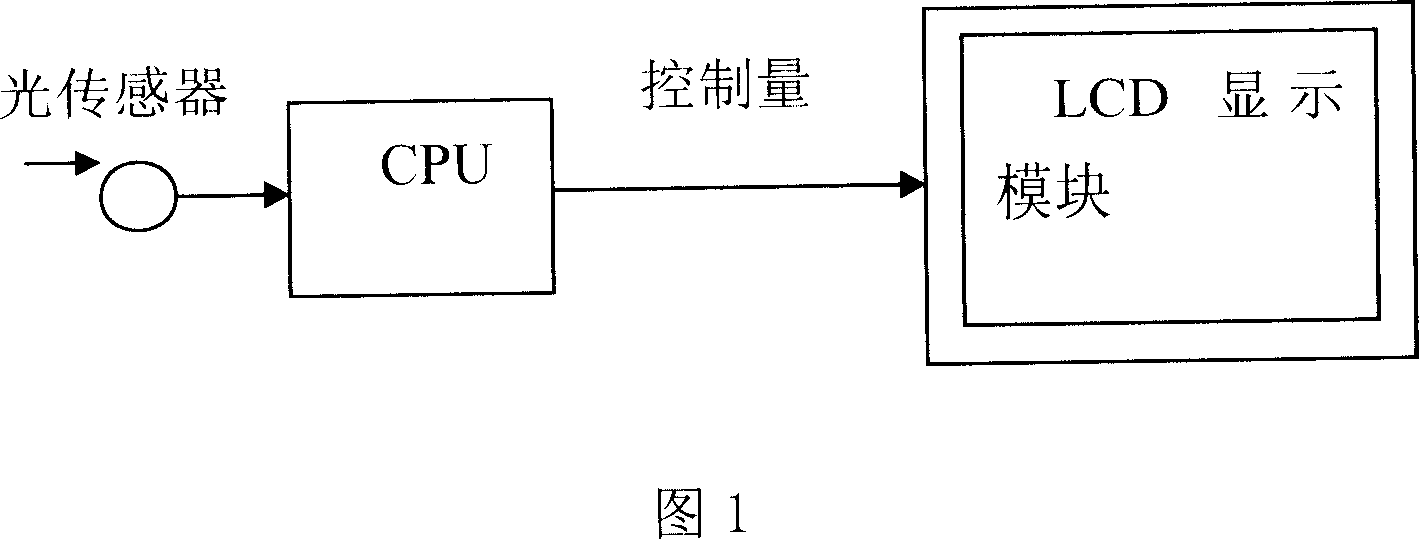
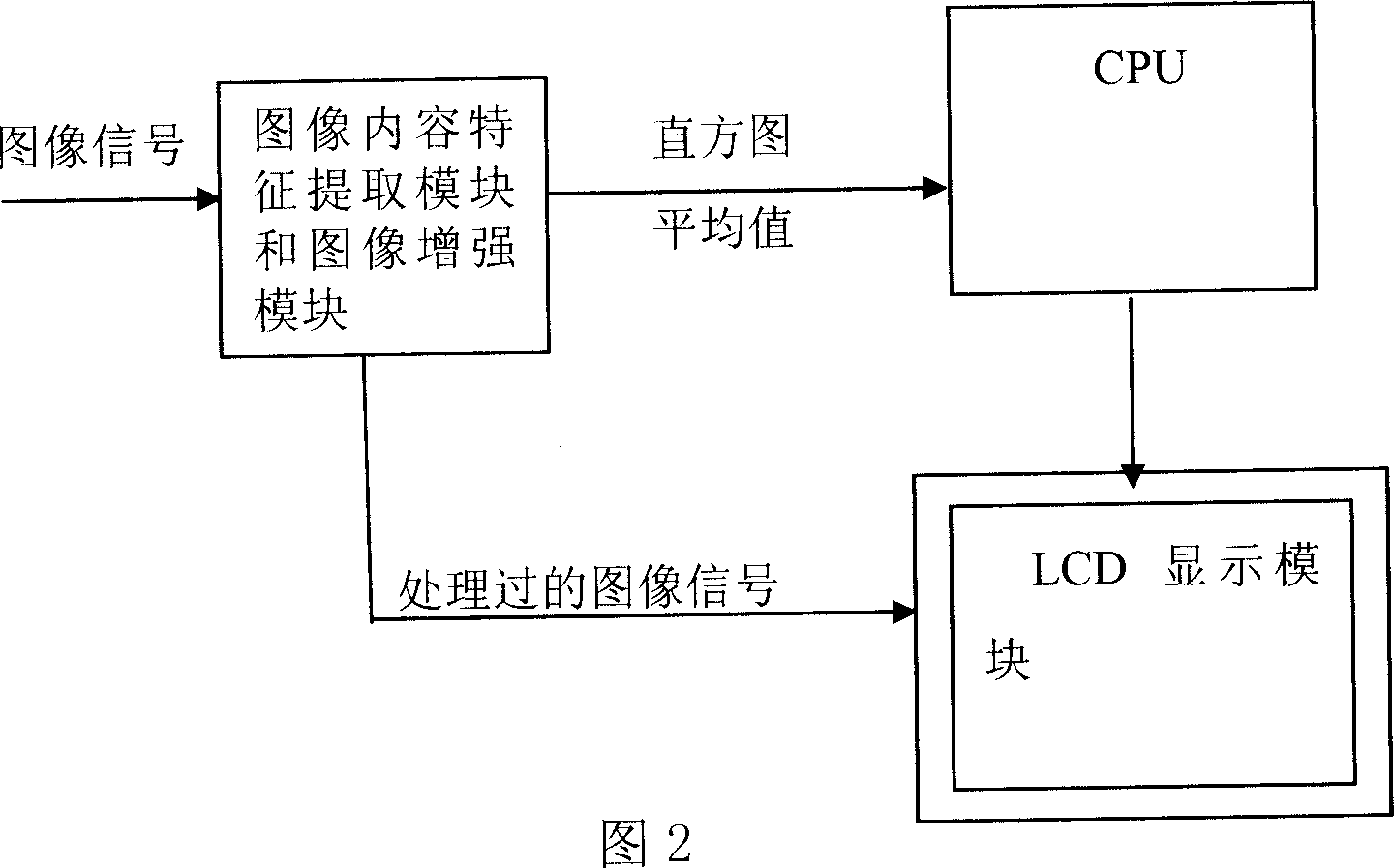
[0034] This embodiment includes an LCD display module, an extraction module, an image enhancement module, and a CPU. The extraction module can extract information from the image content feature of the image signal. The extracted information includes the histogram and average value of the image content, and then the relevant parameters are sent to the CPU with the preset analysis and processing program; then, the control amount of the backlight brightness is output according to the optimization algorithm. Different LCD display modules use Different control quantities, which can be voltage or PWM pulses.
[0035] The algorithm is as follows: see the flowchart, Figure 4. First, for each input image, the histogram information, average value, maximum and minimum value, and deviation value of each frame of image are extracted through the image feature extraction module. Estimating the proportion of bright areas in the image Pbr, the acquisition of Pbr refers to the ratio of the to...
Embodiment 2
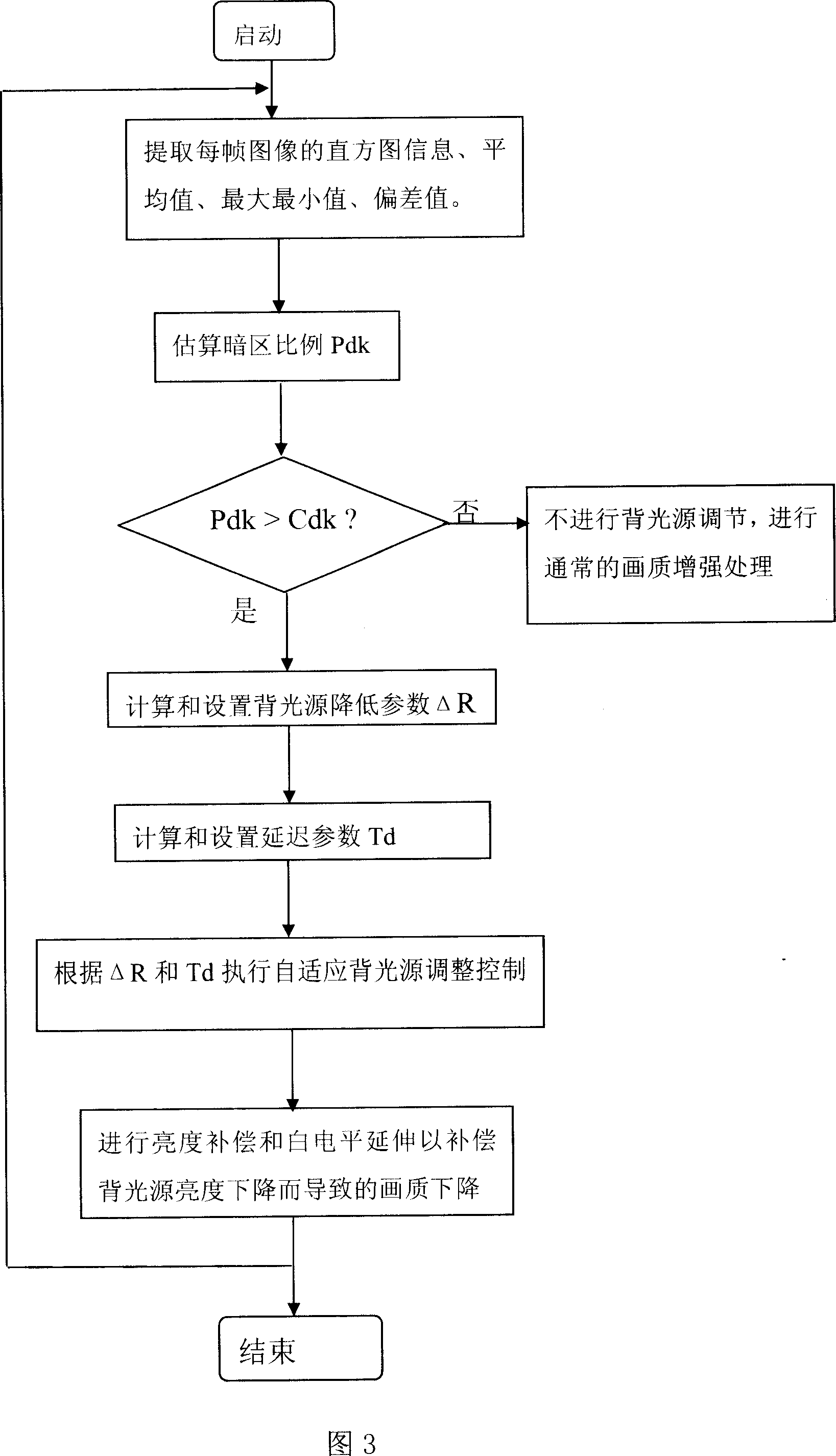
[0037] Using the method combined with the method of measuring the dark area of the previous invention, firstly detect the proportion of the dark area, see Figure 3, that is, extract the histogram information, average value, maximum and minimum values, and deviation values of each frame of image. Then estimate the dark area ratio Pdk in the current state. Compare Pdk with the preset dark area ratio Cdk. If Pdk is less than Cdk, no backlight adjustment is performed, and normal image quality enhancement processing is performed; if Pdk is greater than Cdk, calculate and set the backlight reduction parameter ΔR, calculate and Set the delay parameter Td, and then perform adaptive backlight adjustment control according to ΔR and Td, and perform brightness compensation and white level extension to compensate for the degradation of image quality caused by the decrease in backlight brightness. Otherwise, the ratio of the bright area is detected, referring to FIG. 4 , if the ratio Pb...
PUM
 Login to View More
 Abstract
Description
Claims
Application Information
 Login to View More