Image processing apparatus, image processing method and non-transitory computer-readable storage medium
a technology of image processing and image processing method, applied in image analysis, image enhancement, instruments, etc., can solve problems such as insufficient detection accuracy
- Summary
- Abstract
- Description
- Claims
- Application Information
AI Technical Summary
Benefits of technology
Problems solved by technology
Method used
Image

Examples
first embodiment
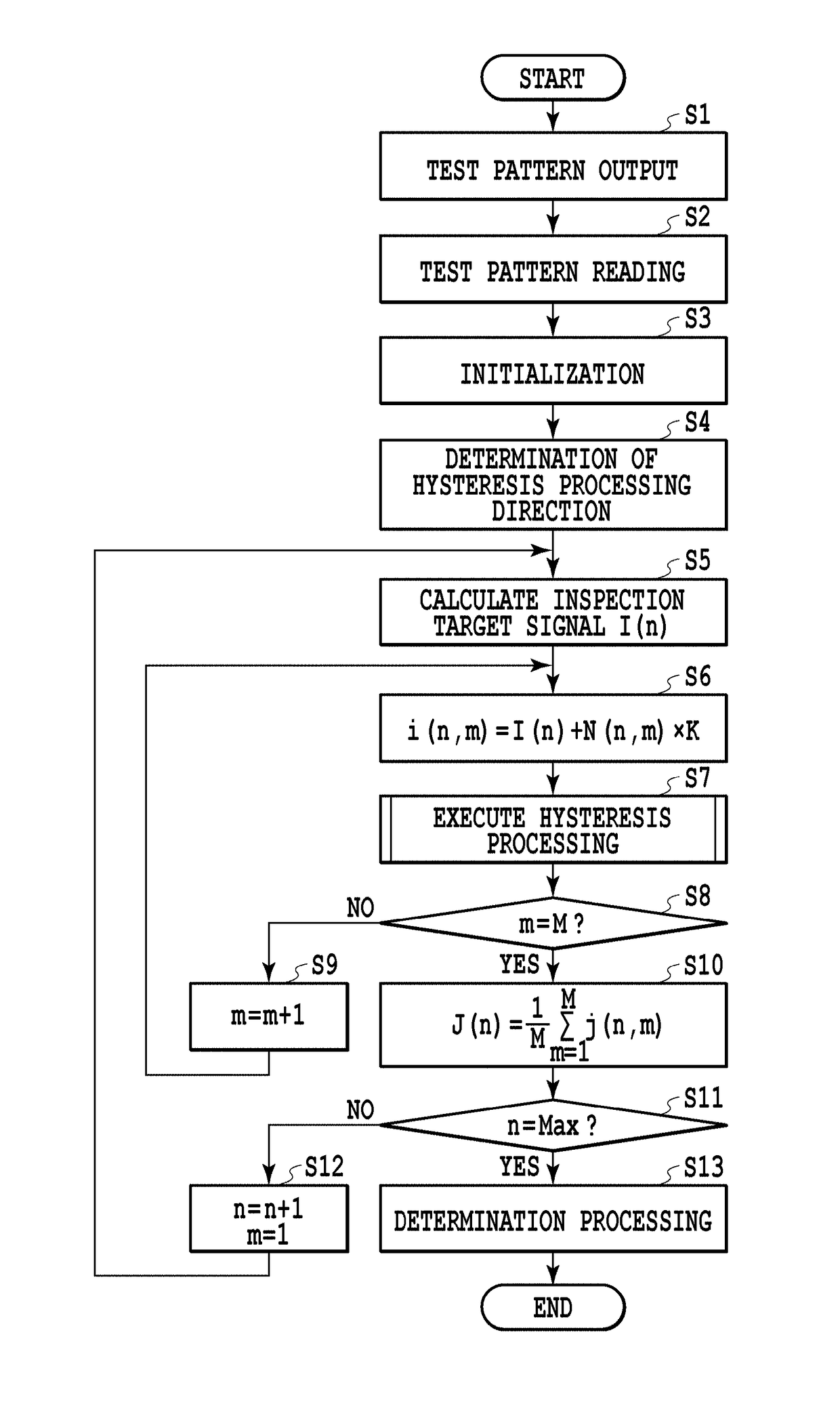
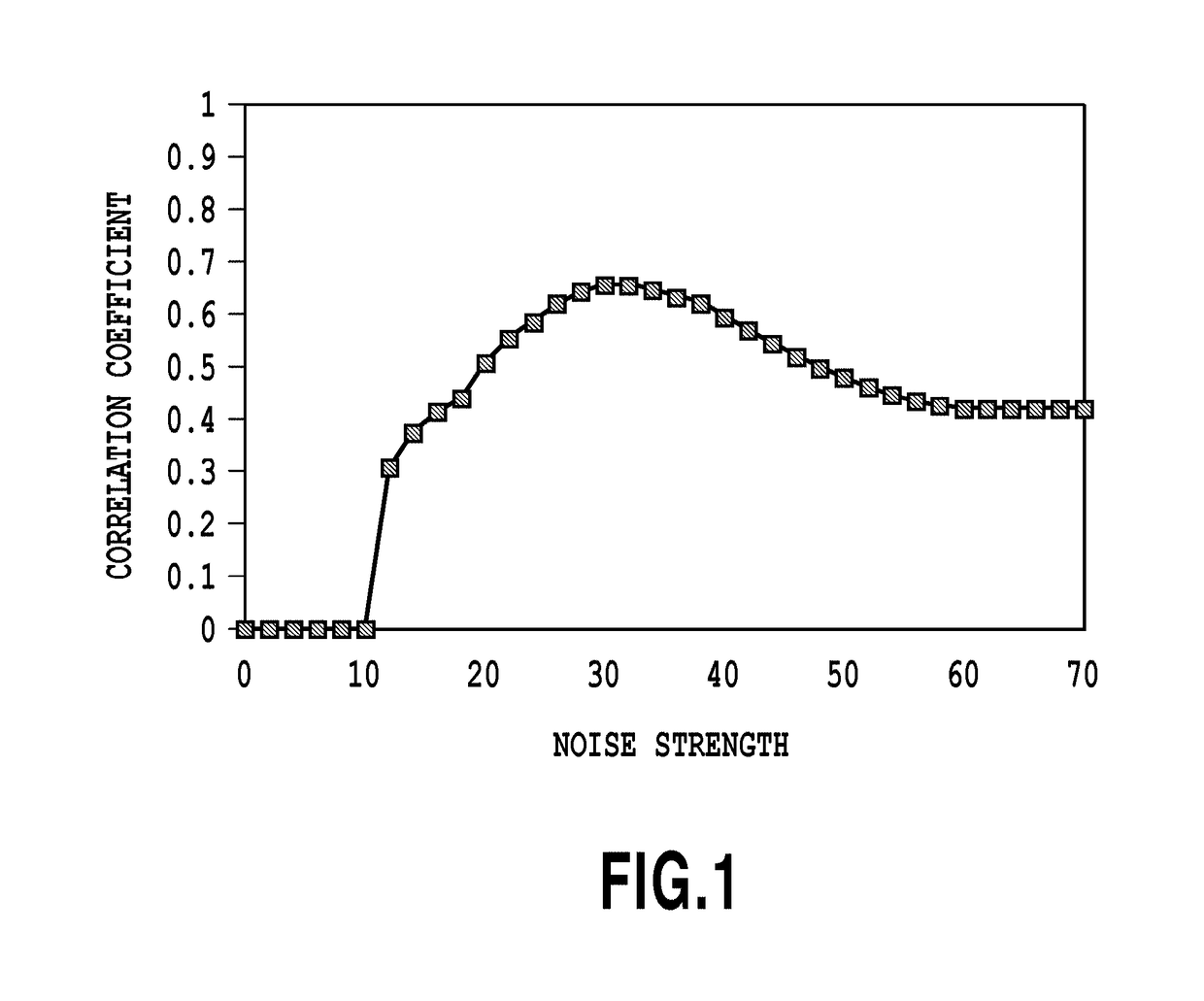
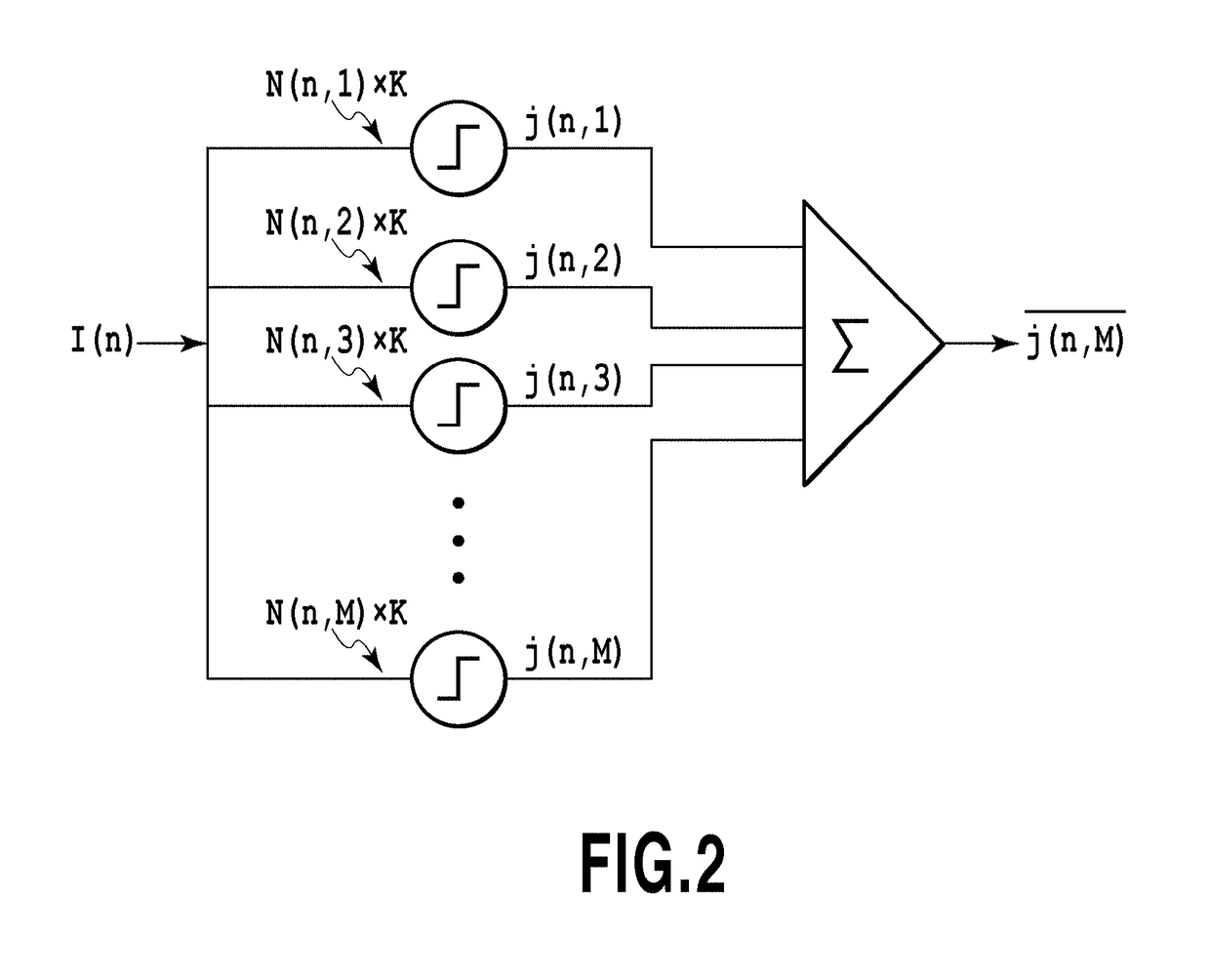
[0033]FIG. 4 is a block diagram for explaining the control configuration in the embodiment of FIG. 3D. The image processing apparatus 1 as a signal extraction processing apparatus consists of a host PC for example. A CPU 301 executes various processing while using a RAM 302 as a work area in accordance with a program retained in an HDD 303. For example, the CPU 301 generates image data that can be printed by the complex machine 6 based on a command received from a user via a keyboard / mouse I / F 305 or a program retained in the HDD 303 and transfers this to the complex machine 6. The CPU 301 subjects the image data received from the complex machine 6 via a data transfer I / F 304 to a predetermined processing based on the program stored in the HDD to display the result or various pieces of information on a not-shown display via a display I / F 306. Image data I(x), which is a target of the stochastic resonance processing of this embodiment as described later, is received from the complex ...
modification example
[0075]In the above-described hysteresis processing, as shown in FIGS. 9A and 9B, the binarization processing of the target pixel 901 was performed based on the ternarizing processing result of the one adjacent pixel 903. However, another configuration also may be used as shown in FIG. 9C for example in which the binarization processing of the target pixel 901 is performed based on the ternarizing processing result of a plurality of adjacent continuous pixels 903 and 904. For example, j(n,m)=1 may be established only in a case where two adjacent continuous pixels both show the result of “1” and j(n,m)=0 may be established in the case other than the above case. Another configuration also may be used in only a case where, among the L adjacent continuous pixels, the number of pixels for which j′(n,m)=1 is established is higher than the number of pixels for which j′(n,m) is other value, j(n,m)=1 is set for the target pixel 901.
[0076]In the flowchart described in FIG. 11 and FIG. 12, the ...
second embodiment
[0078]The second embodiment also uses the image processing system described in FIG. 4 to FIG. 6B as in the first embodiment. In the first embodiment, a case was described in which a singular portion whose extending direction in the image is clear is extracted, including a stripe caused by the ejection failure of a printing element and a stripe caused by the eccentricity of a conveyance roller for example. However, there may be a case where strips caused by different factors appear in directions crossing one another in the inspection target image. This embodiment will describe a configuration in which these singular portions can be favorably extracted even in such a case.
[0079]FIG. 13 shows the hysteresis processing direction in the singular portion detection algorithm of this embodiment. In this embodiment, the hysteresis processing in the X direction and the hysteresis processing in the Y direction are both performed. Specifically, it is assumed that the binarization processing res...
PUM
 Login to View More
 Abstract
Description
Claims
Application Information
 Login to View More
 - R&D
- Intellectual Property
- Life Sciences
- Materials
- Tech Scout
- Unparalleled Data Quality
- Higher Quality Content
- 60% Fewer Hallucinations
Browse by: Latest US Patents, China's latest patents, Technical Efficacy Thesaurus, Application Domain, Technology Topic, Popular Technical Reports.
© 2025 PatSnap. All rights reserved.Legal|Privacy policy|Modern Slavery Act Transparency Statement|Sitemap|About US| Contact US: help@patsnap.com