
Continuous time warping for low bit-rate celp coding
a technology of low bitrate celp and continuous time warping, applied in the field of speech coding techniques, can solve the problems of waveform coders, inefficient techniques, and limited capacity of channels and media used for digital voice transmission and/or storag
- Summary
- Abstract
- Description
- Claims
- Application Information
AI Technical Summary
Benefits of technology
Problems solved by technology
Method used
Image

Examples
Embodiment Construction
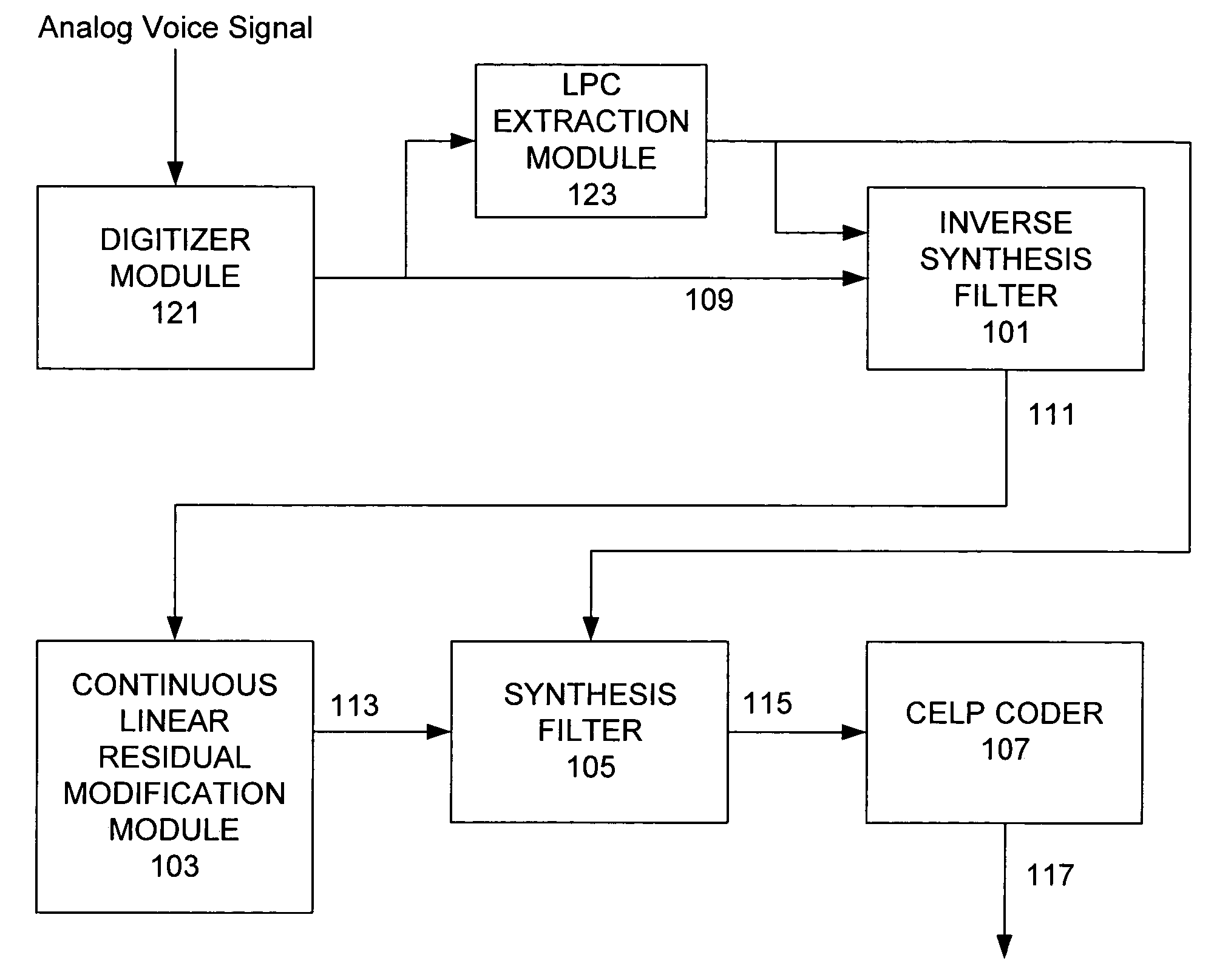
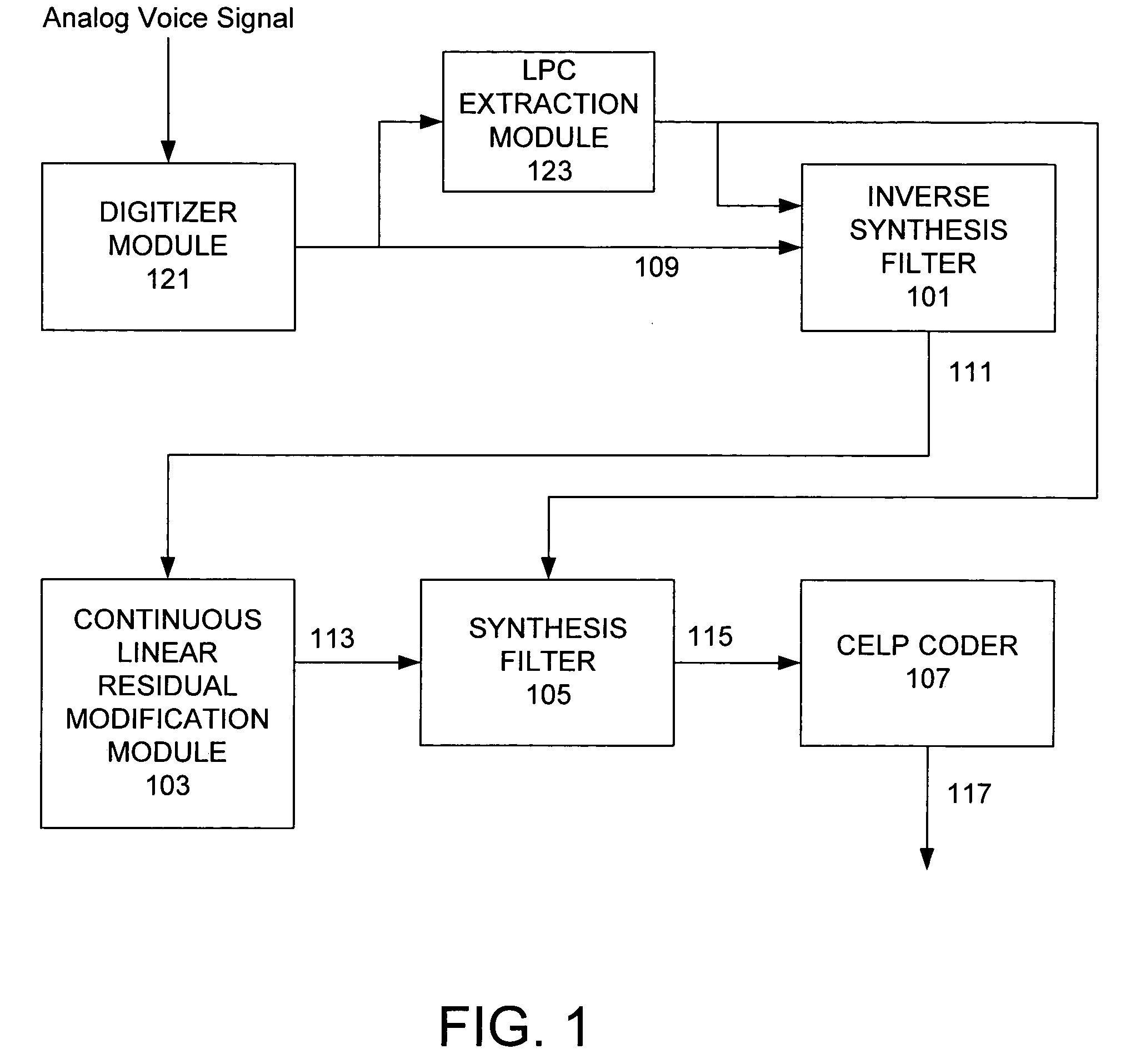
[0022] In the description that follows, the invention will be described with reference to acts and symbolic representations of operations that are performed by one or more computers, unless otherwise indicated. As such, it will be understood that such acts and operations, which are at times referred to as being computer-executed, include the manipulation by the processing unit of the computer of electrical signals representing data in a structured form. This manipulation transforms the data or maintains it at locations in the memory system of the computer, which reconfigures or otherwise alters the operation of the computer in a manner well understood by those skilled in the art. The data structures where data is maintained are physical locations of the memory that have particular properties defined by the format of the data. However, while the invention is being described in the foregoing context, it is not meant to be limiting as those of skill in the art will appreciate that vari...
PUM
 Login to View More
 Abstract
Description
Claims
Application Information
 Login to View More