
Transportable intravenous bag stand
a technology of intravenous bag and bag stand, which is applied in the direction of machine supports, furniture parts, other domestic objects, etc., can solve the problems of waste of valuable trained professionals' resources, non-trained people, and medical treatment must be dispensed, and achieve the effect of facilitating us
- Summary
- Abstract
- Description
- Claims
- Application Information
AI Technical Summary
Benefits of technology
Problems solved by technology
Method used
Image

Examples
Embodiment Construction
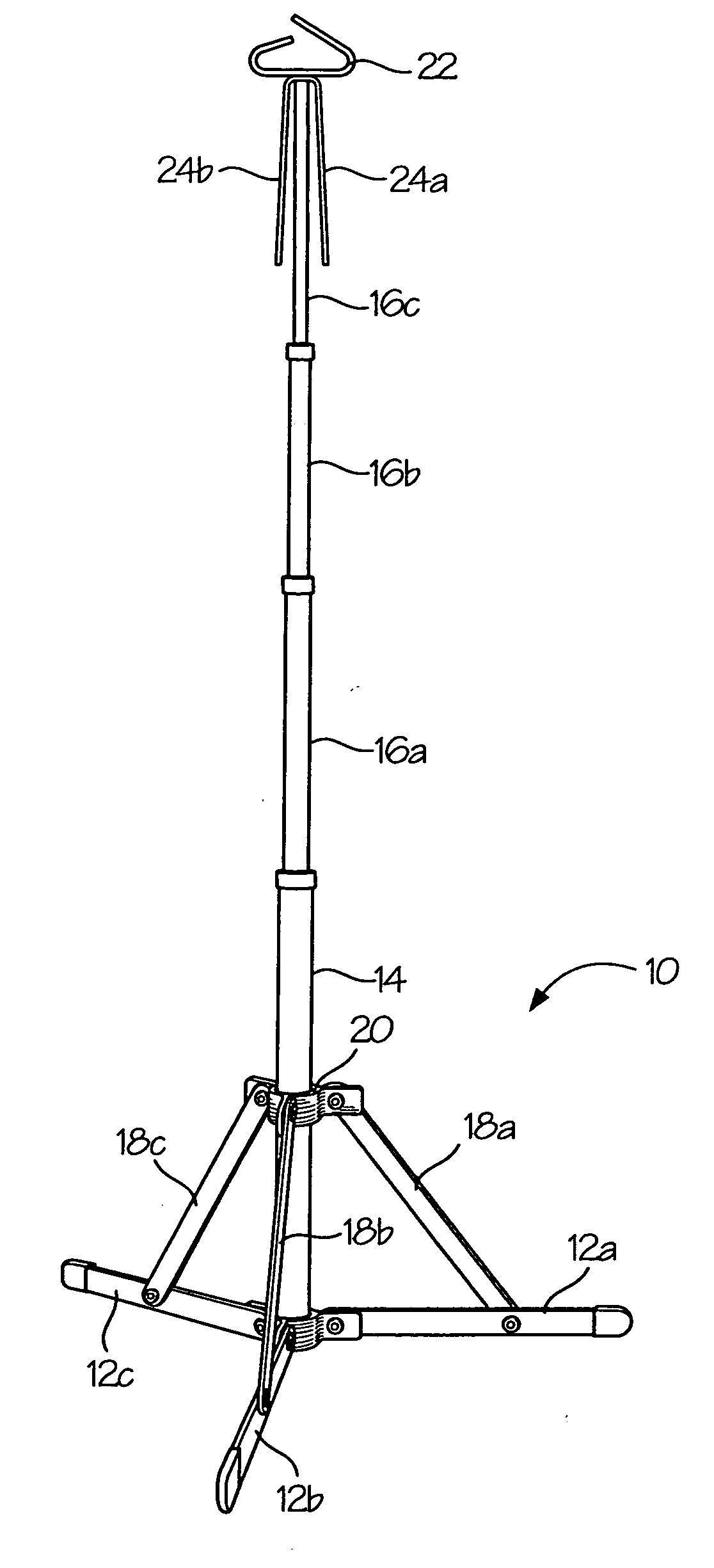
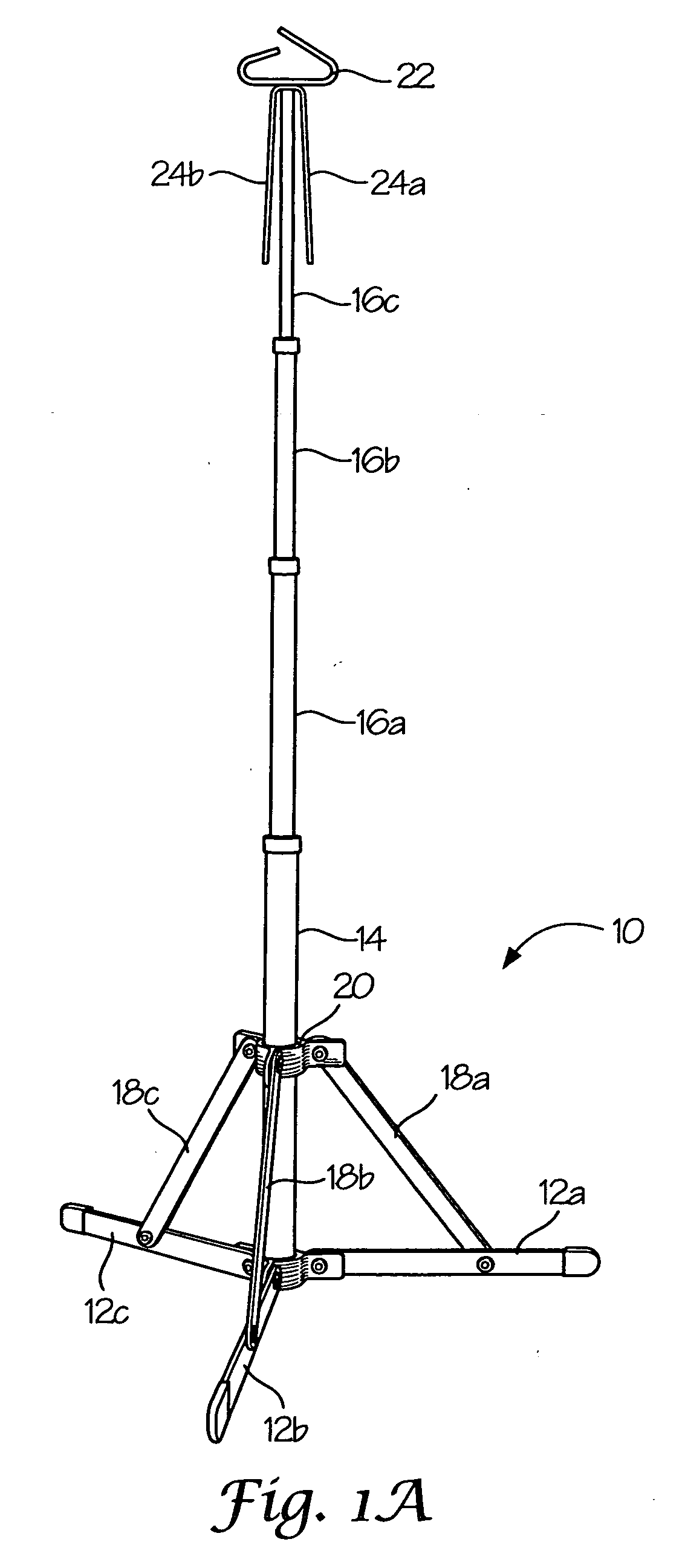
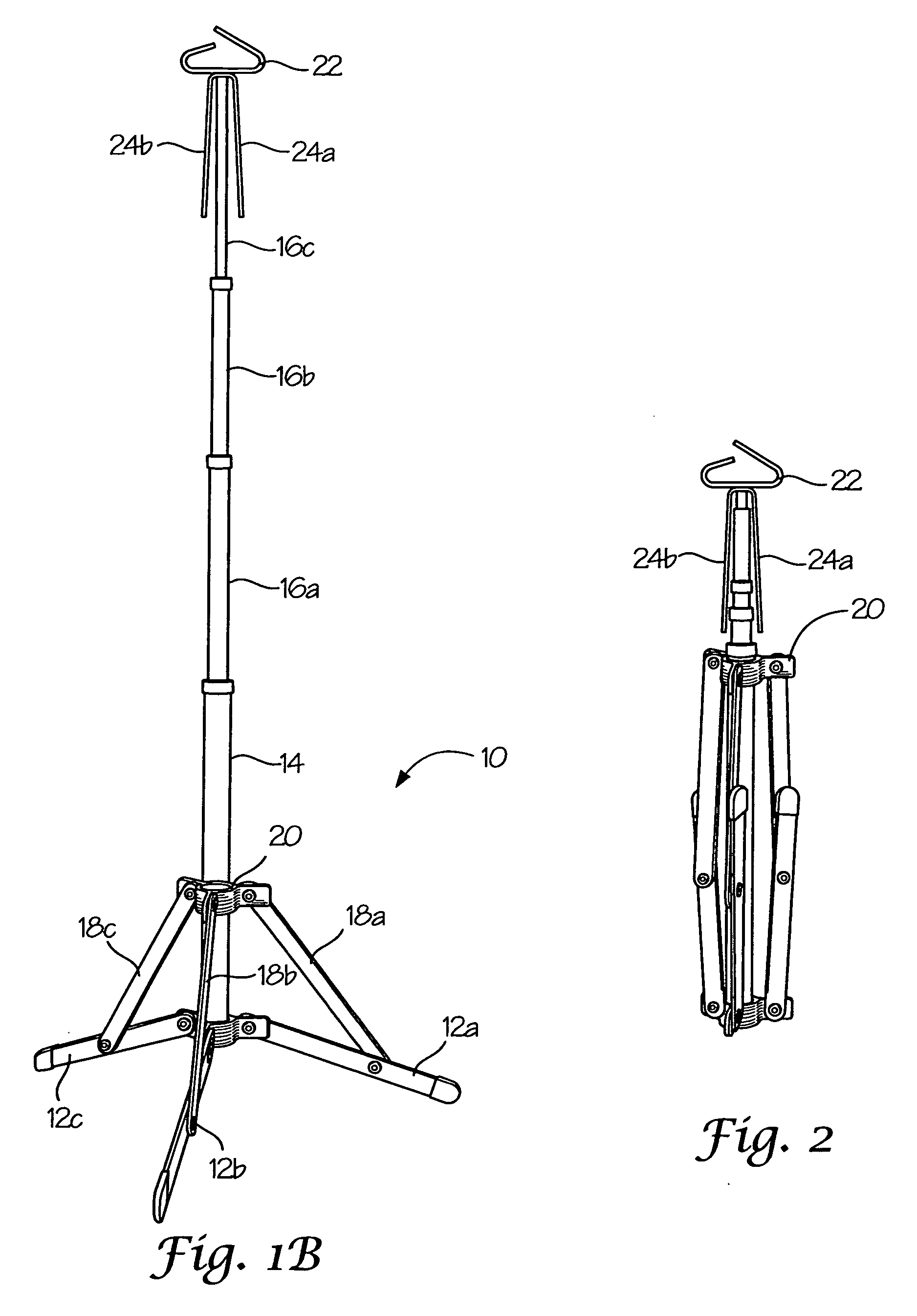
[0018] Referring now to the figures, the preferred embodiment of the invention is described in more detail. Referring to FIG. 1a, the transportable IV stand is shown in an open position. In a preferred embodiment, the present invention is made of a lightweight aluminum and / or a lightweight steel. This allows the pole to be transported easily without concern as to the weight of the pole. Most traditional IV poles are made of steel or stainless steel which give the psychological impression that they are clean due to the shininess of the steel. As the present invention is used in the field in emergency situations, the necessity for psychological impressions of cleanliness is not important. A base member, shown generally as 10, is shown having a plurality of legs, 12a through 12c. The three legs provide stable support, without being unduly cumbersome. The plurality of legs is connected to a vertical support member 14 having a first end and a second end. The plurality of legs is pivotall...
PUM
 Login to View More
 Abstract
Description
Claims
Application Information
 Login to View More