
Coplanar X-ray guided aiming arm for locking of intramedullary nails
a technology of aiming arm and intramedullary nail, which is applied in the direction of bone drill guide, medical science, surgery, etc., can solve the problems of inability to achieve distal locking, inconvenient x-ray technician, and inability to perform distal locking
- Summary
- Abstract
- Description
- Claims
- Application Information
AI Technical Summary
Benefits of technology
Problems solved by technology
Method used
Image

Examples
Embodiment Construction
[0044] Hereinafter, a method of bone fixation according to the preferred embodiment of the present invention will be explained with reference to FIGS. 1-7.
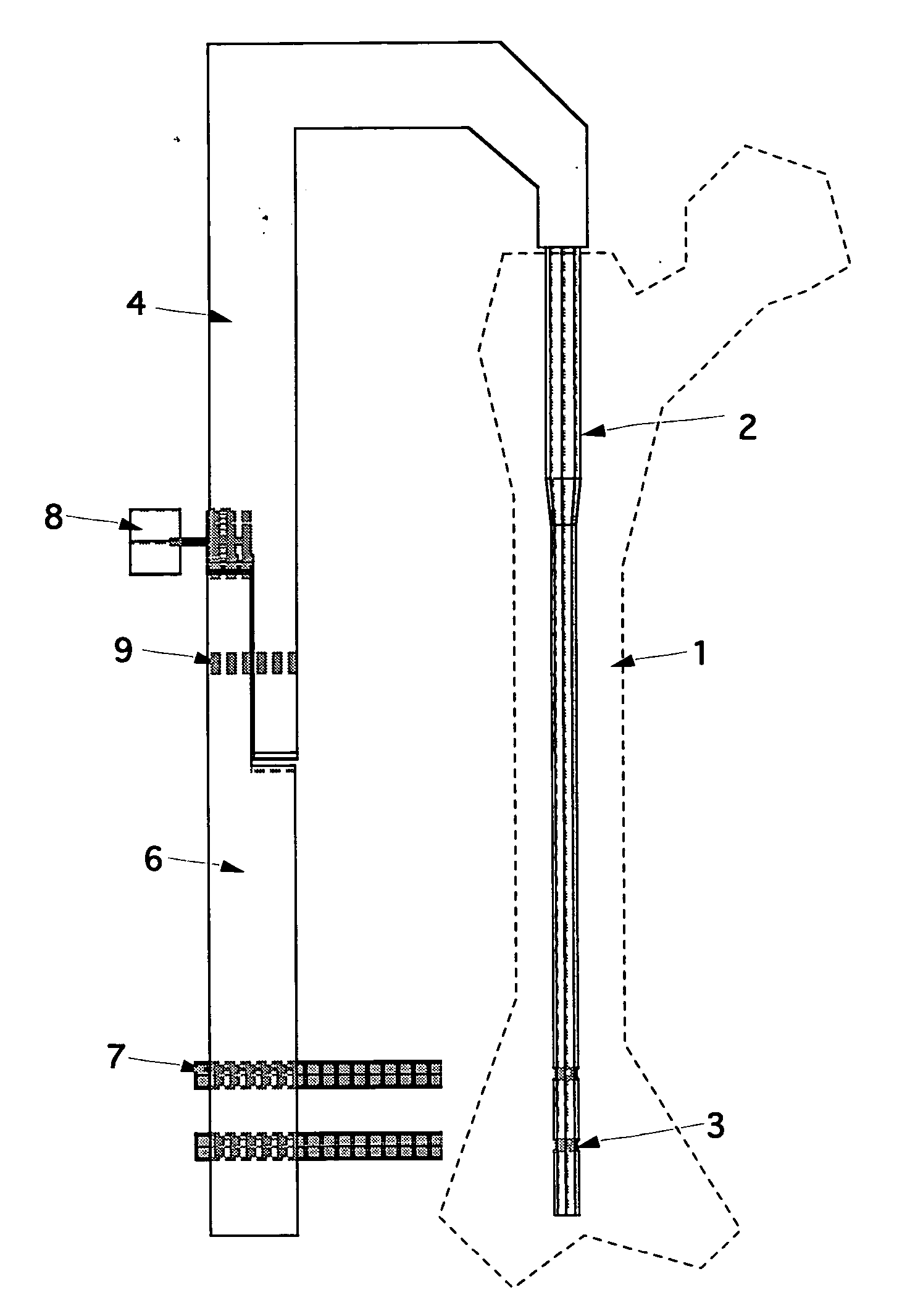
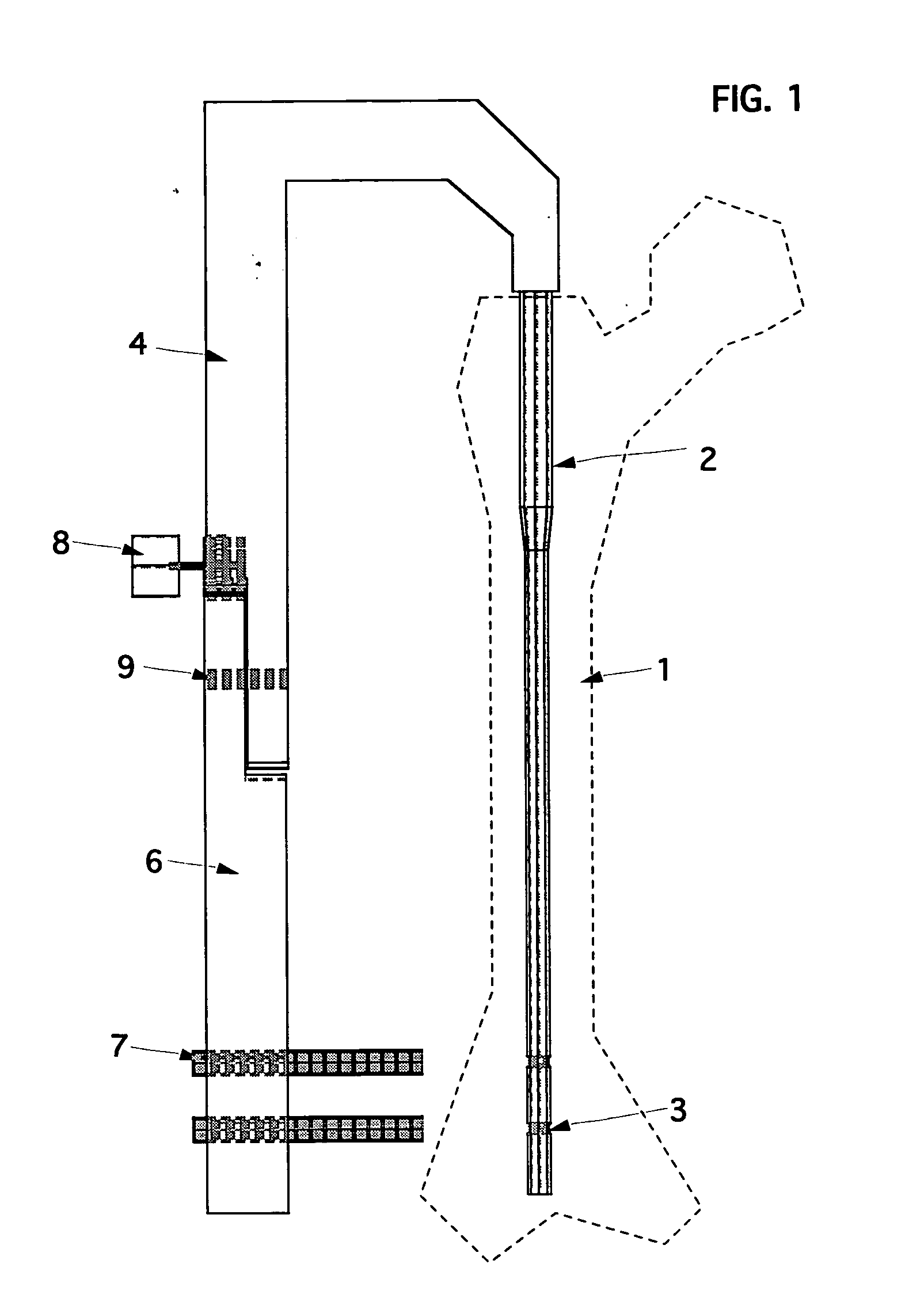
[0045] Referring to FIG. 1 there is shown an aiming device 4, on which is mounted a mobile aiming arm portion 6. An intramedullary nail 2, with two coplanar transverse holes 3 is fastened to the aiming arm 4. Protective sleeves 7 slide through holes 5 located in the mobile part of the aiming arm 6, guiding drills and bone screws through the nail transverse holes 3 for distal locking of the intramedullary nail 2. Mobile part rotates about the axis 9 over aiming arm.
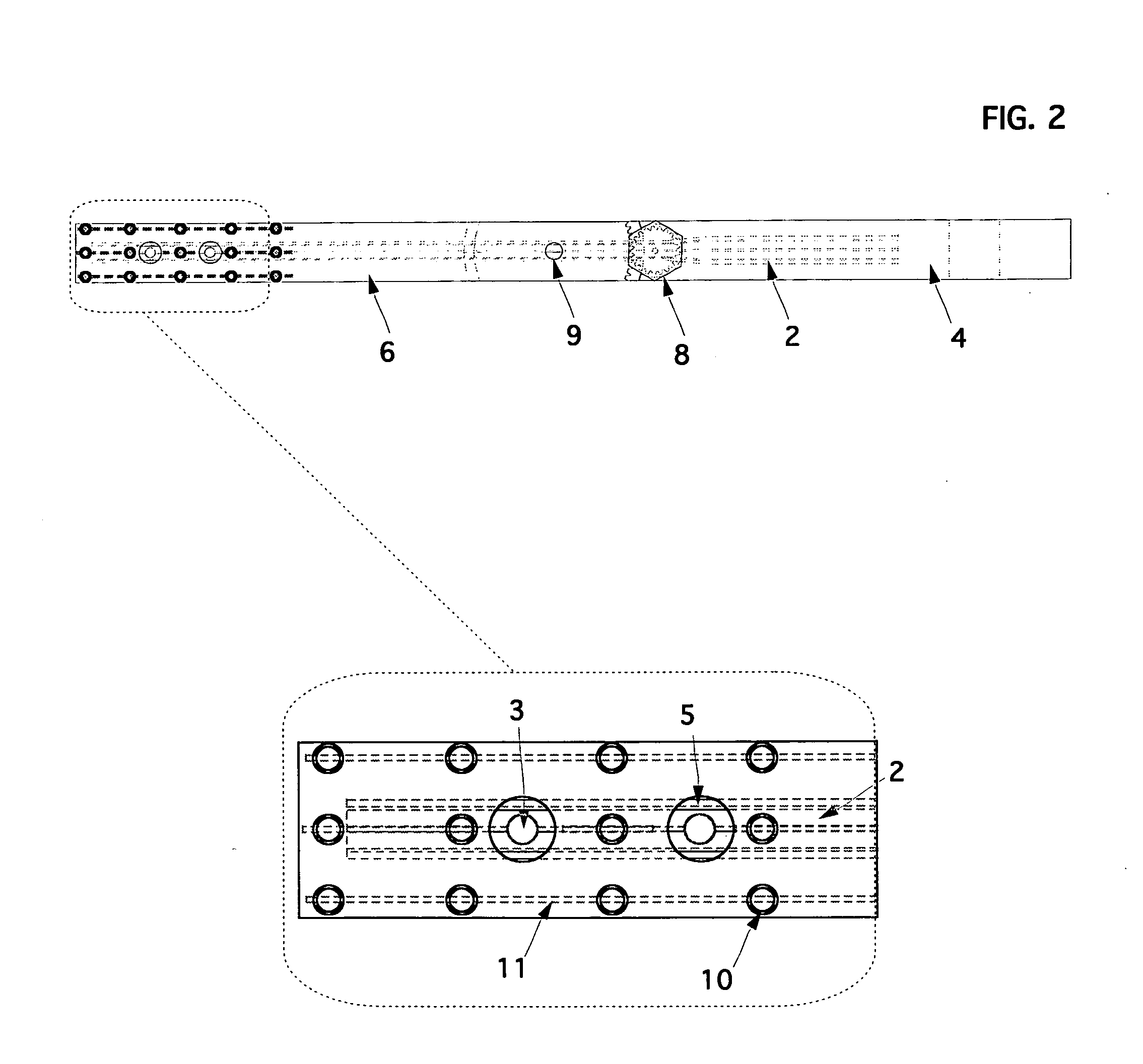
[0046] The aiming arm 4 is fastened to the intramedullary nail 2, and before the nail 2 is inserted into the bone 1, aiming arm holes 5 and intramedullary nail holes 3 are precisely aligned as shown in FIGS. 2 and 3.
[0047] After implanted, the distortion of the intramedullary nail causes aiming arm holes 5 and intramedullary nail holes 3 non-alignment as shown in FIG....
PUM
 Login to View More
 Abstract
Description
Claims
Application Information
 Login to View More