Implantable medical device with real time T-wave oversensing detection

a medical device and real-time twave technology, applied in the field of implantable medical devices, can solve the problems of shortening the operating life of the icd, causing an arrhythmia when one occurs, and wasting energy

US20060224075A1Active Publication Date: 2006-10-05MEDTRONIC INC
7 Cites 34 Cited by

Patent Information

Authority / Receiving Office
US · United States
Patent Type
Applications(United States)
Current Assignee / Owner
Publication Date
2006-10-05

Smart Images

  • Figure 1
    Figure 1
  • Figure 2
    Figure 2
  • Figure 3
    Figure 3
Patent Text Reader

Abstract

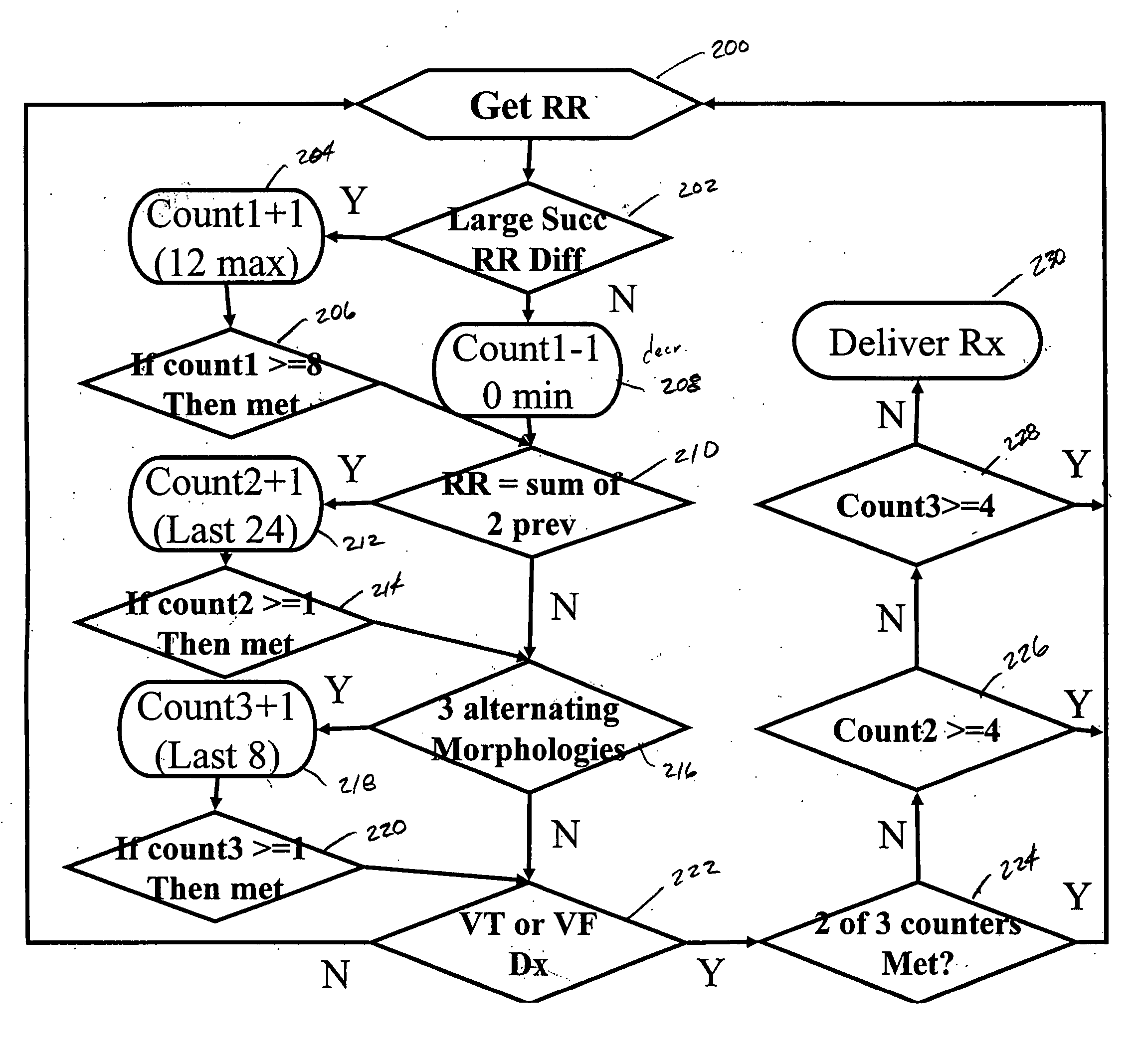
An implantable cardioverter defibrillator (ICD) senses ventricular depolarizations (R-waves) in an electrogram signal to detect a ventricular tachycardia or fibrillation episodes. The EGM signal is also monitored in real time for characteristics that uniquely identify instances of T-wave oversensing. The ICD determines whether detection of a tachycardia or fibrillation episode is appropriate based upon counts of each of the unique characteristics evidencing T-wave oversensing.
Need to check novelty before this filing date? Find Prior Art

Description

FIELD OF THE INVENTION

[0001] The present invention relates to an implantable medical device (IMD), and more particularly, to an implantable medical device that automatically identifies T-wave oversensing on a real-time basis. BACKGROUND OF THE INVENTION

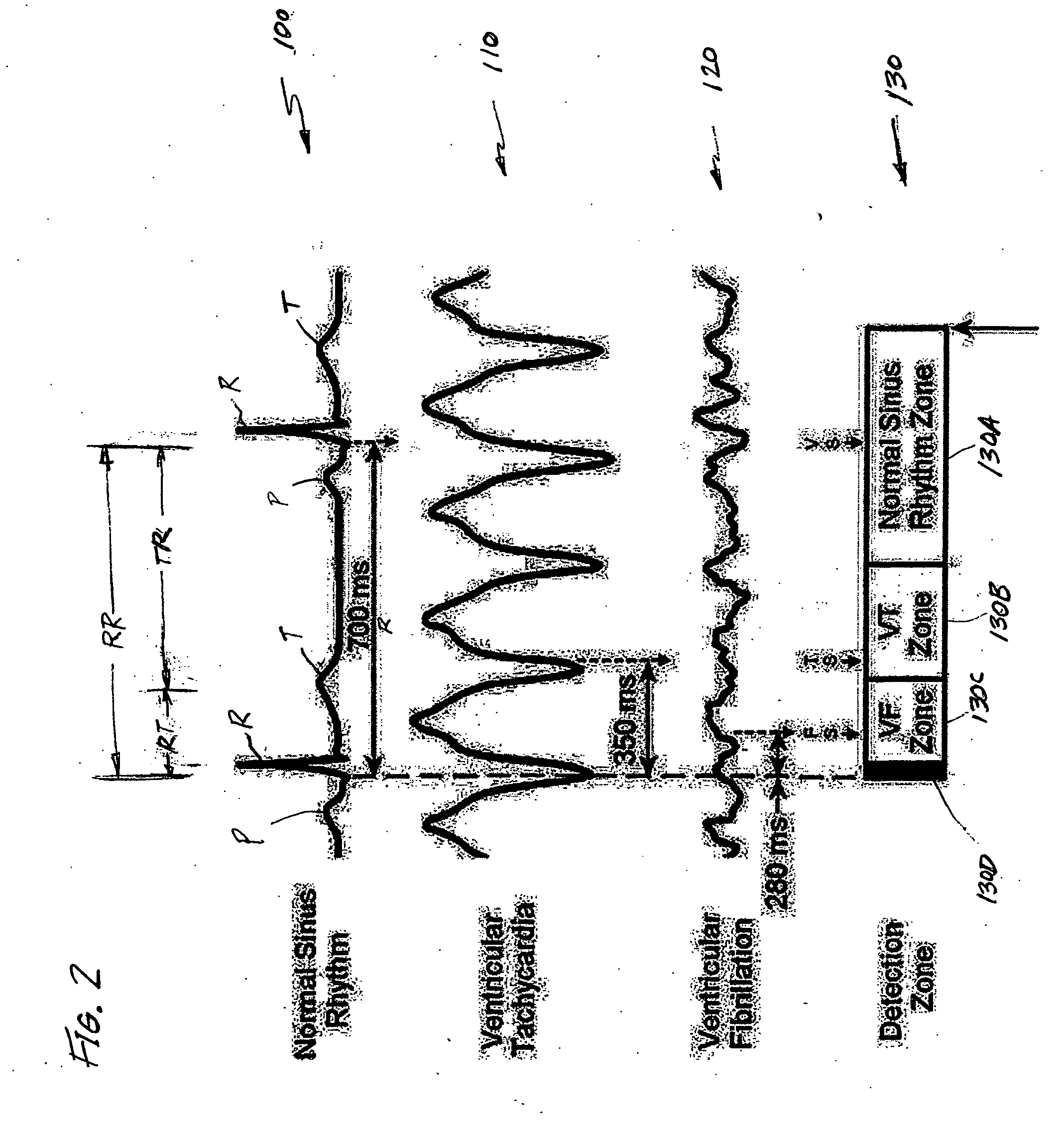
[0002] An implantable cardioverter defibrillator (ICD) is an IMD that is capable of detecting a tachyarrhythmia (i.e. a fibrillation or abnormal high rate tachycardia) in a heart chamber and providing a high energy electrical shock into or across cardiac tissue to terminate the detected tachyarrhythmia. The ICD typically uses leads inserted into or positioned adjacent the heart chamber to sense electrical activity in the chamber. Cardiac depolarizations are sensed by sense amplifiers having inputs coupled to electrodes carried by the leads. The intervals between sensed depolarizations are measured and compared to threshold intervals to determine whether the chamber is in normal sinus rhythm, tachycardia, or fibrillation.

[0003] When...

Examples

Embodiment Construction

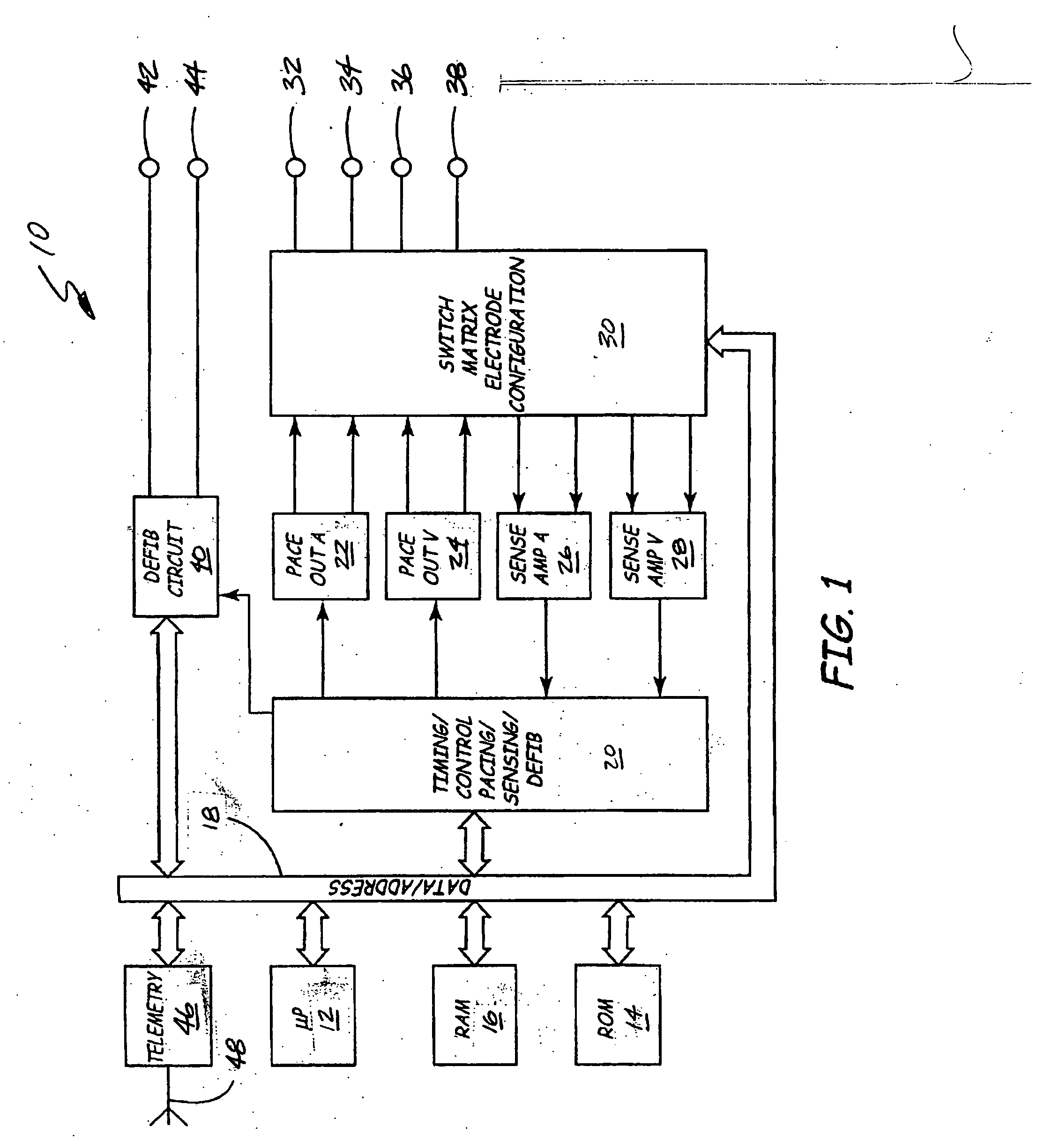
[0013]FIG. 1 is a block diagram of implantable cardioverter defibrillator (ICD) 10 that is configured to provide pacing and cardioversion / defibrillation therapy to the atria and ventricles of a patient's heart. ICD 10 senses electrical activity of the heart, and determines whether the atria and the ventricles are in normal sinus rhythm, or whether tachycardia or fibrillation of either the atria or the ventricles is occurring. Based upon the sensed electrical activity and stored programmed instructions, ICD 10 may provide anti-tachycardia pacing (ATP) therapy, cardioversion shocks, or defibrillation shocks.

[0014] ICD 10 includes microprocessor 12, read only memory (ROM) 14, random access memory (RAM) 16, data / address bus 18, timing / control circuitry 20, atrial pacing output circuit 22, ventricular pacing output circuit 24, atrial sense amplifier 26, ventricular sense amplifier 28, switch matrix 30, atrial pace / sense electrodes 32 and 34, ventricular pace / sense electrodes 36 and 38, ...