
Trailer stabilizing device
a technology for stabilizing devices and trailers, which is applied in the direction of vehicle maintenance, vehicle with living accommodation, transportation and packaging, etc. it can solve the problems of inconvenience for users to place their hands, complicated other known stabilizers, and limited stroke length, etc., and achieves the effect of greater stability
- Summary
- Abstract
- Description
- Claims
- Application Information
AI Technical Summary
Benefits of technology
Problems solved by technology
Method used
Image

Examples
Embodiment Construction
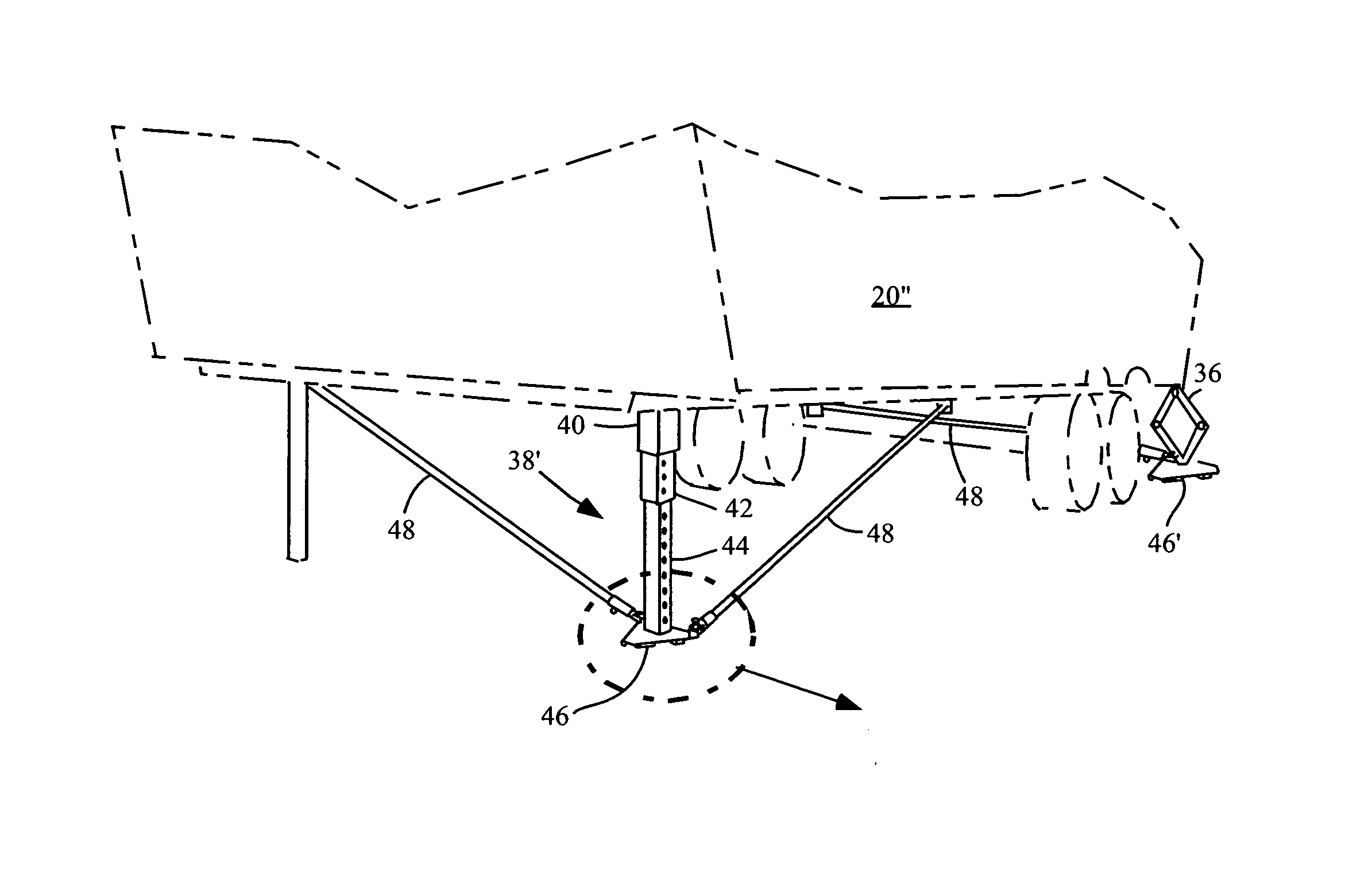
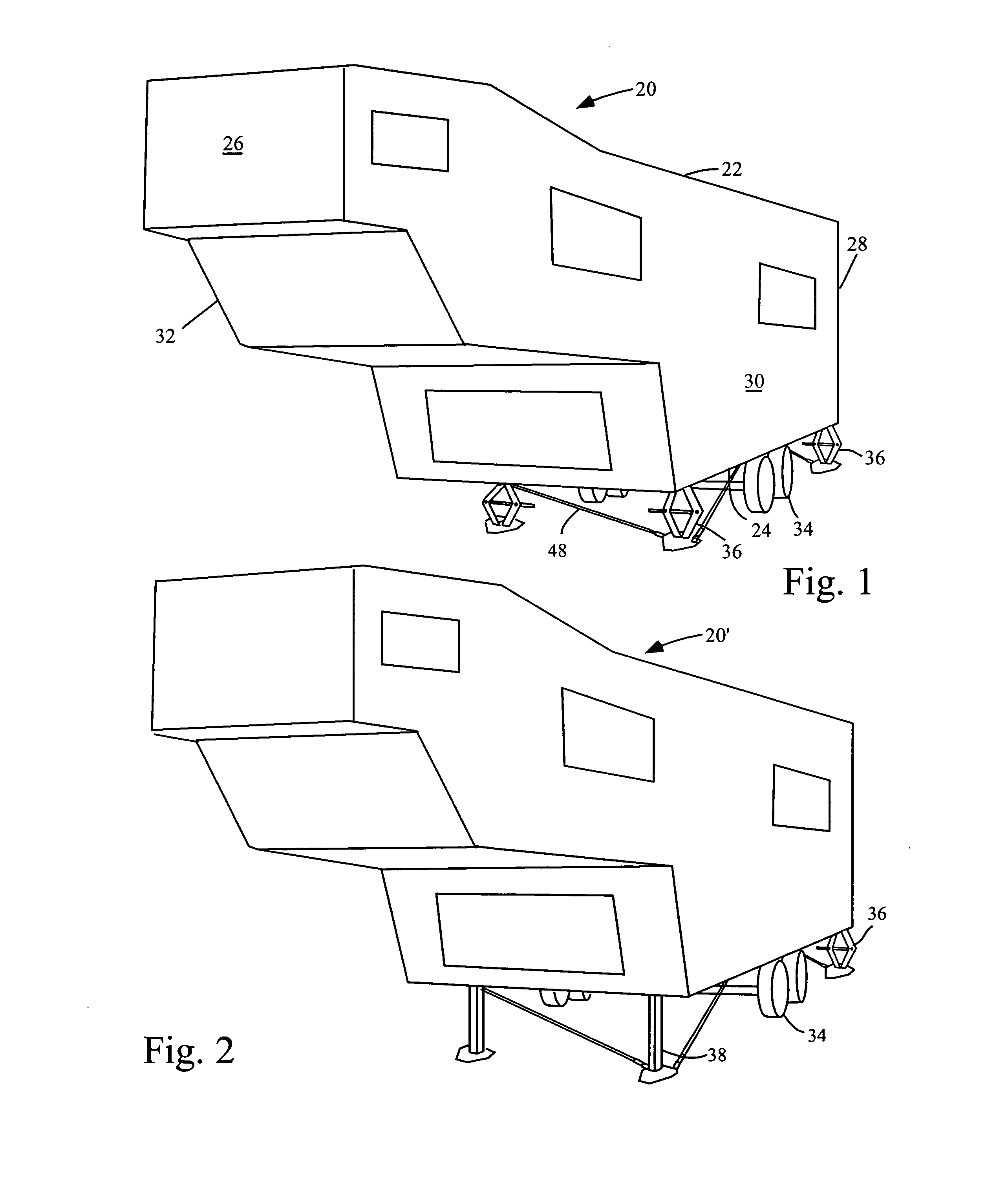
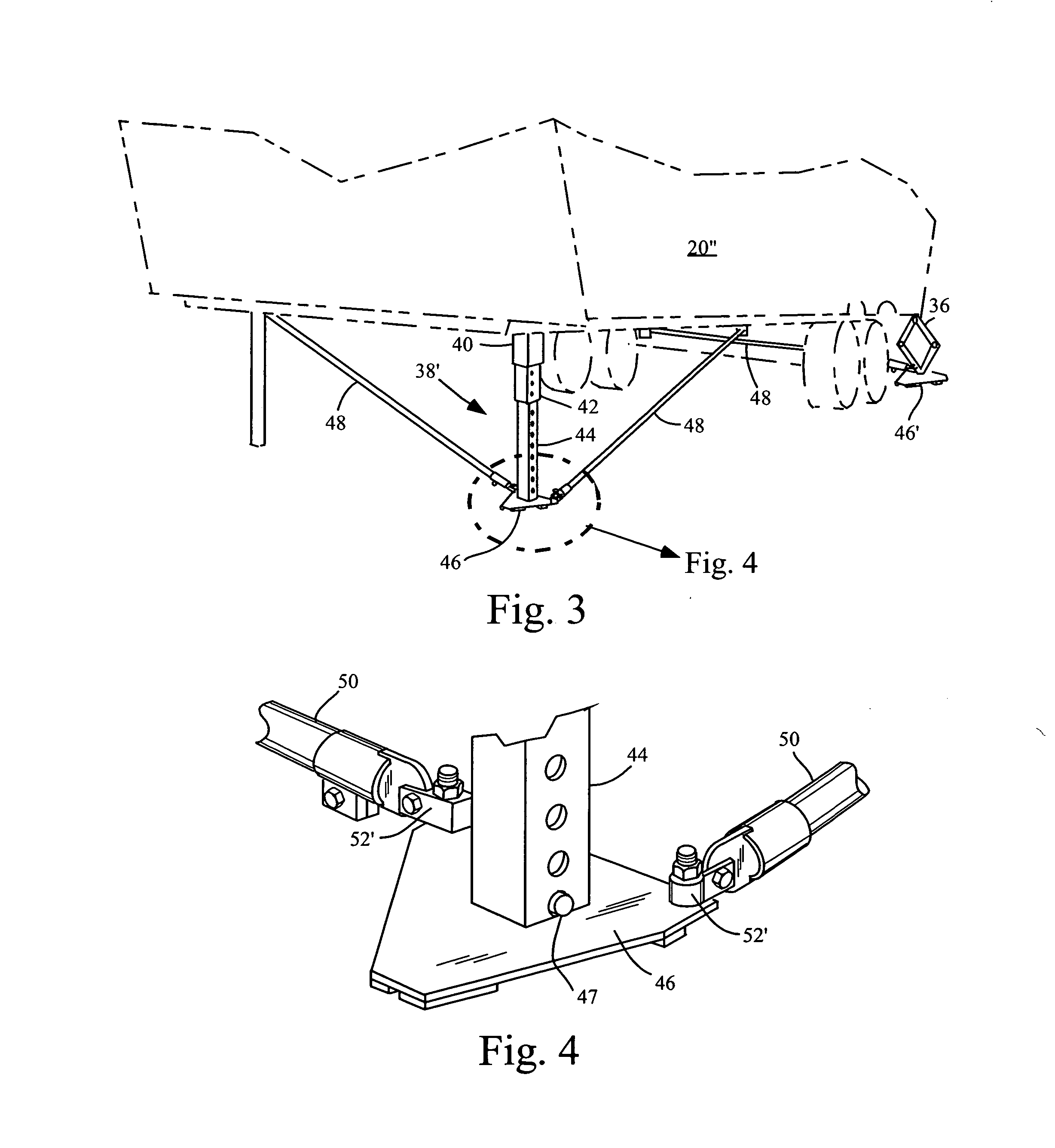
[0026] Referring now specifically to the drawings, FIG. 1 shows a schematic of a trailer 20 with an embodiment of the stabilizing device installed. The trailer 20 is of the type having a top 22 and a bottom 24 defining a vertical axis, a front 26 and a back 28 defining a longitudinal axis, a first side 30 and a second side 32 defining a transverse axis perpendicular to the longitudinal axis, and ground engaging wheels 34 attached to the bottom 24. As shown in FIG. 1, scissor jacks 36 may be a component of this embodiment. Many trailers 20 come pre-equipped with leveling mechanisms of various types, including scissor jacks 36, which are attached to the bottom 24 of the trailer 20. Other leveling mechanisms may include mechanically, hydraulically, pneumatically, and electrically actuated jacks. The leveling mechanisms are employed to bring the trailer to a relatively level orientation for the comfort of those inside. However, the leveling mechanisms are generally not sufficient on the...
PUM
 Login to View More
 Abstract
Description
Claims
Application Information
 Login to View More