Stereoscopic 3D-video image digital decoding system and method

US20070041444A1Inactive Publication Date: 2007-02-22TDVISION CORP SA DE CV

Patent Information

Authority / Receiving Office
US Ā· United States
Current Assignee / Owner
TDVISION CORP SA DE CV
Publication Date
2007-02-22
Estimated Expiration
Not applicable Ā· inactive patent

Smart Images

  • Figure 1
    Figure 1
  • Figure 2
    Figure 2
  • Figure 3
    Figure 3
Patent Text Reader

Abstract

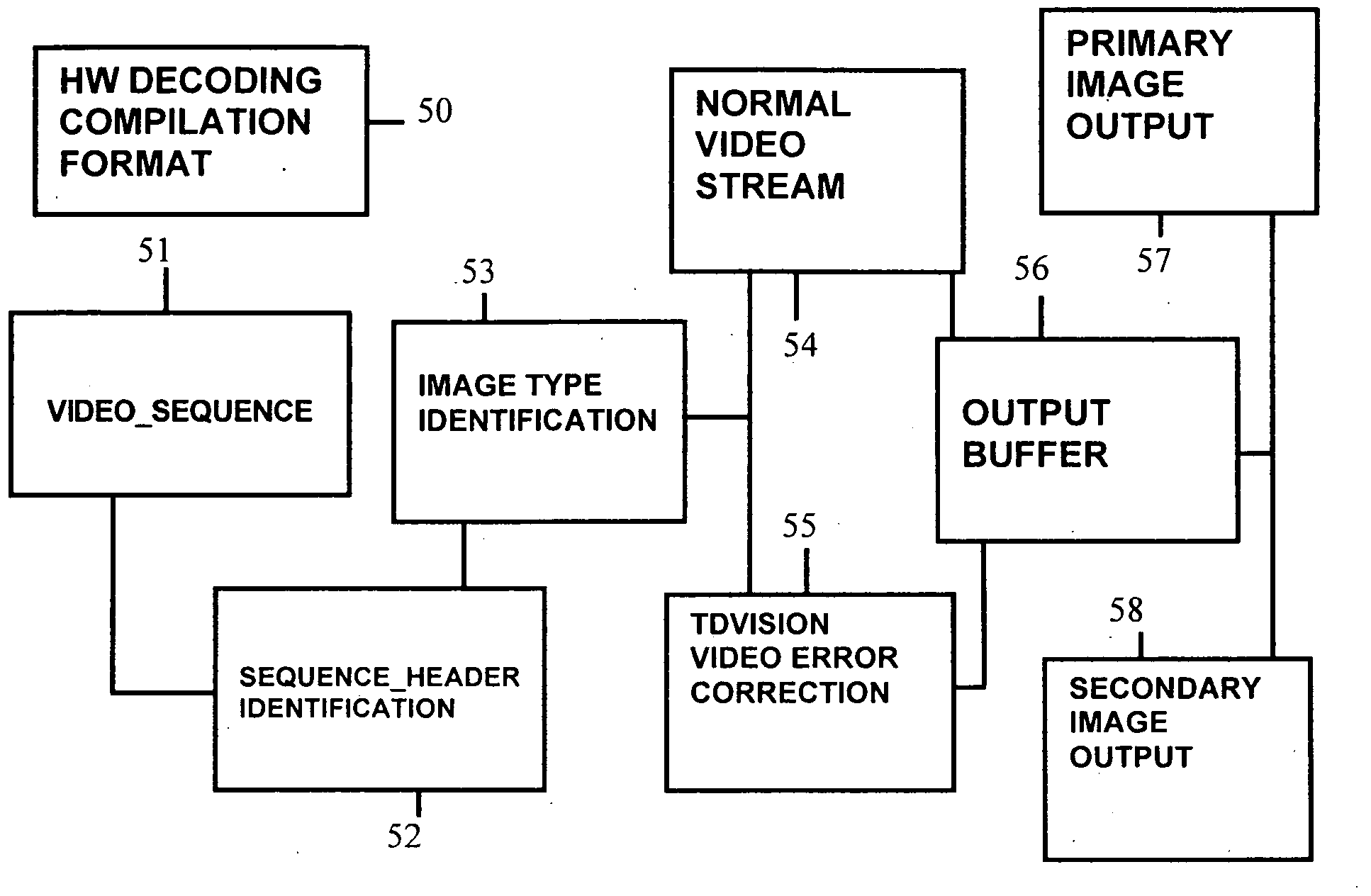
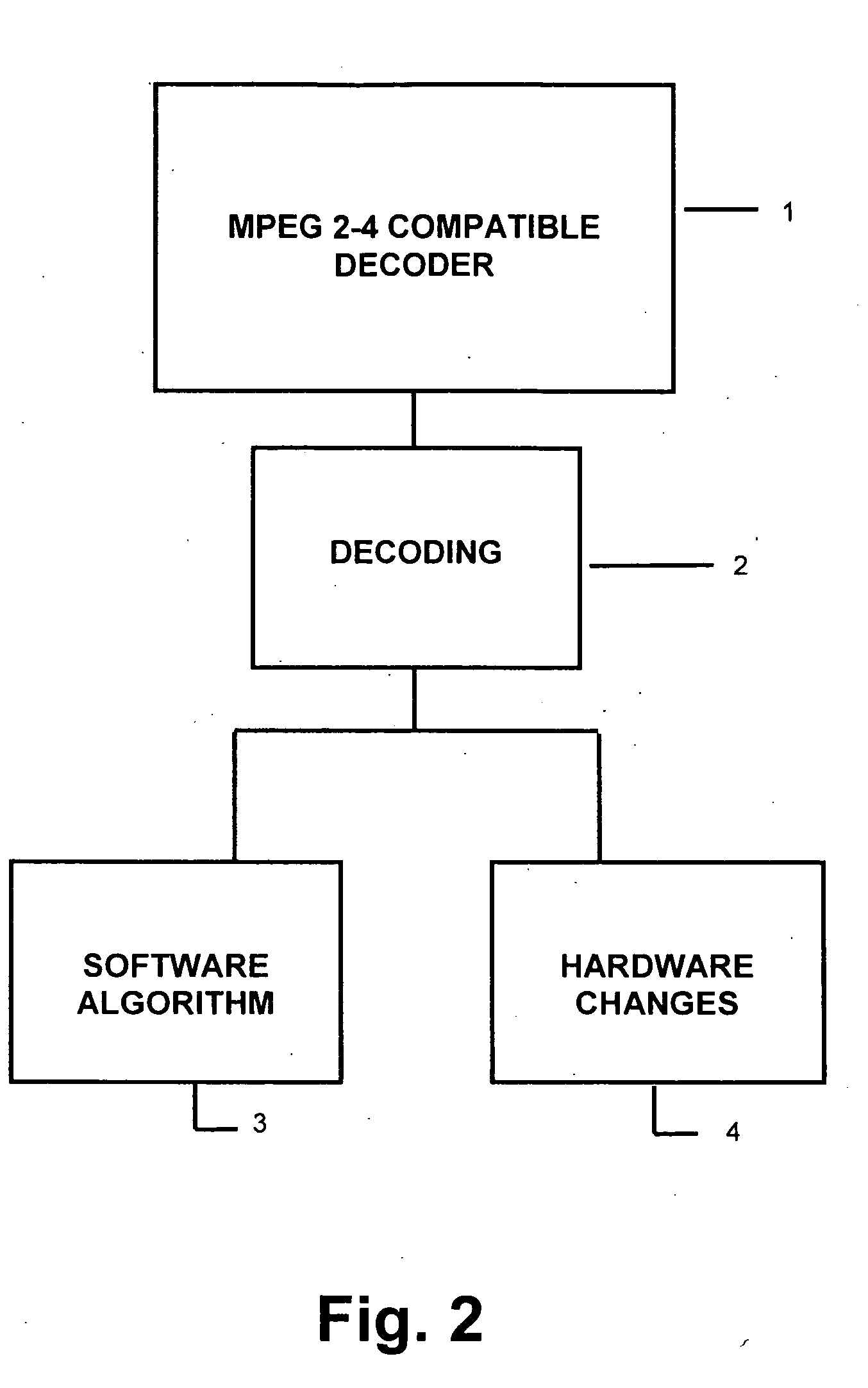
Described herein is a MPEG-2 compatible stereoscopic 3D-video image digital decoding method and system. In order to obtain 3D-images from a digital video stream, modifications are made to the current MPEG2 decoders, by means of software and hardware changes in different parts of the decoding process. Namely, the video_sequence structures of the video data stream are modified via software to include the necessary flags at the bit level of the image type in the TDVisionĀ® technology. Modifications are also made in the decoding processes as well as in decoding the information via software and hardware, wherein a double output buffer is activated, a parallel and difference decoding selector is activated, the decompression process is executed, the corresponding output buffer is displayed; and the decoder is programmed via software to simultaneously receive and decode two independent program streams, each with an TDVisionĀ® stereoscopic identifier.
Need to check novelty before this filing date? Find Prior Art

Description

CROSS-REFERENCE TO RELATED APPLICATION

[0001] This application is a continuation of PCT Application No: PCT / MX2004 / 000012 filed on Feb. 27, 2004 in the Spanish language.FIELD OF THE INVENTION

[0002] The present invention is related to stereoscopic video image display in the 3DVisorĀ® device and, particularly, to a video image decoding method by means of a digital data compression system, which allows the storage of three-dimensional information by using standardized compression techniques. BACKGROUND OF THE INVENTION

[0003] Presently, data compression techniques are used in order to decrease the bits consumption in the representation of an image or a series of images. The standardization works were carried out by a group of experts of the International Standardization Organization. Presently, the methods are usually known as JPEG (Joint Photographic Expert Group), and MPEG (Moving Pictures Expert Group).

[0004] A common characteristic of these techniques is that the image blocks are ...

Claims

the structure of the environmentally friendly knitted fabric provided by the present invention; figure 2 Flow chart of the yarn wrapping machine for environmentally friendly knitted fabrics and storage devices; image 3 Is the parameter map of the yarn covering machine
Login to View More