
Enhanced bank card with lottery feature
a lottery and bank card technology, applied can solve the problems of high interest rates, large risk in the issuance of bank cards to customers, and high risk in the field of credit cards
- Summary
- Abstract
- Description
- Claims
- Application Information
AI Technical Summary
Problems solved by technology
Method used
Image

Examples
Embodiment Construction
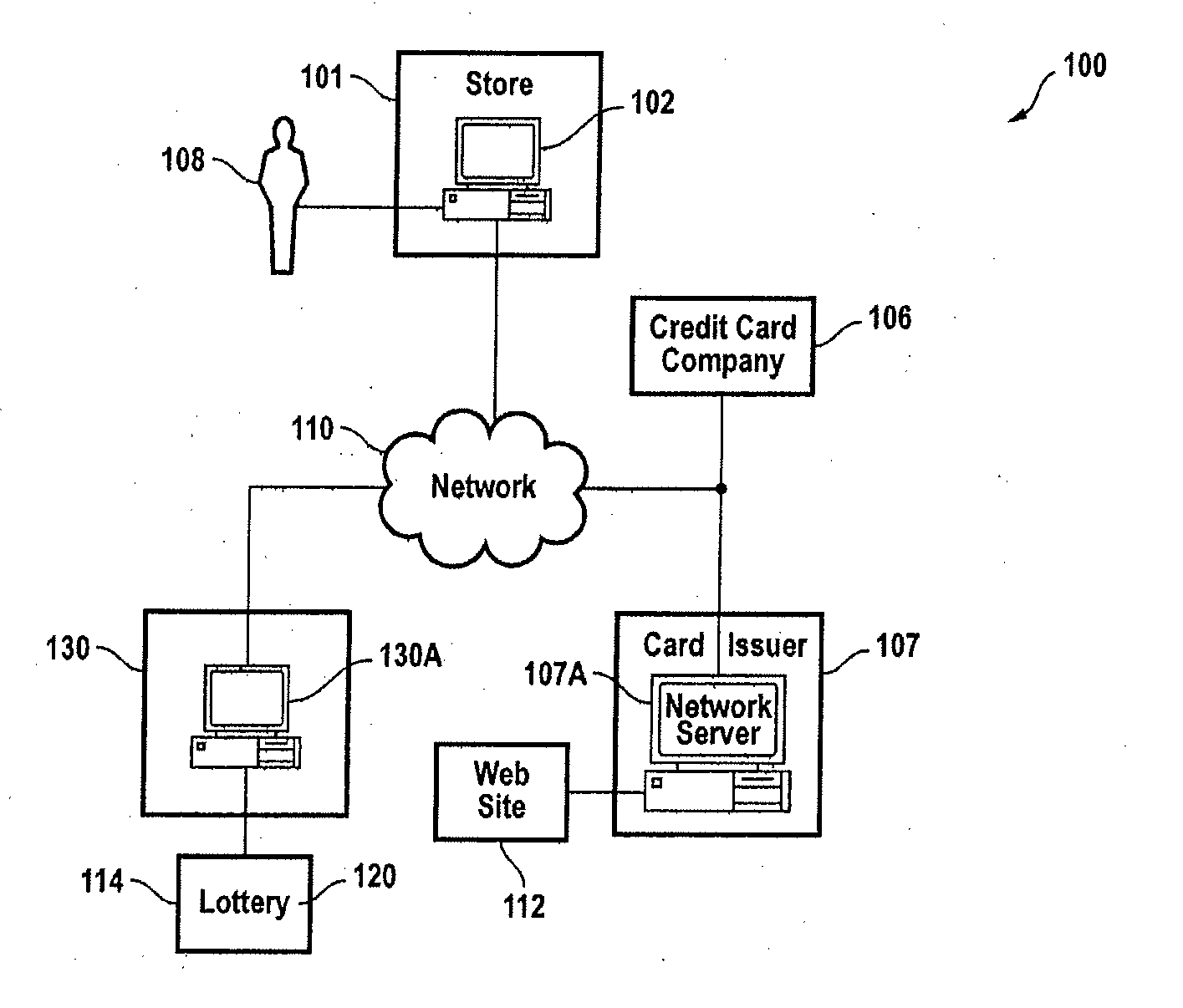
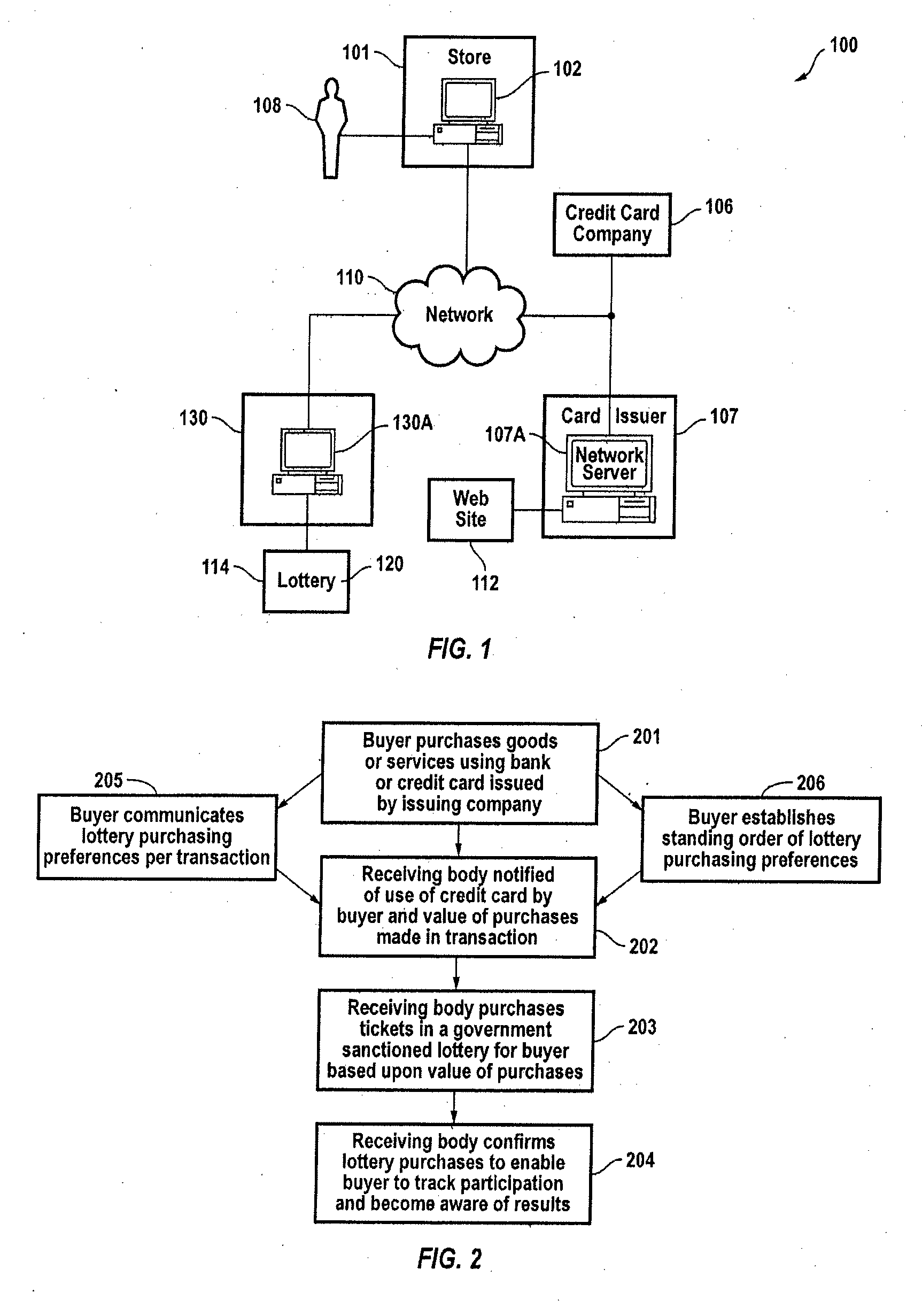
[0016] The present invention is intended to, in its preferred embodiment, take advantage of electronic commerce and employs various hardware and software implementations as disclosed in parent application Ser. No. 11 / 089,693, filed on Mar. 24, 2005, which issued as U.S. Pat. No. 7,168,616, the disclosure of which is incorporated by reference herein. The distributed electronic commerce environment contemplated for use herein includes a computer network system that links to one or more server computers and one or more client computers, as well as server computers networked to other service computers and client computers to other client computers. The client servers and server computers include desktop personal computers, work station computers, mobile computers, portable computing devices, personal digital assistant (PDA) devices, or any other similar type of computing device. The steps of accessing, downloading and manipulating the data, as well as other aspects of the parent inventi...
PUM
 Login to View More
 Abstract
Description
Claims
Application Information
 Login to View More