
Dynamic Cellular Cognitive System
a cognitive system and dynamic technology, applied in the field of broadband wireless communications, can solve the problems of difficult to find the difficulty of finding the optimal solution for both the transmitter and the receiver, and the waste of resources by the secondary user, so as to reduce or eliminate interference, improve the computational complexity, and improve the effect of quality
- Summary
- Abstract
- Description
- Claims
- Application Information
AI Technical Summary
Benefits of technology
Problems solved by technology
Method used
Image

Examples
Embodiment Construction
[0019]Cognitive Radio (CR) technology is well understood in the art. U.S. Pat. No. 7,289,972 to Reiser, which is herein incorporated by reference, describes CR technology and algorithm's used to adapt a wireless radio to a changing environment. Self organizing networks are also known in the art. U.S. Pat. No. 7,171,476 to Maeda, which is herein incorporated by reference, describes an example of self-organization of a number of nodes. The use of CR based wireless communications in dynamic access networks is also understood in the art. U.S. Patent Publication 2008 / 0089306 to Hu, which is herein incorporated by reference describes an exemplary method of addressing inter-systems (cells) communications for coexistence and spectrum sharing. The invention builds on these and other technologies.
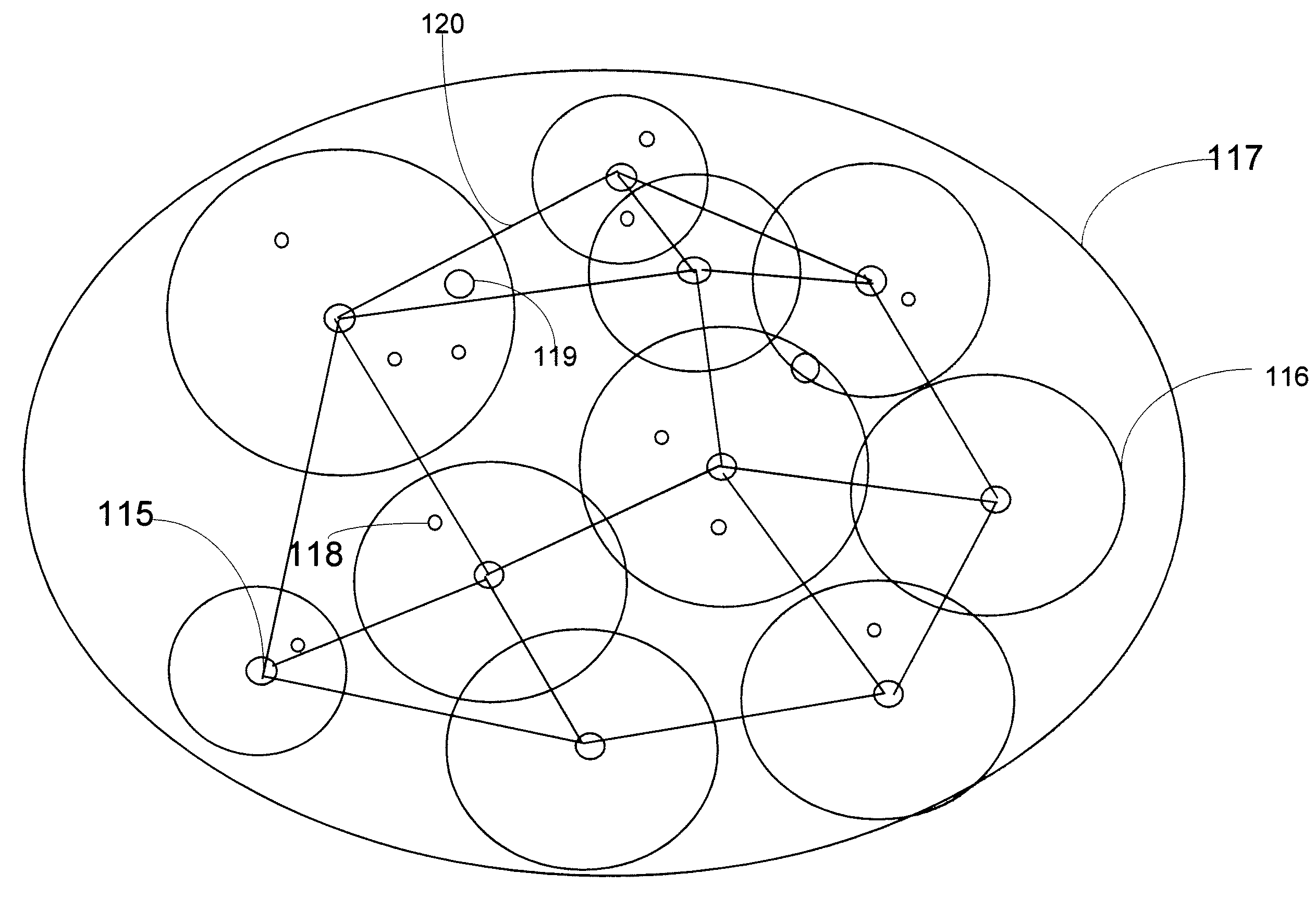
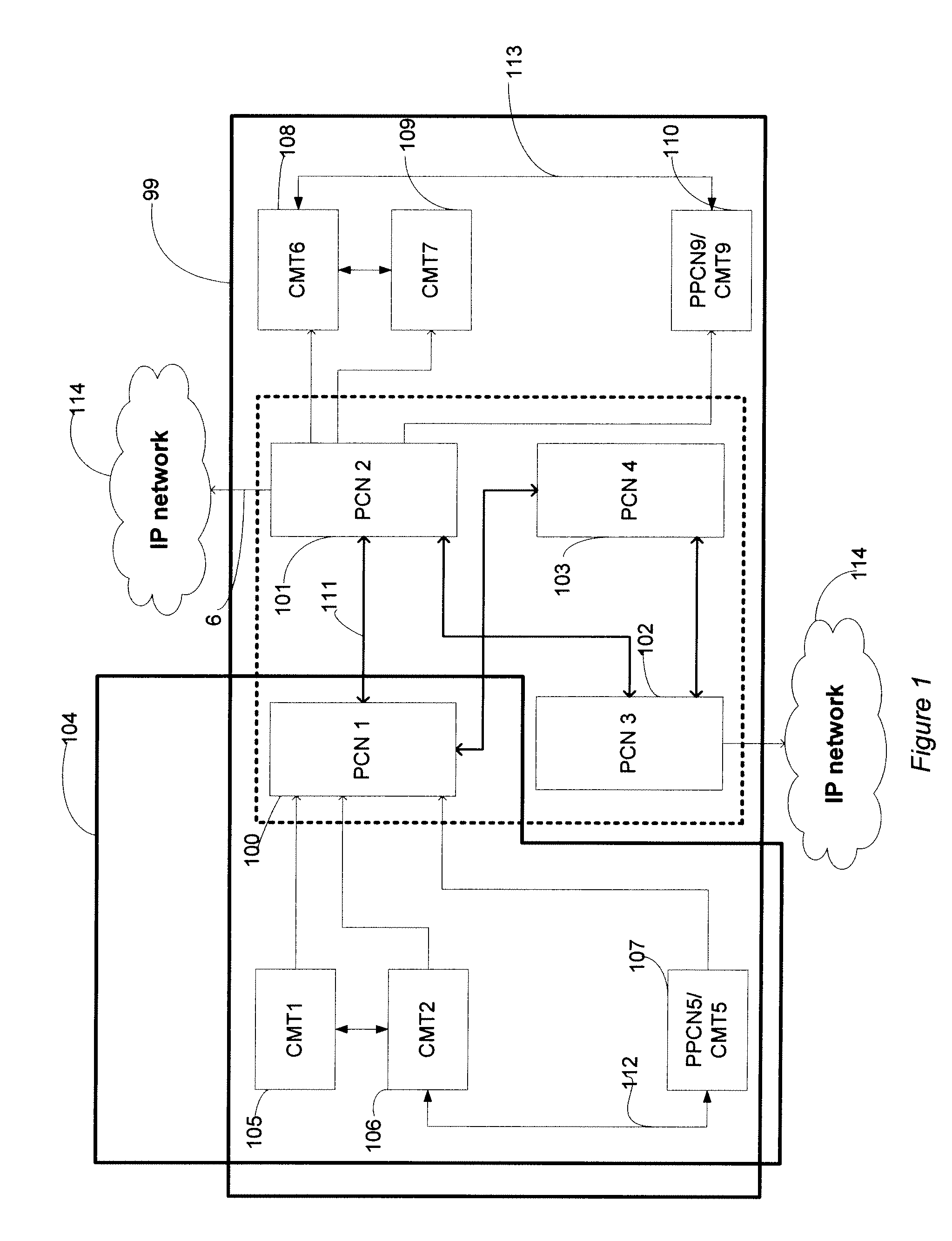
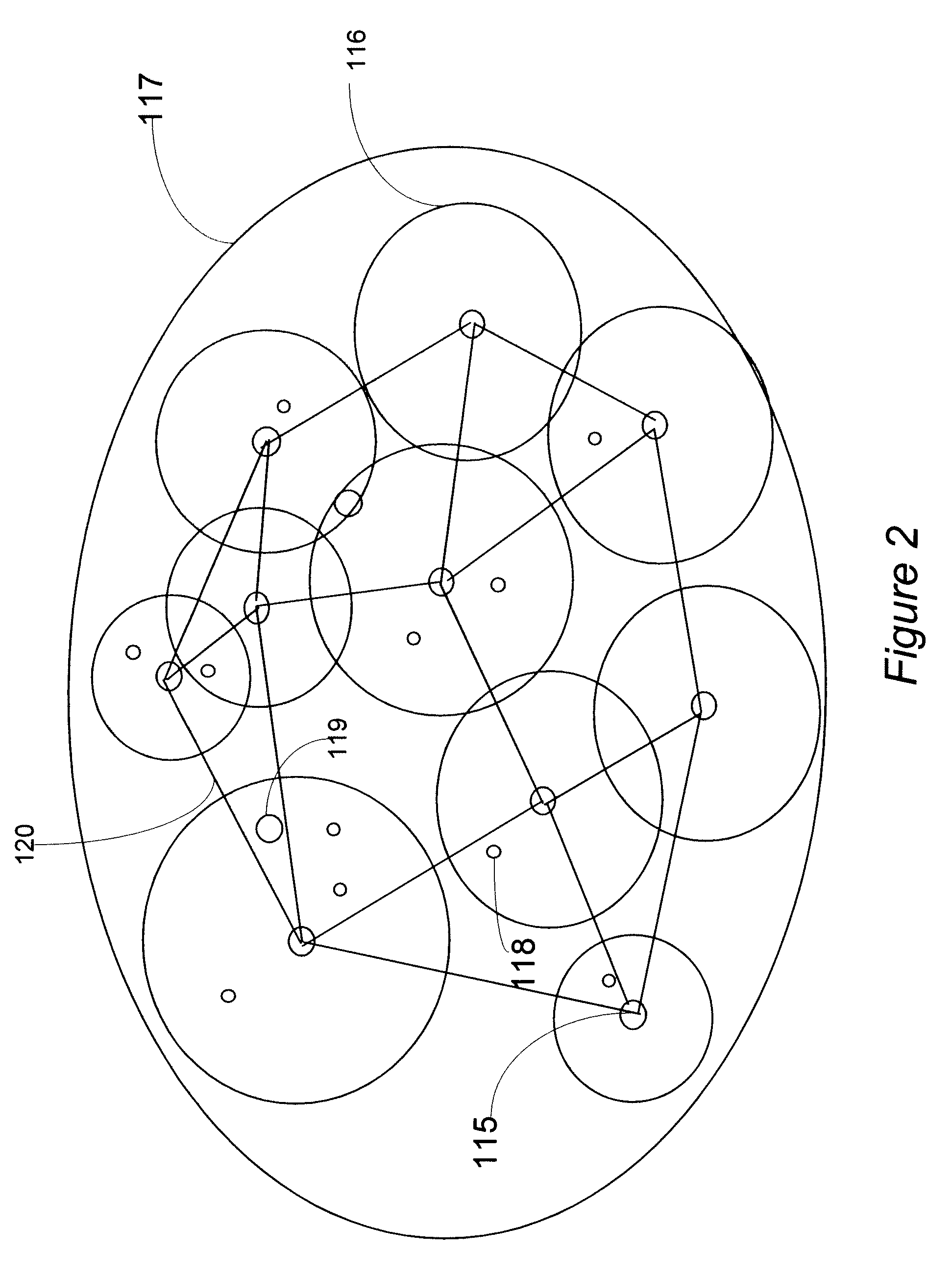
[0020]FIG. 1 shows an example of the implementation of a cognitive radio network according to the invention. When the infrastructure of an IP network is not available, cognitive radios (CR) collabora...
PUM
 Login to View More
 Abstract
Description
Claims
Application Information
 Login to View More