Seamless integration of multiple computing environments

a technology of computing environment and seamless integration, applied in the direction of software simulation/interpretation/emulation, program control, instruments, etc., can solve the problems of user inconvenience, poor user experience, and hugely complicated operations and workflows

US20090328033A1Active Publication Date: 2009-12-31MICROSOFT TECH LICENSING LLC
15 Cites 175 Cited by

Patent Information

Authority / Receiving Office
US · United States
Patent Type
Applications(United States)
Current Assignee / Owner
Publication Date
2009-12-31

Smart Images

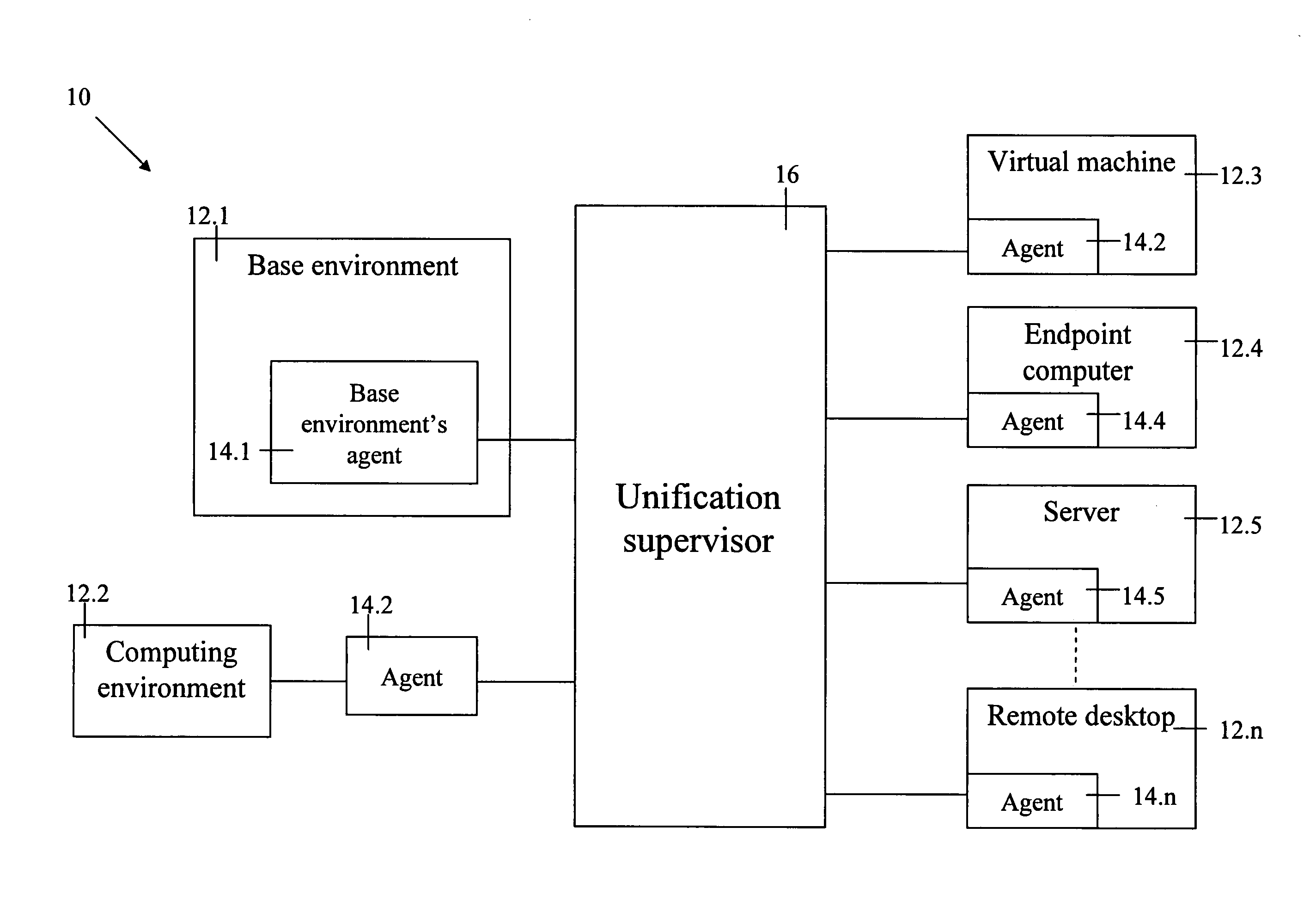
  • Figure 1
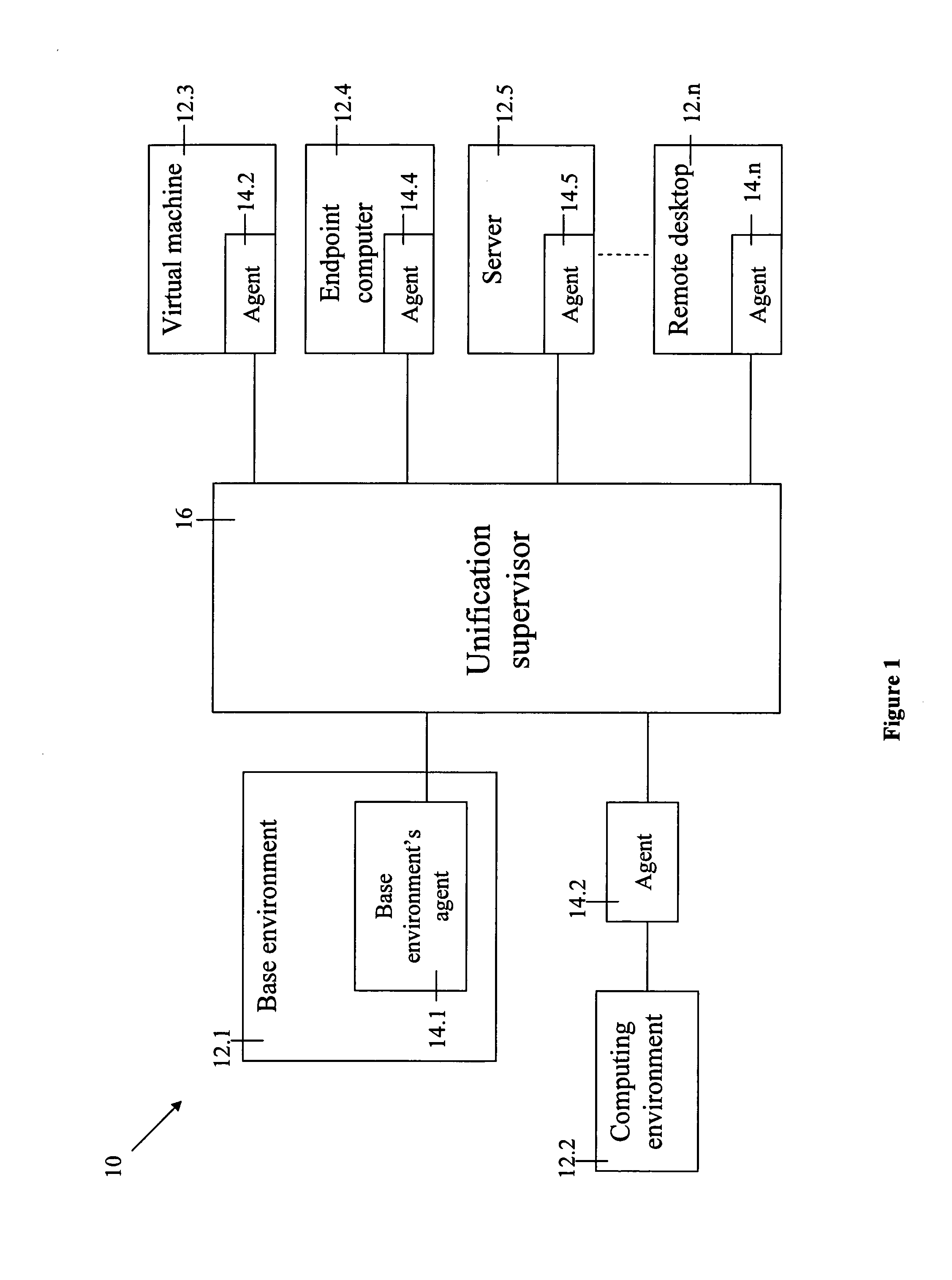
    Figure 1
  • Figure 2
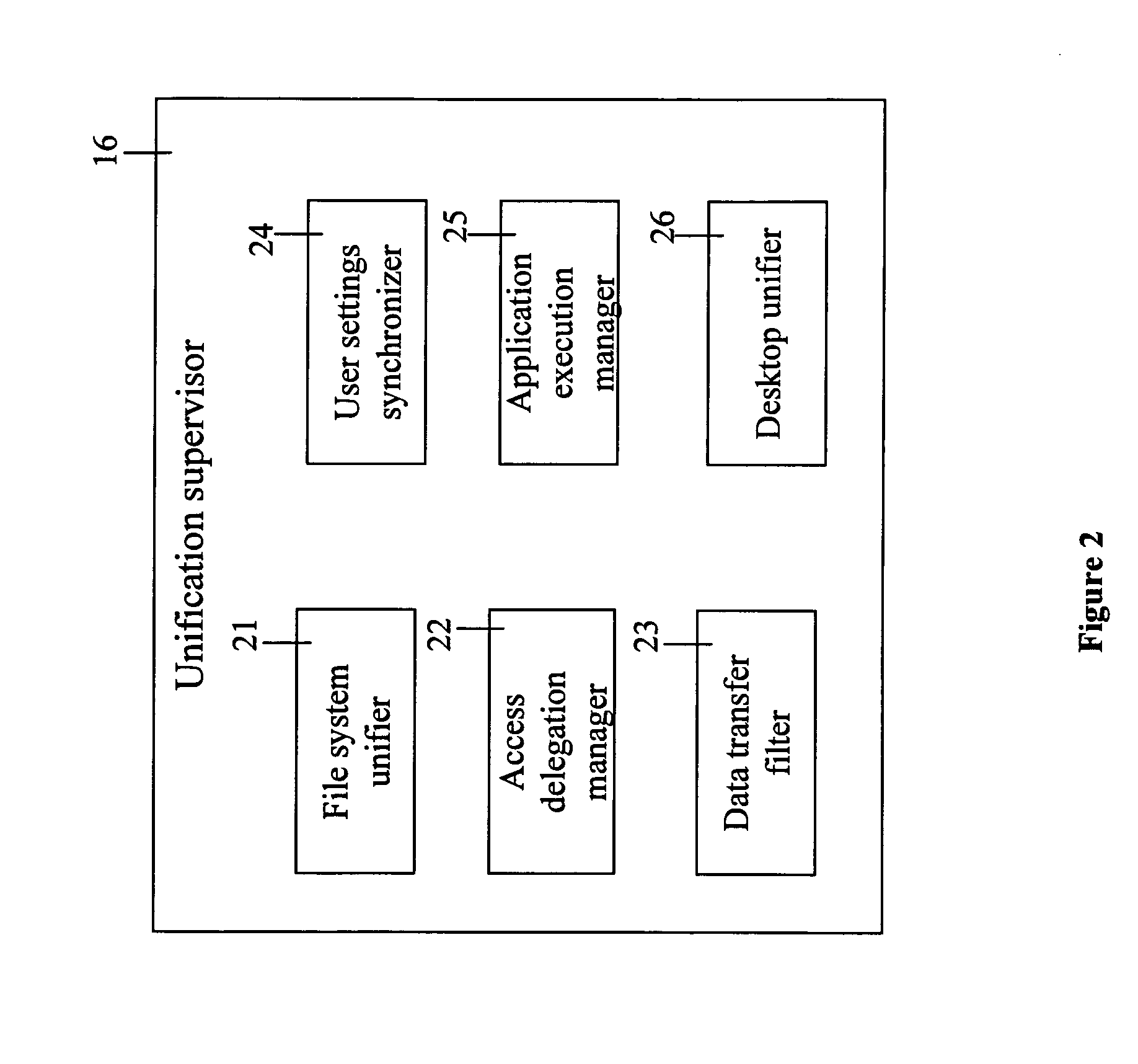
    Figure 2
  • Figure 3
    Figure 3
Patent Text Reader

Abstract

A unification system for integrating multiple computing environments, which are available for simultaneous use by a single user, into a base environment includes a unification supervisor and a plurality of agents, where each agent is associated with a respective computing environment. The unification supervisor monitors information received from the agents regarding the multiple computing environments, and performs centralized direction of the computing environments in accordance with the received information. The centralized direction serves to incorporate the other computing environments into the base environment, and may be guided by policies designed to provide the user with a unified environment. The unification supervisor also issues instructions to the various agents. Each of the agents provides information regarding a respective computing environment to the unification supervisor, and may also manage the respective computing environment as directed by the unification supervisor. The base environment is typically the user's endpoint work environment.
Need to check novelty before this filing date? Find Prior Art

Description

FIELD AND BACKGROUND OF THE INVENTION

[0001] The present invention relates to providing a user working in multiple computing environments with a single, unified environment, and more particularly but not exclusively to the seamless integration of multiple computing environments in an information technology (IT) infrastructure.

[0002] The growing complexity and variations in the deployment of computing environments in the modern IT infrastructure have created the need to enable a single user to work concurrently in multiple computing environments, each having different characteristics.

[0003] Examples of working within multiple computing environments include:

[0004] 1. The simultaneous use of applications running on different operating systems (such as Windows and Unix) or a different version of the same operating system (such as Windows 95 and Windows XP).

[0005] 2. The simultaneous use of applications that cannot coexist on the same environment, for instance because they use different versio...

Examples

examples

[0136]Reference is now made to the following examples, which, together with the above descriptions, illustrate the invention in a non-limiting fashion.

[0137]The following presents two exemplary embodiments. Each embodiment includes a subset of the components described above, to create a system that enables a user to concurrently work on multiple computing environments while transparently integrating them into a unified environment.

[0138]Reference is now made to FIG. 9, which is a simplified block diagram of an exemplary system that enables a user to access two computing environments, while providing transparent integration between those two environments.

[0139]In the present example, two computing environments are defined:[0140]1. Environment A 220 is an instance of operating system assigned to a physical workstation, and serves as the base environment (which provides the base desktop and base file system).[0141]2. Environment B 260 is a virtual environment, for the sake of example c...