
Thermal barrier coating material and method for production thereof, gas turbine member using the thermal barrier coating material, and gas turbine
a technology of thermal barrier coating and gas turbine, which is applied in the direction of superimposed coating process, machines/engines, mechanical equipment, etc., can solve the problems of increased thermal conductivity of topcoat, reduced peeling resistance, and increased cost of large-scale gas turbines or the like, so as to achieve adsorption and peeling resistance. high, the effect of high peeling resistan
- Summary
- Abstract
- Description
- Claims
- Application Information
AI Technical Summary
Benefits of technology
Problems solved by technology
Method used
Image

Examples
examples 1 to 15
[0116]The sample Nos. 1 to 15 described below were prepared.
(Sample No. 1)
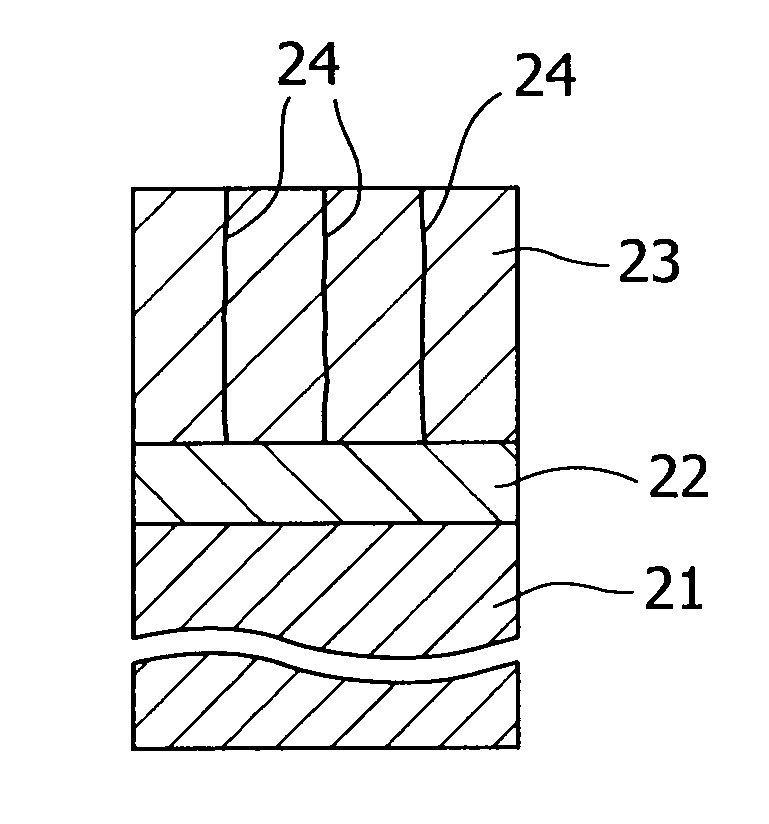
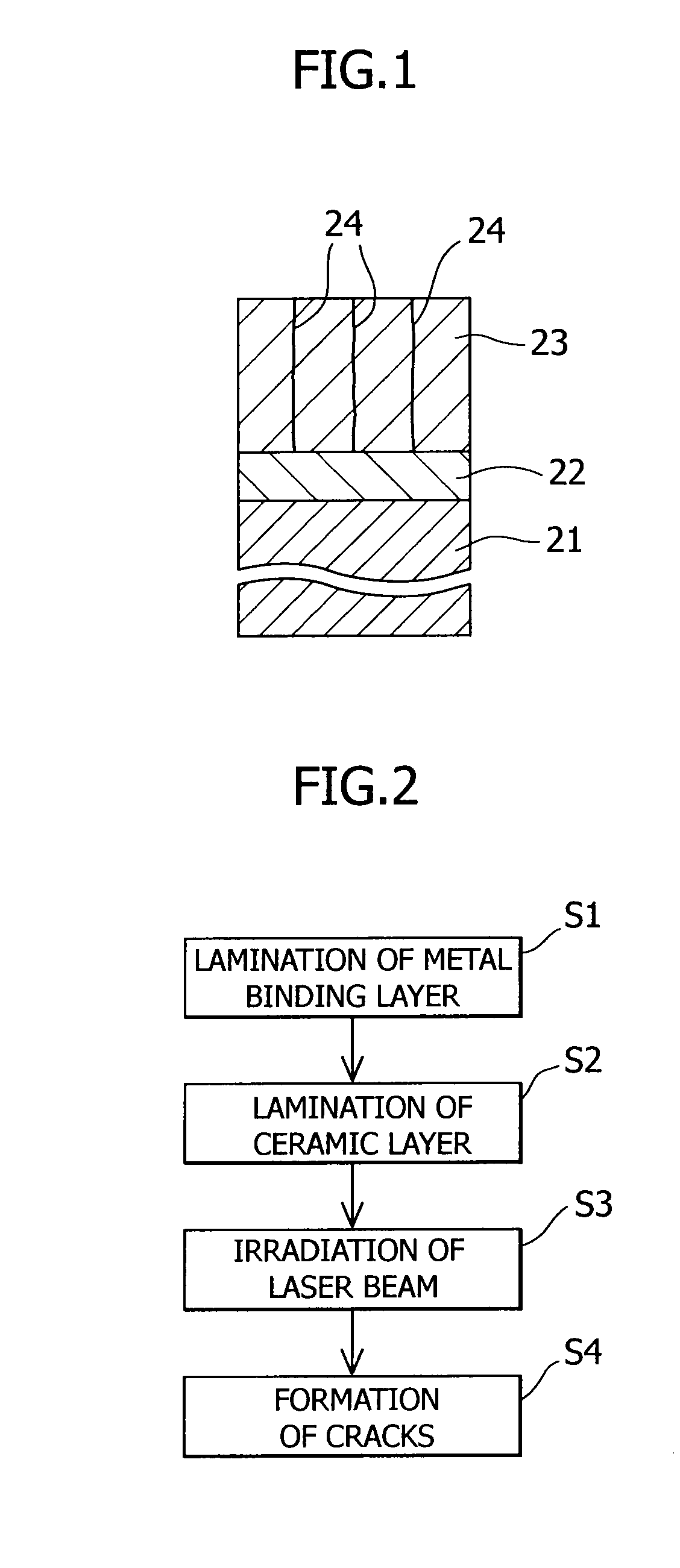
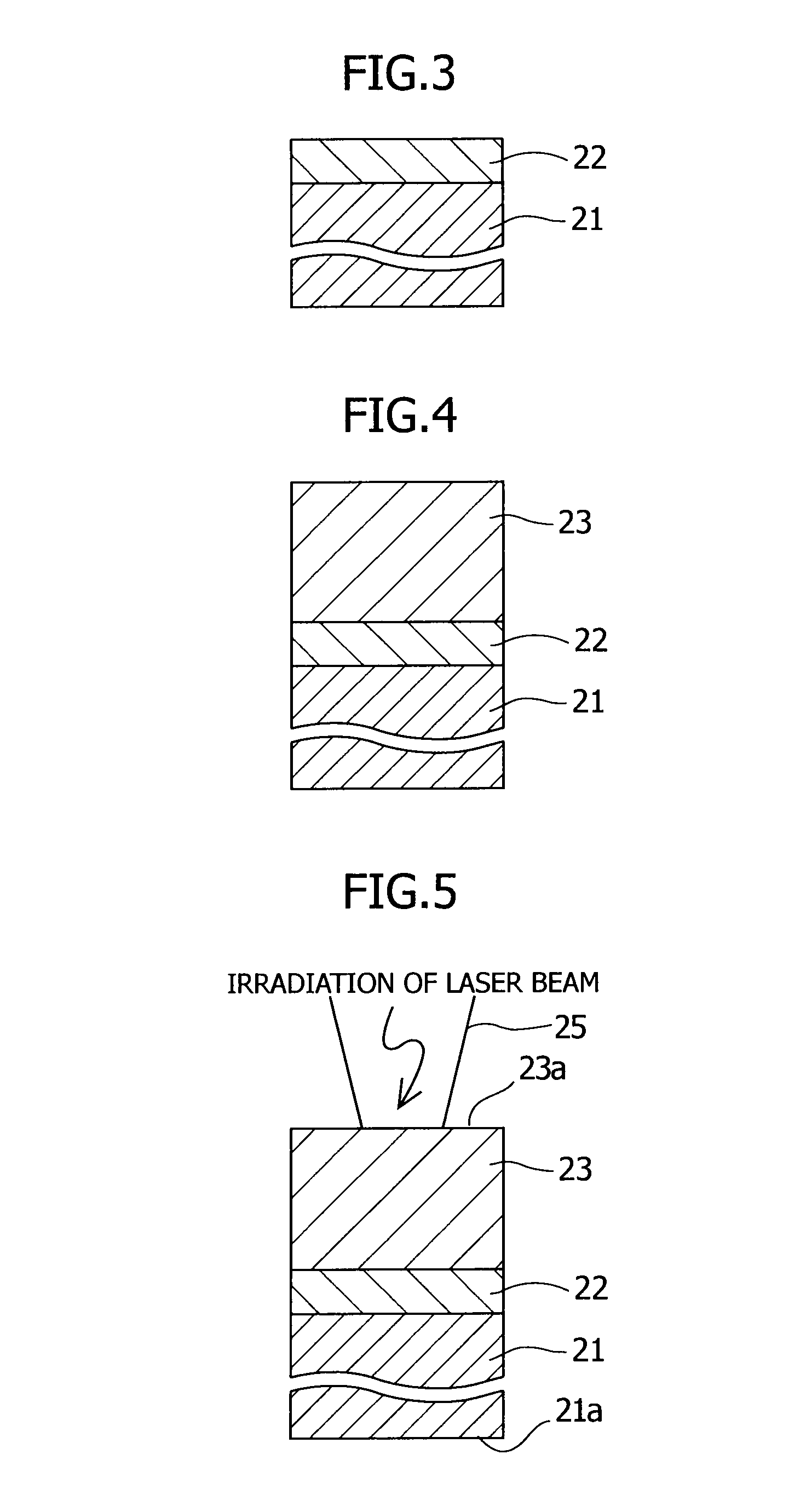
[0117]The surface of the base material was grid-blasted with Al2O3 particles and put in a state suitable for low pressure plasma spraying. A CoNiCrAlY alloy layer was then formed to a thickness of 0.1 mm by the low pressure plasma spraying. A ceramic layer comprising porous and partially stabilized ZrO2, which had been partially stabilized by 8 wt % of Y2O3 as an additive, was then formed to a thickness of 0.5 mm by atmospheric pressure plasma spraying. Then, while cooling the rear surface of the base material, the top surface of the ceramic layer was subject to 30 seconds×100 times of irradiations of a laser beam from a carbon dioxide laser. Thus, the heat cycle was repeated. In this process, the top surface of the ceramic layer was heated to a maximum temperature of 1400° C. The irradiation area per spot of the laser beam was 177 mm2 (beam diameter: 15 mm). The entire sample was then cooled to room temperatu...
examples 101 to 136
[0141]Sample Nos. 101 to 136, described below, were prepared.
(Sample No. 101)
[0142]The top surface of the base material was grid-blasted with Al2O3 grains and put in a state suitable for low pressure plasma spraying. A CoNiCrAlY alloy layer was then formed to a thickness of 0.1 mm by the low pressure plasma spraying. A ZrO2-10 wt % Dy2O3-0.1 wt % Yb2O3 layer was then formed to a thickness of 0.5 mm by atmospheric pressure plasma spraying.
(Sample No. 102)
[0143]The top surface of the base material was grid-blasted with Al2O3 grains and put in a state suitable for low pressure plasma spraying. A CoNiCrAlY alloy layer was then formed to a thickness of 0.1 mm by the low pressure plasma spraying. A ZrO2-10 wt % Dy2O3-6 wt % Yb2O3 layer was then formed to a thickness of 0.5 mm by atmospheric pressure plasma spraying.
(Sample No. 103)
[0144]The top surface of the base material was grid-blasted with Al2O3 grains and put in a state suitable for low pressure plasma spraying. A CoNiCrAlY alloy la...
PUM
| Property | Measurement | Unit |
|---|---|---|
| diameter | aaaaa | aaaaa |
| temperature | aaaaa | aaaaa |
| porosity | aaaaa | aaaaa |
Abstract
Description
Claims
Application Information
 Login to View More