
Iterative selection of pixel paths for content aware image resizing
a content-aware, image-based technology, applied in the field of content-aware digital image resizing, can solve the problems of image resizing, cropping and scaling, and image resizing, which does not take into account the content of the image, so as to avoid unnatural image resizing results
- Summary
- Abstract
- Description
- Claims
- Application Information
AI Technical Summary
Benefits of technology
Problems solved by technology
Method used
Image

Examples
Embodiment Construction
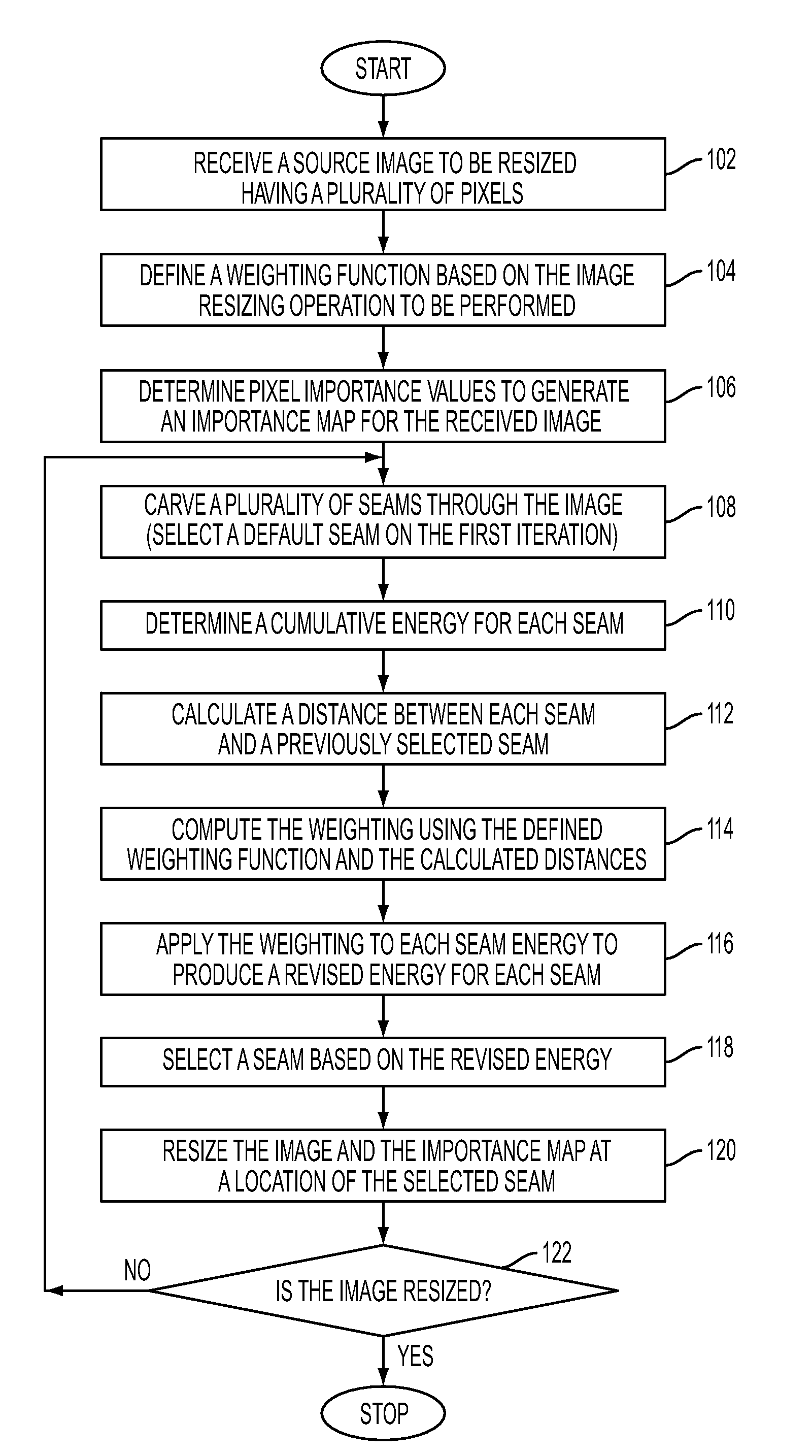
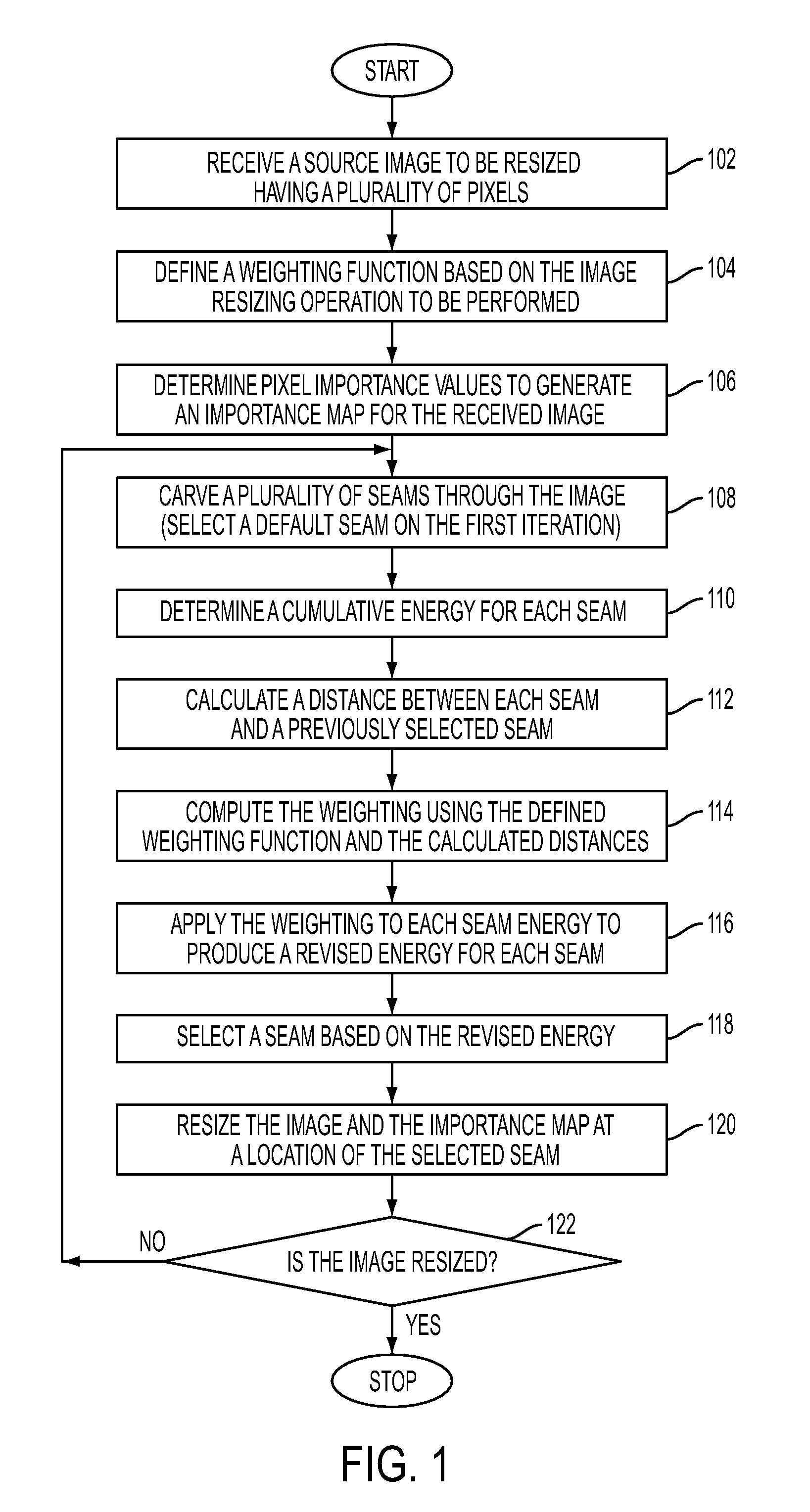
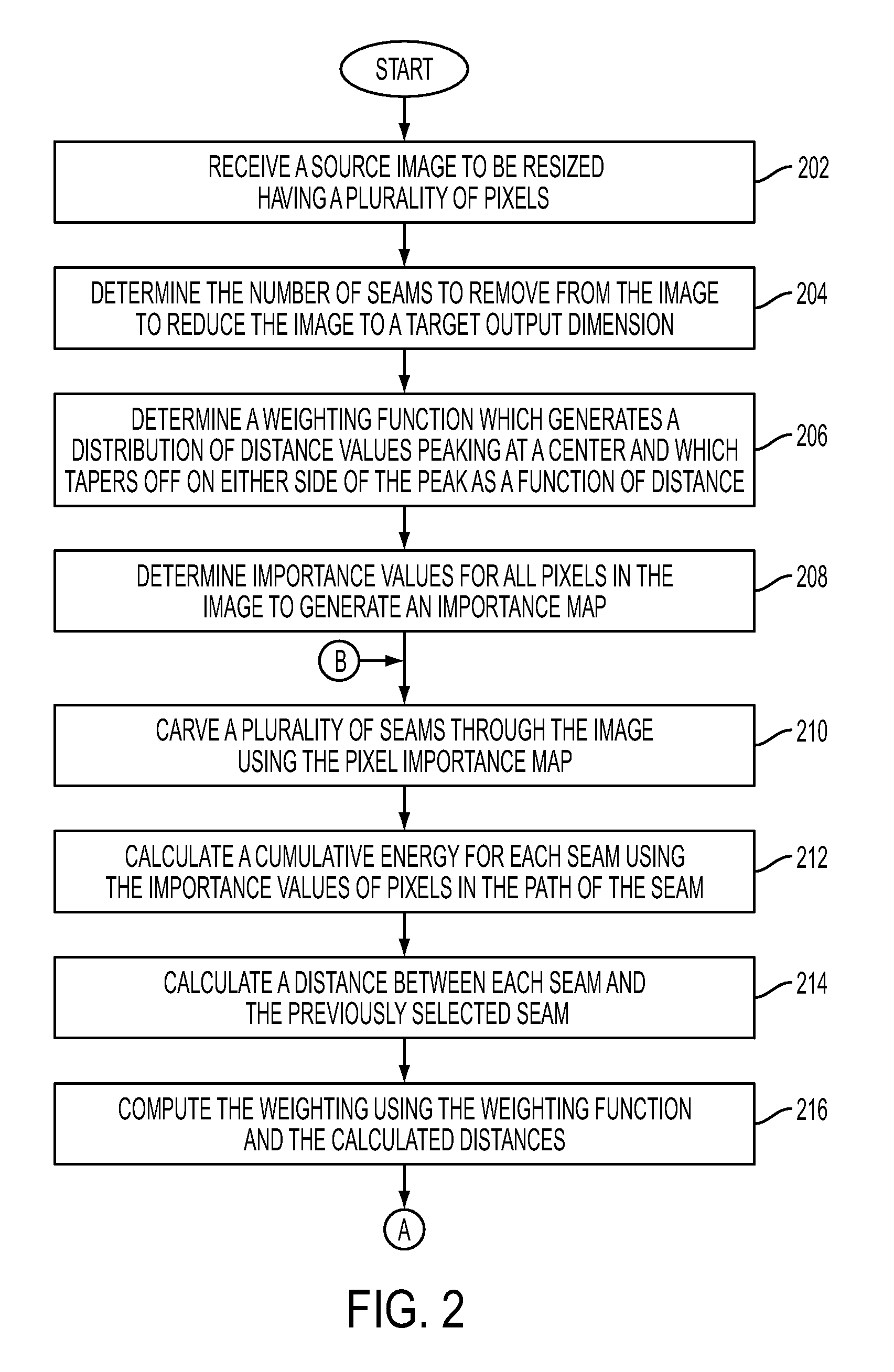
[0023]What is provided are a system and method for content-aware image resizing of digital images. Image reduction and / or enlargement are effectuated through a novel iterative seam selection method as described in detail herein.
[0024]It should be understood that one of ordinary skill in this art would be readily familiar with many facets of image processing such as image resizing, image operators, pixel importance values and importance maps for images, seam-carving techniques, and other algorithms and techniques common to the digital image resizing arts. Additionally, one of ordinary skill would be familiar with advanced mathematical techniques, equations, and algorithms common in this art. One of ordinary skill would also be knowledgeable about computer science and software and programming systems and methods sufficient to implement the functionality and capabilities described herein in their own hardware environments without undue experimentation.
[0025]A pixel, as used herein, ref...
PUM
 Login to View More
 Abstract
Description
Claims
Application Information
 Login to View More