
Flourescent dot counting in digital pathology images
a technology of fluorescent dots and digital pathology, applied in the field of image processing, can solve the problems of difficult separation of these two overlapped dots, and the blurred image boundaries of dots with relatively low image contrast, and achieve the effect of high sensitivity
- Summary
- Abstract
- Description
- Claims
- Application Information
AI Technical Summary
Benefits of technology
Problems solved by technology
Method used
Image

Examples
Embodiment Construction
[0014]A novel dot counting algorithm for fluorescence in situ hybridization (FISH) enables detection of overlapped dots in an image.
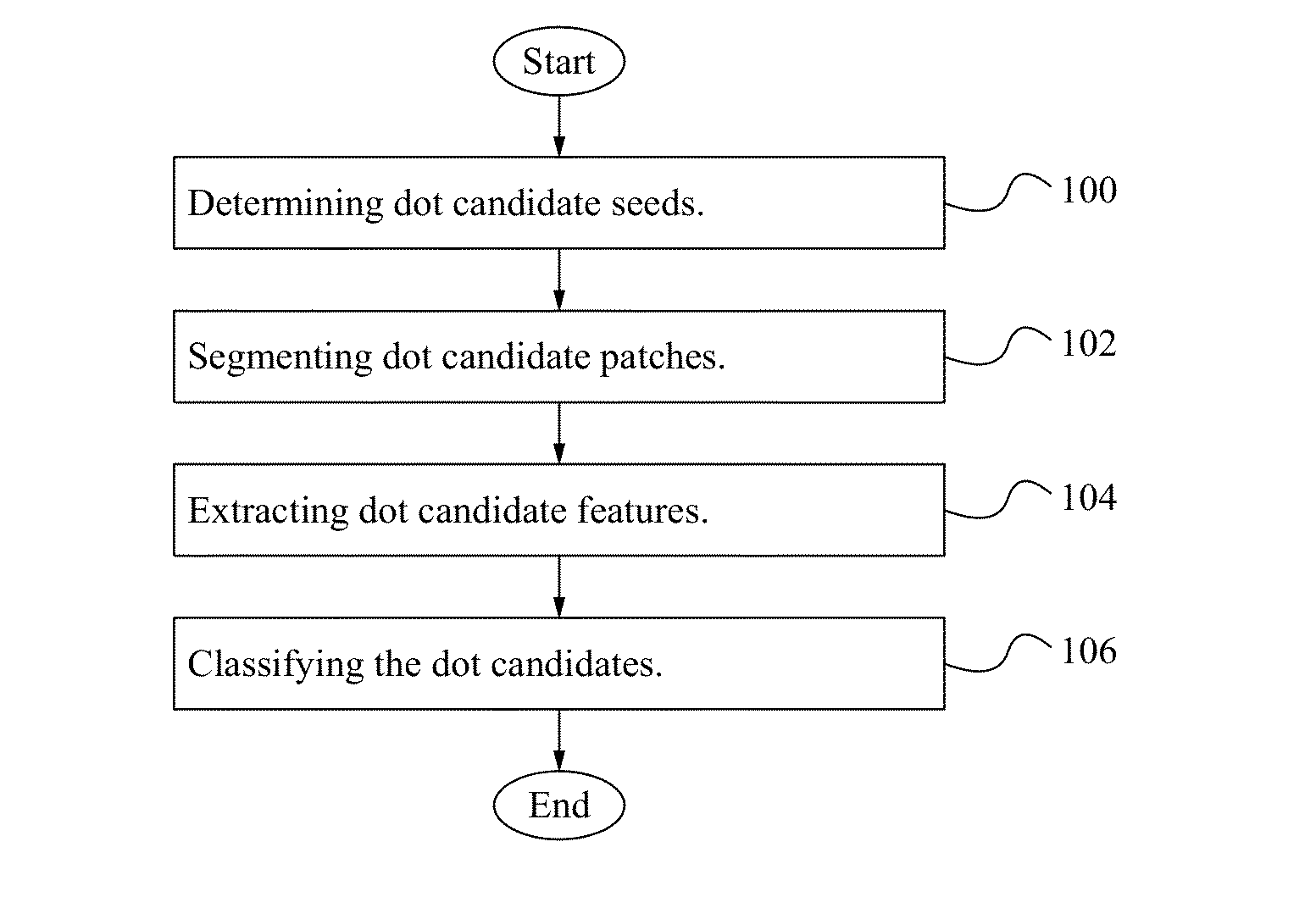
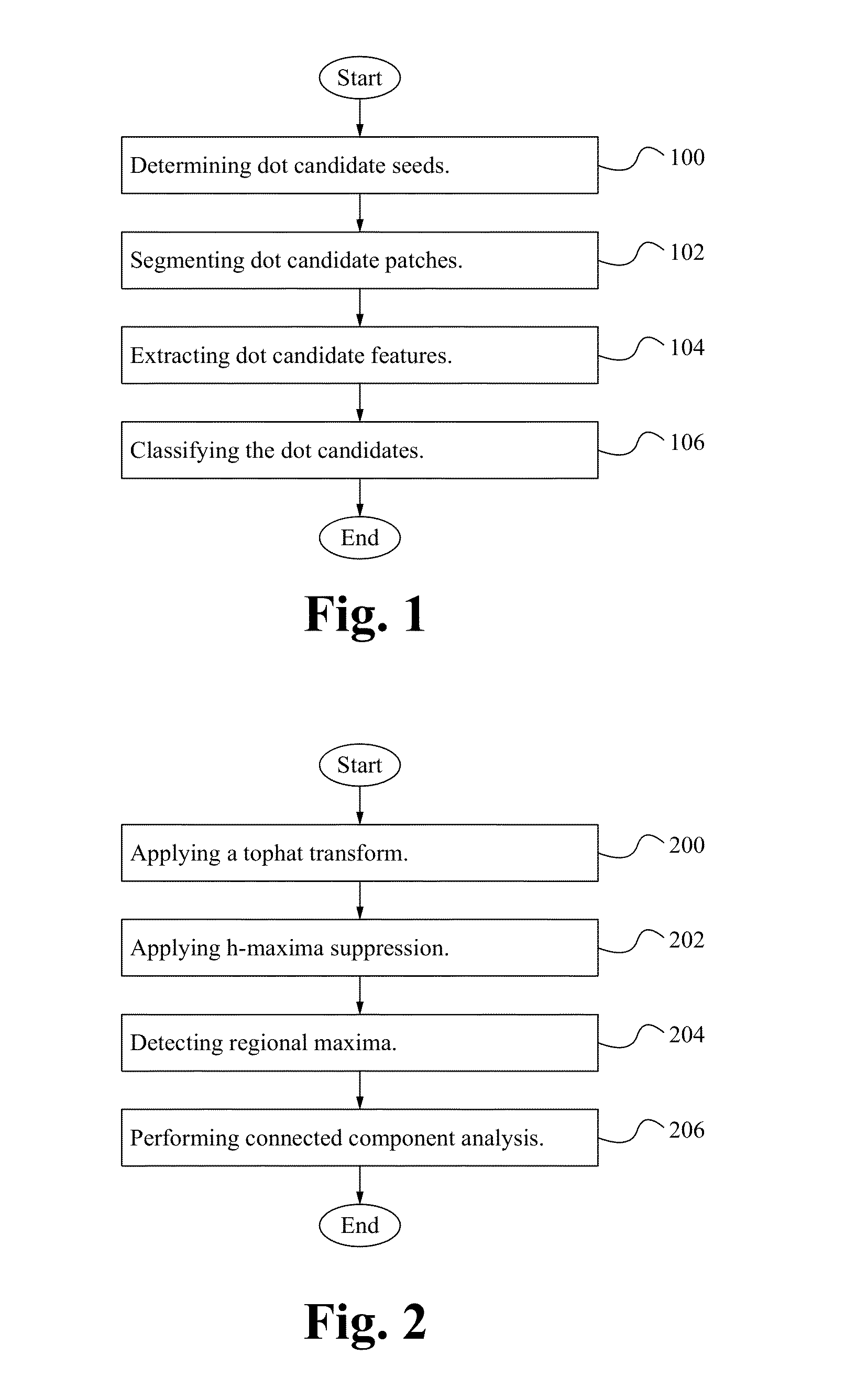
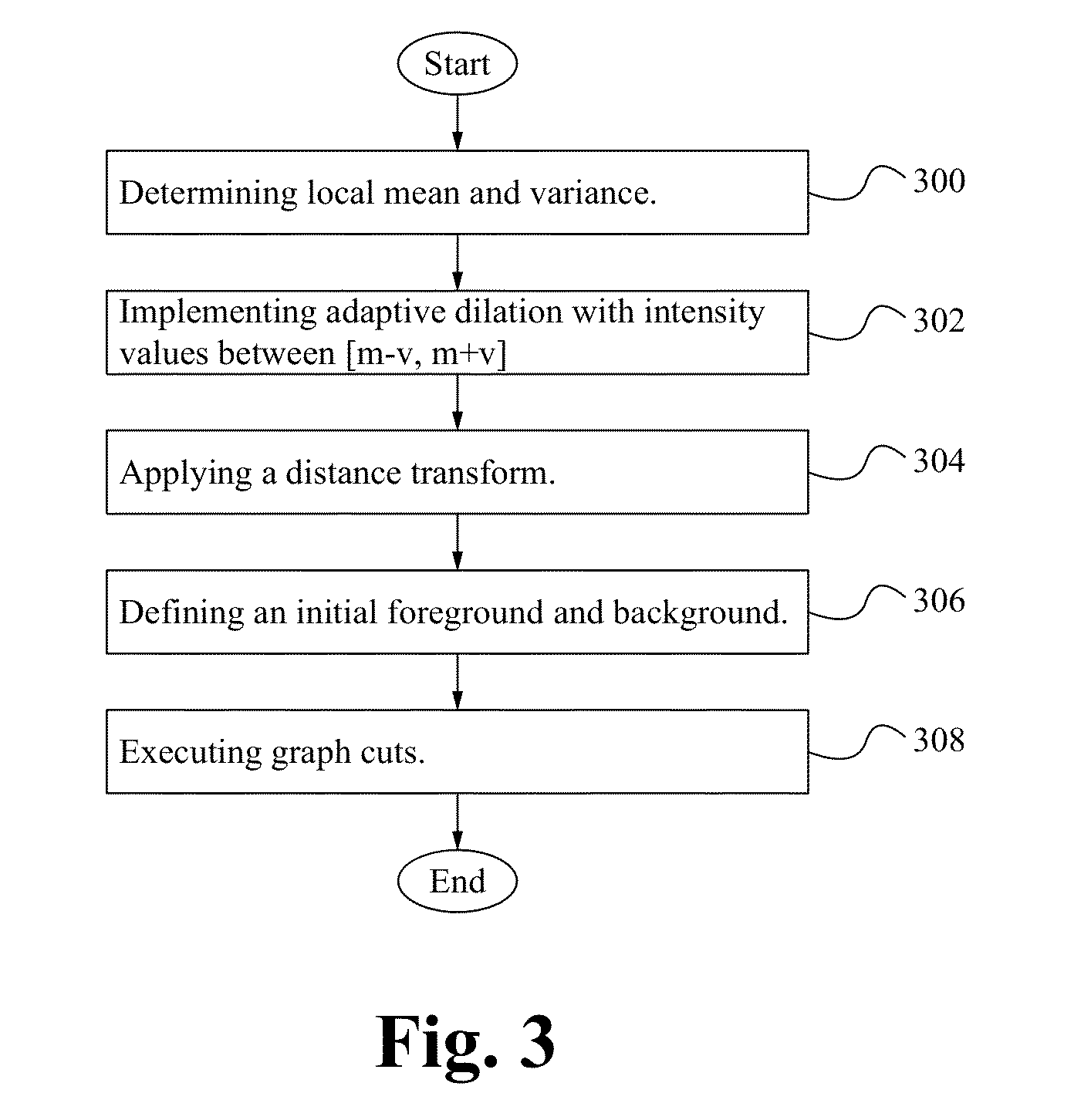
[0015]FIG. 1 illustrates a flowchart of a method of implementing FISH according to some embodiments. In the step 100, dot candidate seeds are determined. Determining the dot candidate seeds includes applying a tophat transform to the image to extract small elements from the image; suppressing maxima; detecting regional maxima and connected component analysis is performed. In the step 102, dot candidate patches are segmented. Segmenting dot candidate patches includes determining a local mean (m) and variance (v); implementing adaptive dilation with intensity values between [m−v, m+v]; applying a distance transform; defining an initial foreground and background and executing graph cuts. In the step 104, dot candidate features are extracted. The features of dot candidates are extracted as shown below in Table 1. In the step 106, dot candidates are classifi...
PUM
 Login to View More
 Abstract
Description
Claims
Application Information
 Login to View More