
Method and device for measuring the interference level of vsat TDMA terminals causing cross-polar and/or terminals causing cross-polar and/or communication link
a technology of vsat tdma and interference level, which is applied in the direction of polarisation/directional diversity, radio transmission, transmission monitoring, etc., can solve the problems of increased transmission level, interference is generally a violation, interference to occur, etc., and achieves low interference levels.
- Summary
- Abstract
- Description
- Claims
- Application Information
AI Technical Summary
Benefits of technology
Problems solved by technology
Method used
Image

Examples
Embodiment Construction
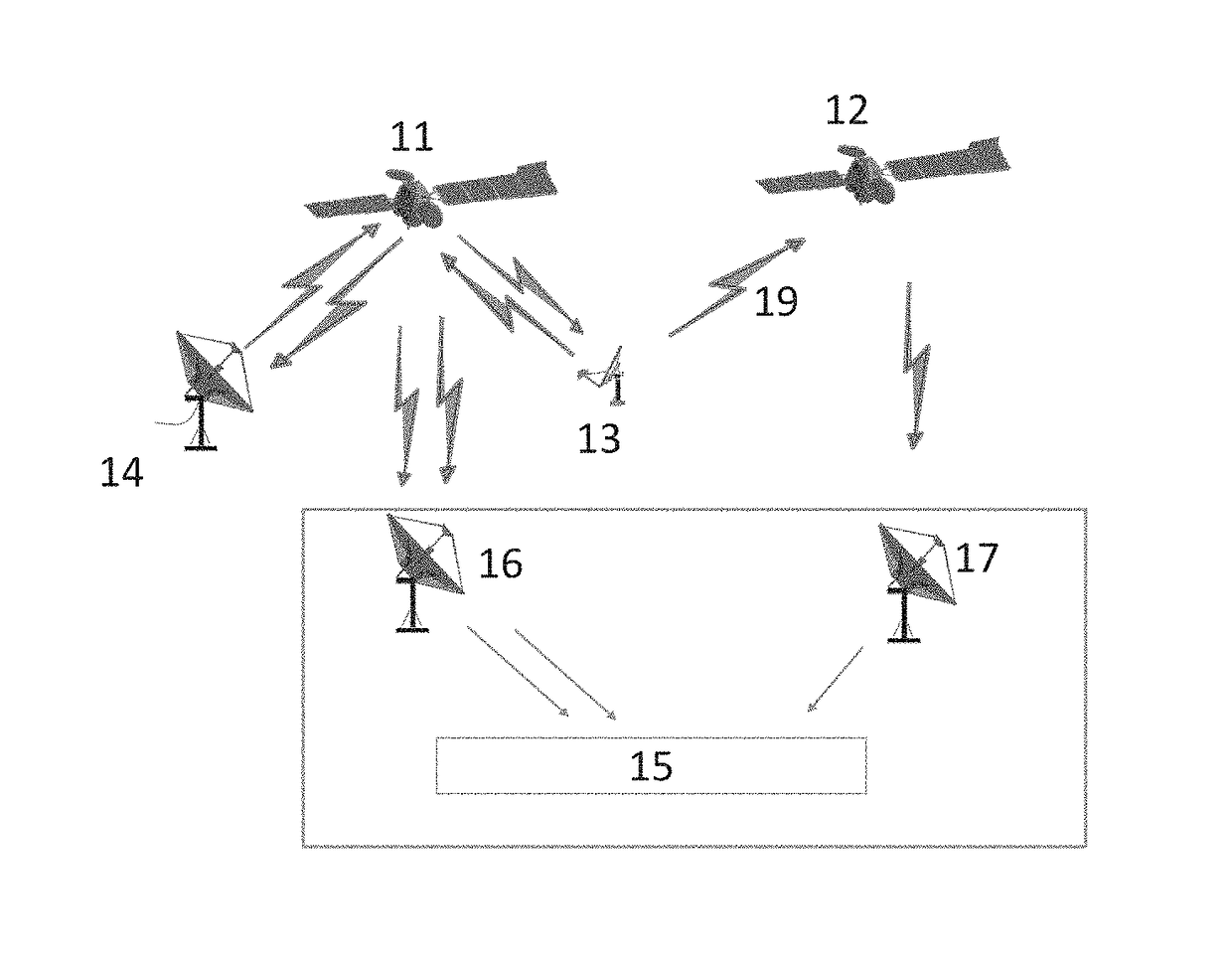
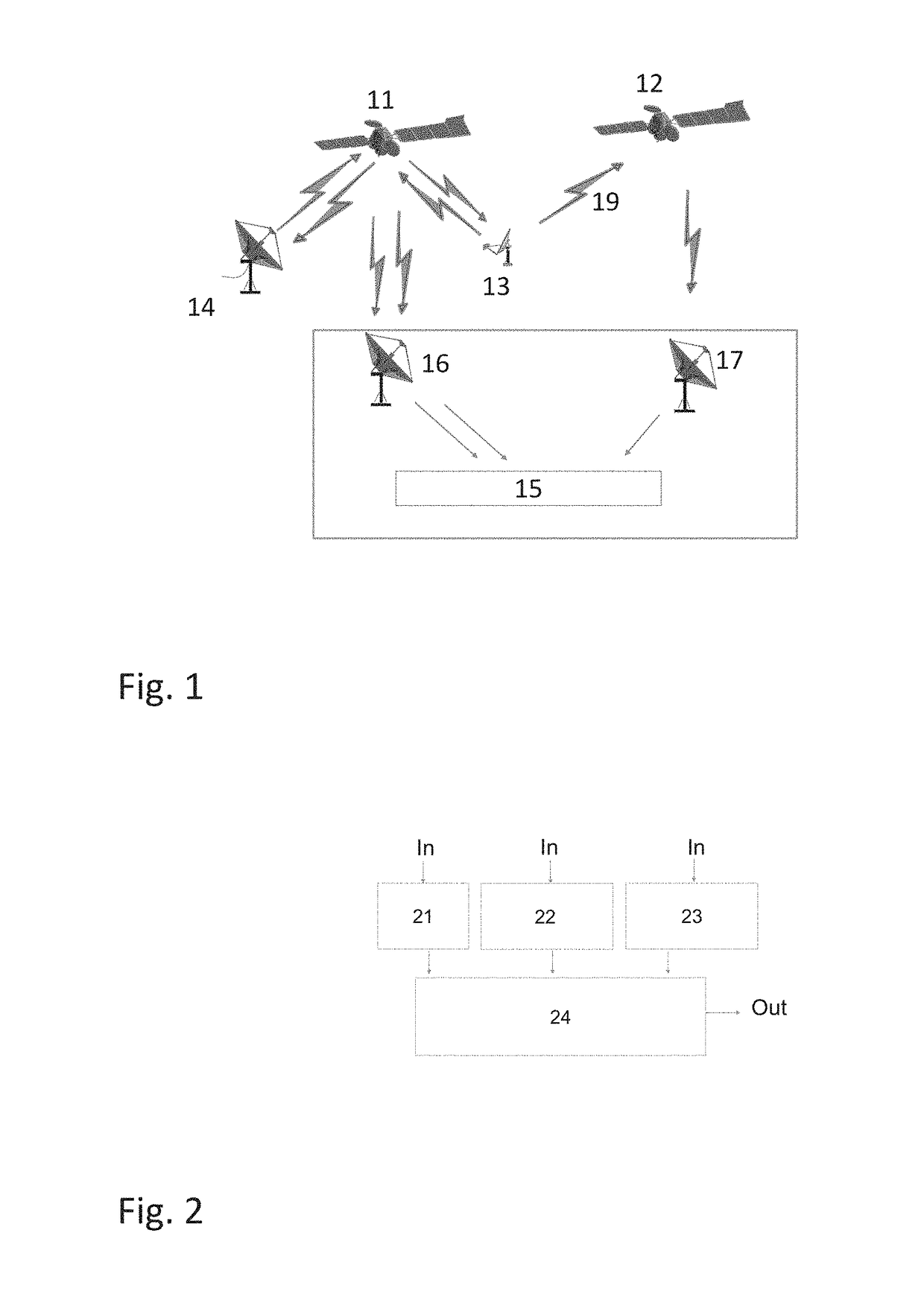
[0066]In FIG. 1 there is shown two geo-stationary satellites, the first satellite 11 and the second satellite 12. A number of terminals are communicating with a hub station 14 through the first satellite 11. Here, only one terminal 13 is shown.
[0067]If the antenna of the terminal 13 is misaligned, a part of its transmitted signal may cause cross-polar interference, as well as being received by the adjacent satellite 12 and appear as interference in the corresponding frequency segment of this satellite. It is in the following assumed that the interference is not powerful enough to allow a direct demodulation and decoding of the interfering burst which then would reveal the terminal ID directly. This approach is covered by well-known technology.
[0068]In order to detect the interference and identify the source (the terminal causing the interference), an interference guarding (i.e. measuring) device 15 is introduced in the system. The device 15 is connected to a first antenna 16 receivi...
PUM
 Login to View More
 Abstract
Description
Claims
Application Information
 Login to View More