
Unit Cell Titanium Casting
a technology of titanium casting and unit cell, applied in the field of precision titanium casting, can solve the problems of loss of substantial heat, increase costs, and time-consuming preparation of molding shell, and achieve the effects of reducing pressure, increasing pressure, and optimizing the filling of complex geometries
- Summary
- Abstract
- Description
- Claims
- Application Information
AI Technical Summary
Benefits of technology
Problems solved by technology
Method used
Image

Examples
Embodiment Construction
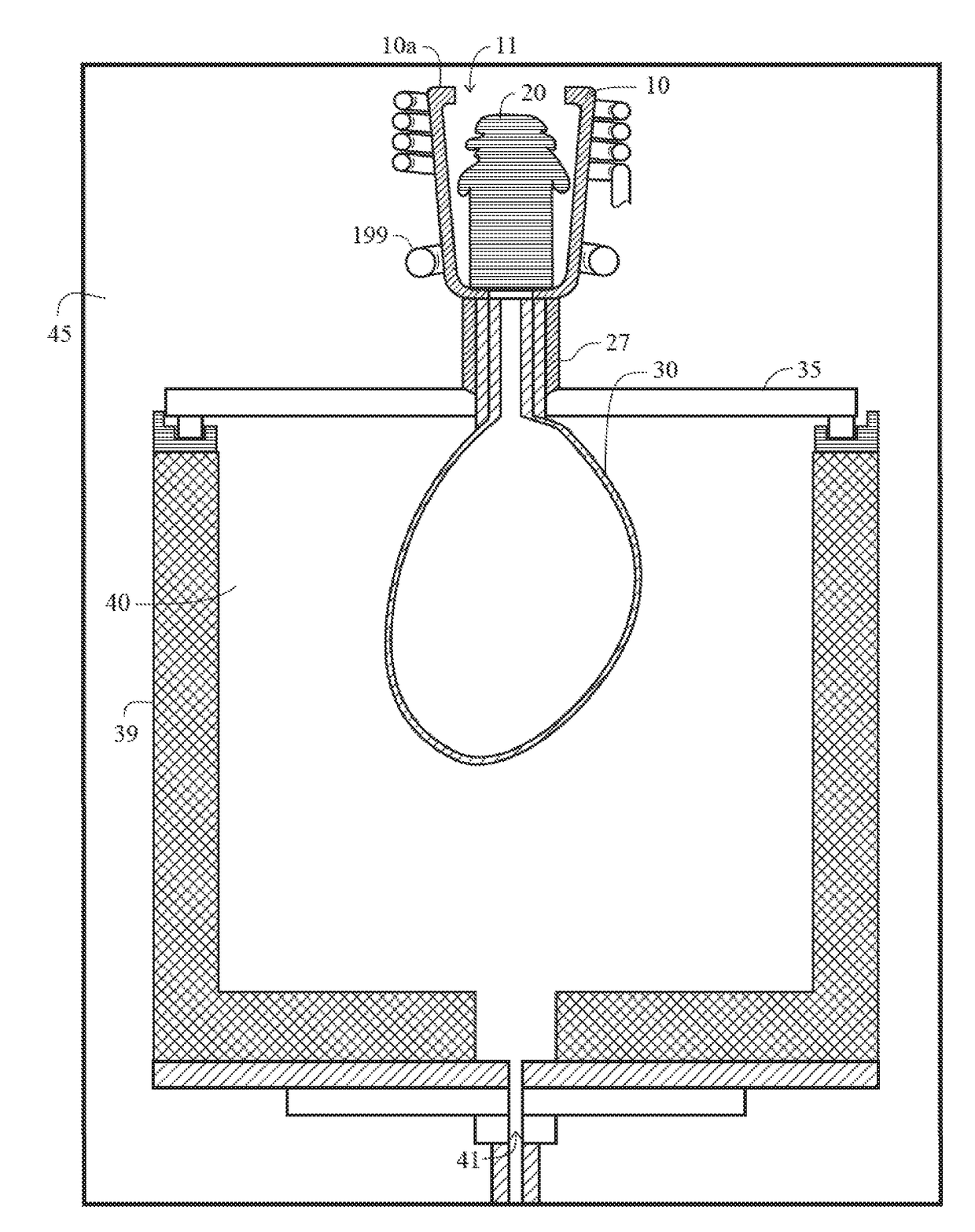
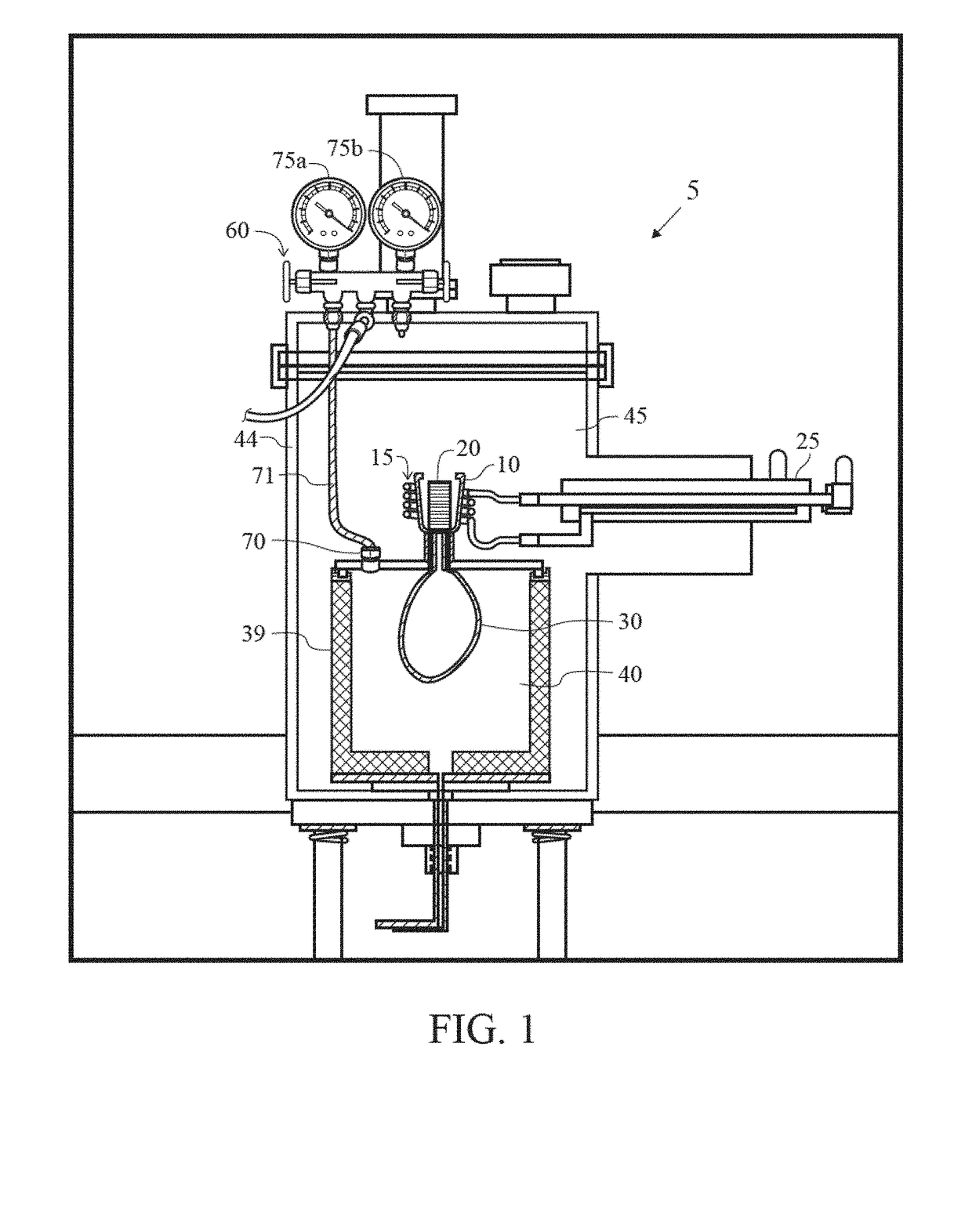
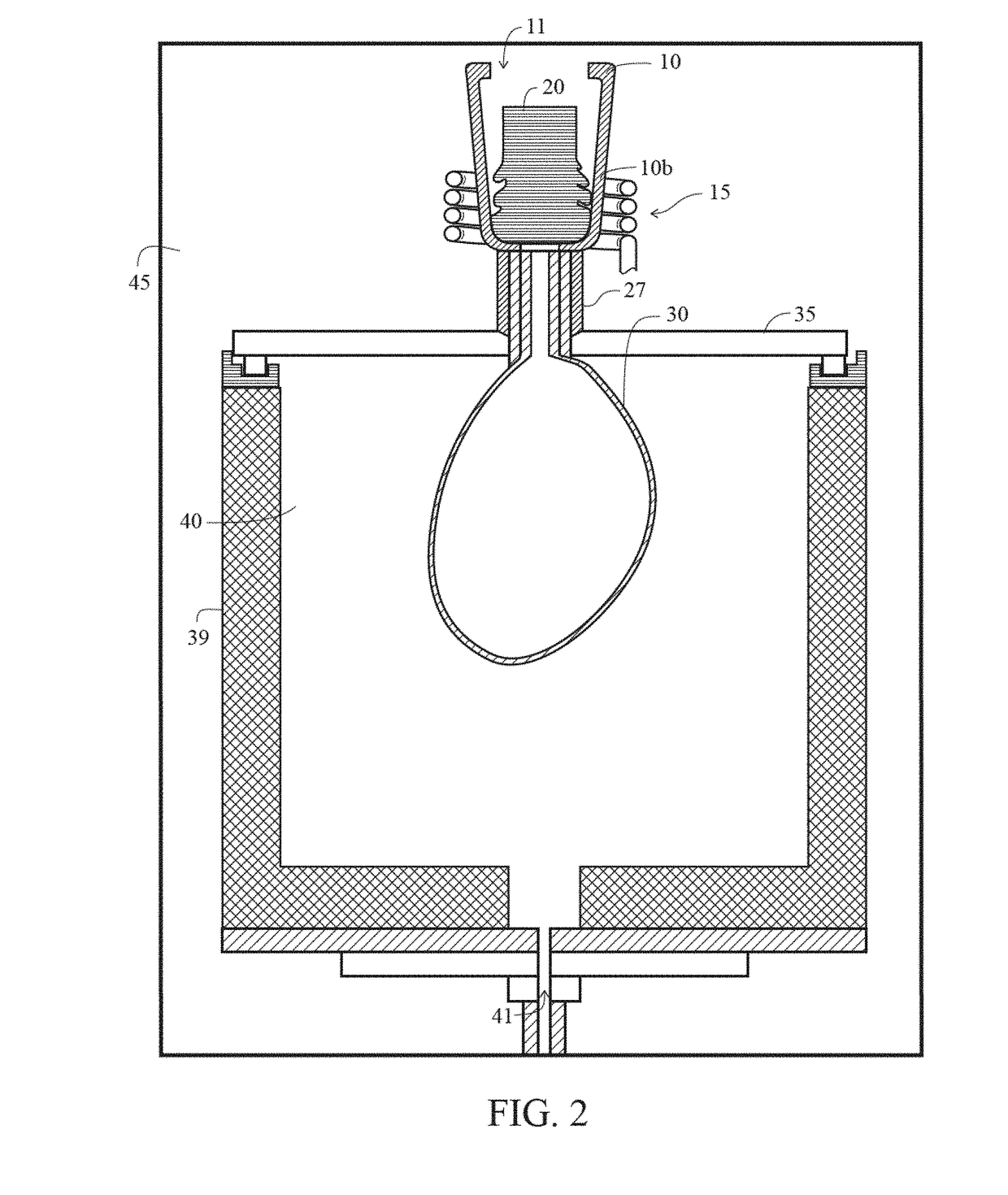
[0037]During the casting process it is critical to ensure that the material be heated sufficiently and consistently in order to ensure proper flow into the pattern mold. Especially with the use of a bottom-fed / gravity flow system, having the ability to precisely control the pour time will allow for optimum material heating ensuring desired material properties in the finished part. In order to achieve this a chill plate should be utilized which would help to definitively control the time that the molten material would transition to the pattern mold. The chill plate would be in the shape of a ring, with an opening centered on the opening of the ceramic crucible where the material is being melted. The plate itself would be cooled during melting and then at the optimal pour time, the cooling would be turned off. With the cooling, the seal melts through and the material is evacuated into the pattern mold. The use of this feature will allow for precise evacuation times providing consisten...
PUM
| Property | Measurement | Unit |
|---|---|---|
| pressure | aaaaa | aaaaa |
| pressure | aaaaa | aaaaa |
| atmospheric pressure | aaaaa | aaaaa |
Abstract
Description
Claims
Application Information
 Login to View More