Communication port control module for lighting systems

US6845274B2Inactive Publication Date: 2005-01-18KONINKLIJKE PHILIPS ELECTRONICS NV
20 Cites 29 Cited by

Patent Information

Authority / Receiving Office
US · United States
Current Assignee / Owner
Publication Date
2005-01-18
Estimated Expiration
Not applicable · inactive patent

Smart Images

  • Figure 1
    Figure 1
  • Figure 2
    Figure 2
  • Figure 3
    Figure 3
Patent Text Reader

Abstract

An improved technique of interfacing a computer lighting device to a control computer is disclosed, wherein a hardware device is interposed between the control computer and the lighting device. The hardware device handles certain functions in hardware, thereby permitting the microprocessor at the lighting device to incur substantially less processing load.
Need to check novelty before this filing date? Find Prior Art

Description

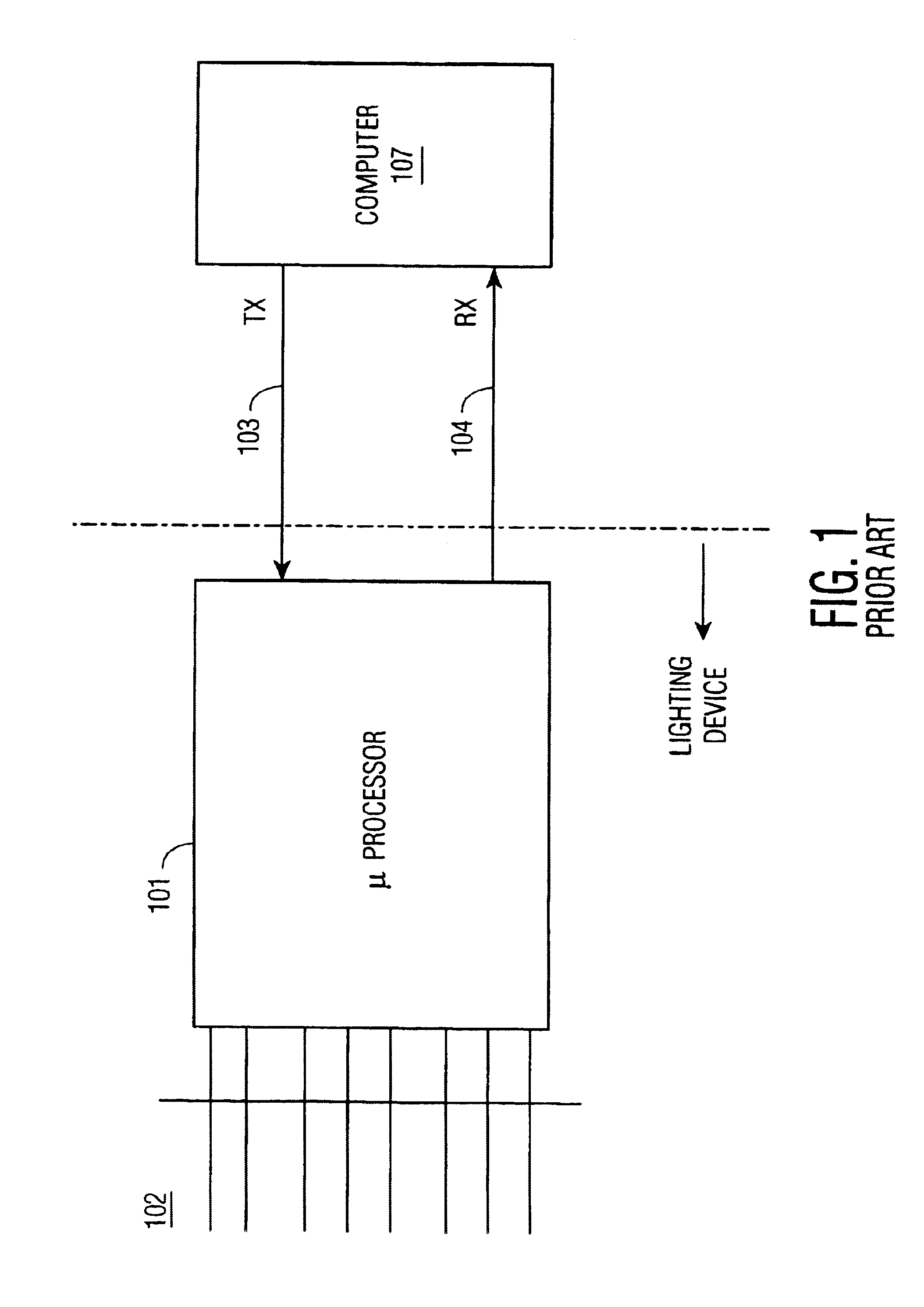
TECHNICAL FIELDThe present invention relates to lighting control networks, and more particularly, to an improved communication port control module (“CPCM”) that acts as a serial interface to a network control computer for a lighting system. The present invention also relates to a system that offloads much of the processing normally required of a microprocessor at the lighting device being controlled, instead performing such processing in hardware contained in an interface device interposed between the lighting device being controlled and the control computer controlling said lighting device.BACKGROUND OF THE INVENTIONCentralized lighting control systems are known in the art. Typically, the central computer controls the lighting system throughout a building or other facility, such as is defined by the DALI standard, a well-known lighting control standard. The lighting device being controlled interfaces to the central computer through a serial interface. A microprocessor at the lighti...

Examples

Embodiment Construction

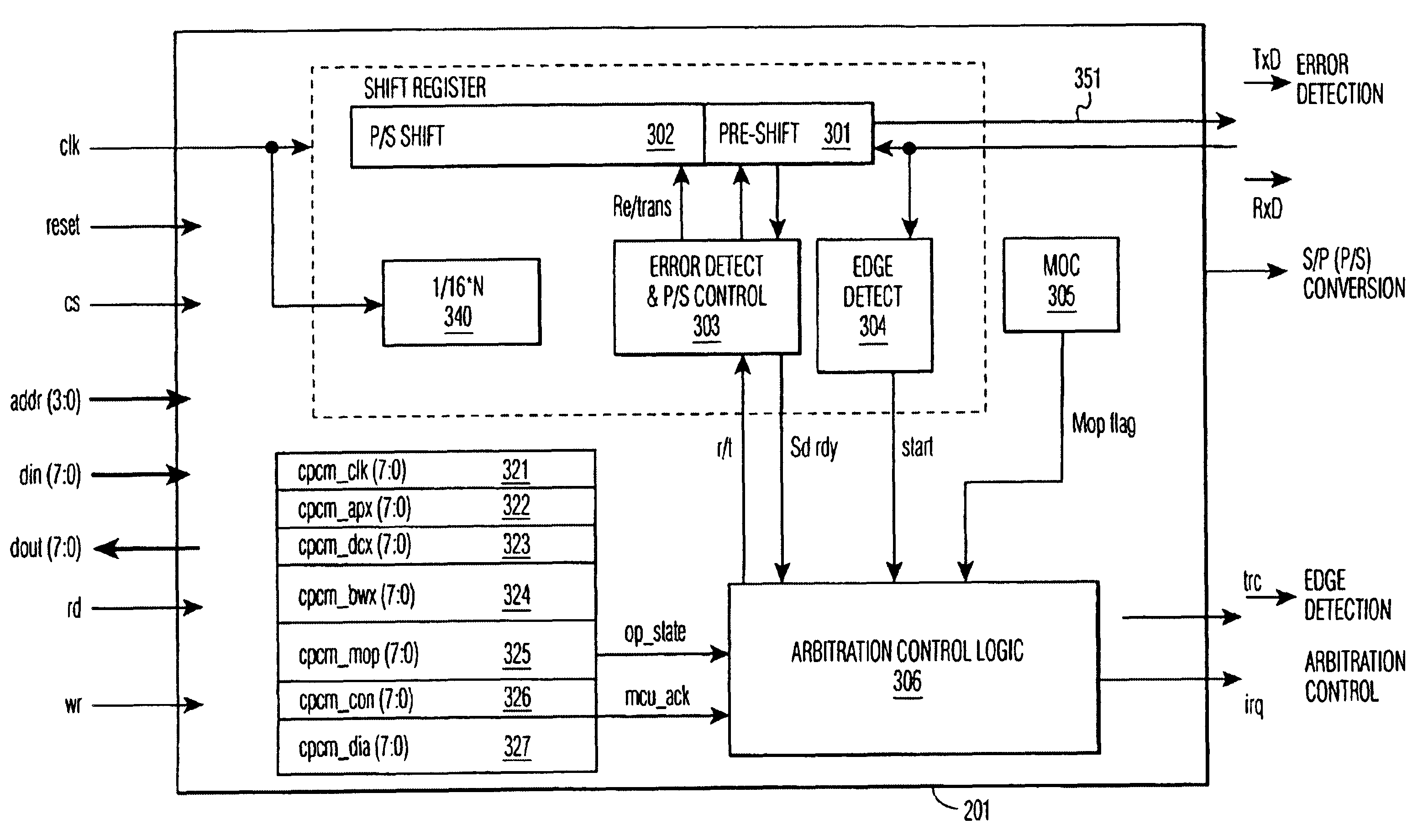
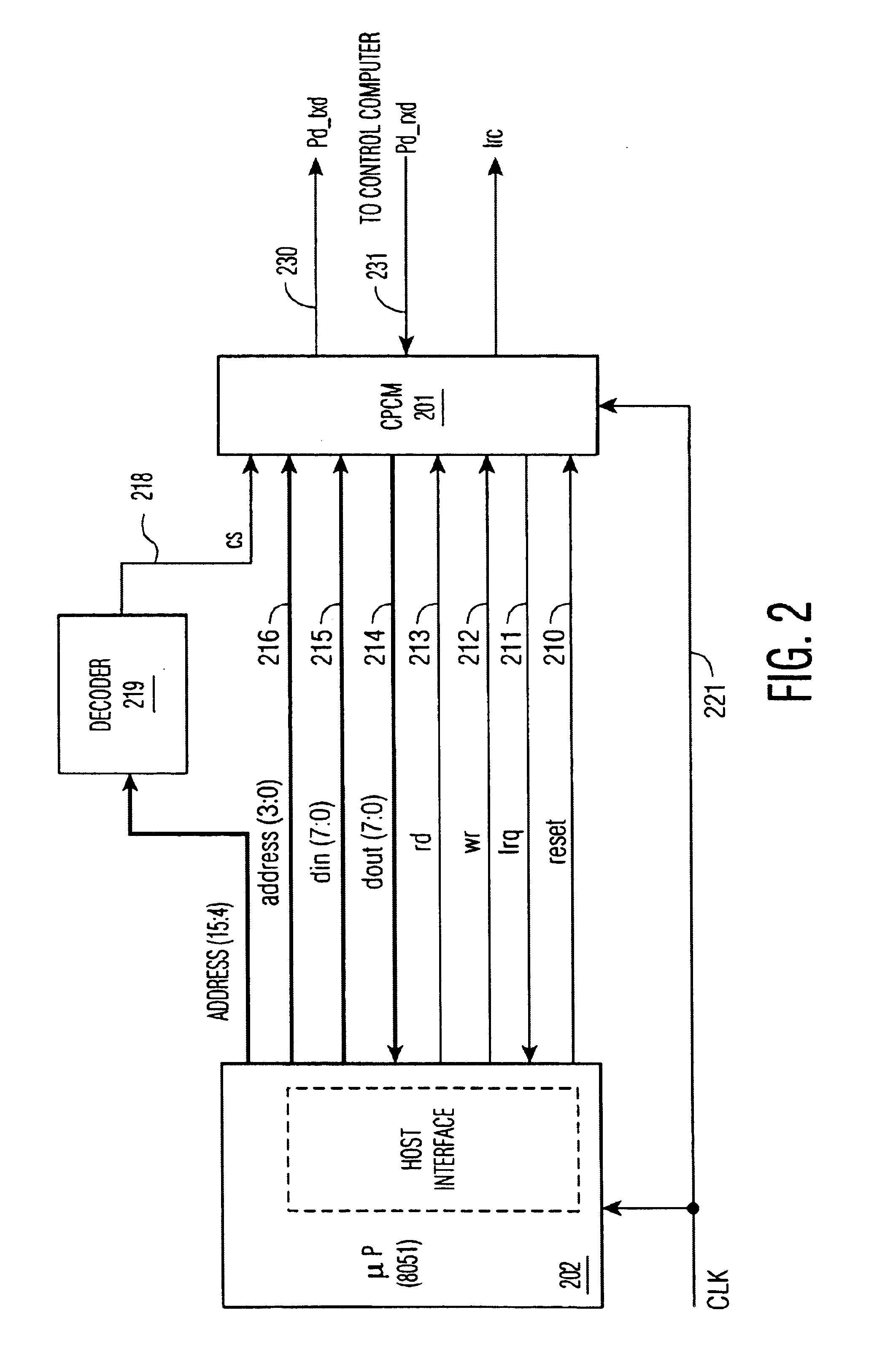
FIG. 2 depicts a block diagram of a hardware device CPCM 201 connected to a microprocessor 202. Not shown in FIG. 2 is the lighting device controlled by microprocessor 202. FIG. 2 includes a plurality of signals interfacing between CPCM 201 and microprocessor 202.

A decoder 219 and address lines 216 serve to permit communications to and from CPCM 201 over a parallel computer bus as is known in the art. More specifically, CPCM 201 is at a particular address known to microprocessor 202 and that address is asserted on the bus when communications with CPCM 201 are desired by the microprocessor. Several of the address lines are used for a chip select signal 218 and the remainder utilized as signal 216 in order to select the appropriate location within CPCM 201. Typically the most significant bits are utilized to decode as a chip select signal, and any remaining bits of the address are used to identify a location within the CPCM.

Signals 214 and 215 represent the data bus exchanging data be...