
Systems and methods of viewing, modifying, and interacting with "path-enhanced" multimedia
a multimedia and multimedia technology, applied in the field of recorded multimedia data, can solve the problems of not providing information relating to gps data occurring at times, no information is provided relating to gps data occurring along a continuous path between points of capture, and no path information associated with photos or route information
- Summary
- Abstract
- Description
- Claims
- Application Information
AI Technical Summary
Benefits of technology
Problems solved by technology
Method used
Image

Examples
Embodiment Construction
[0026]In general, the present invention relates to systems and methods of viewing, modifying, and interacting with recorded “path-enhanced” multimedia (herein referred to as PEM).
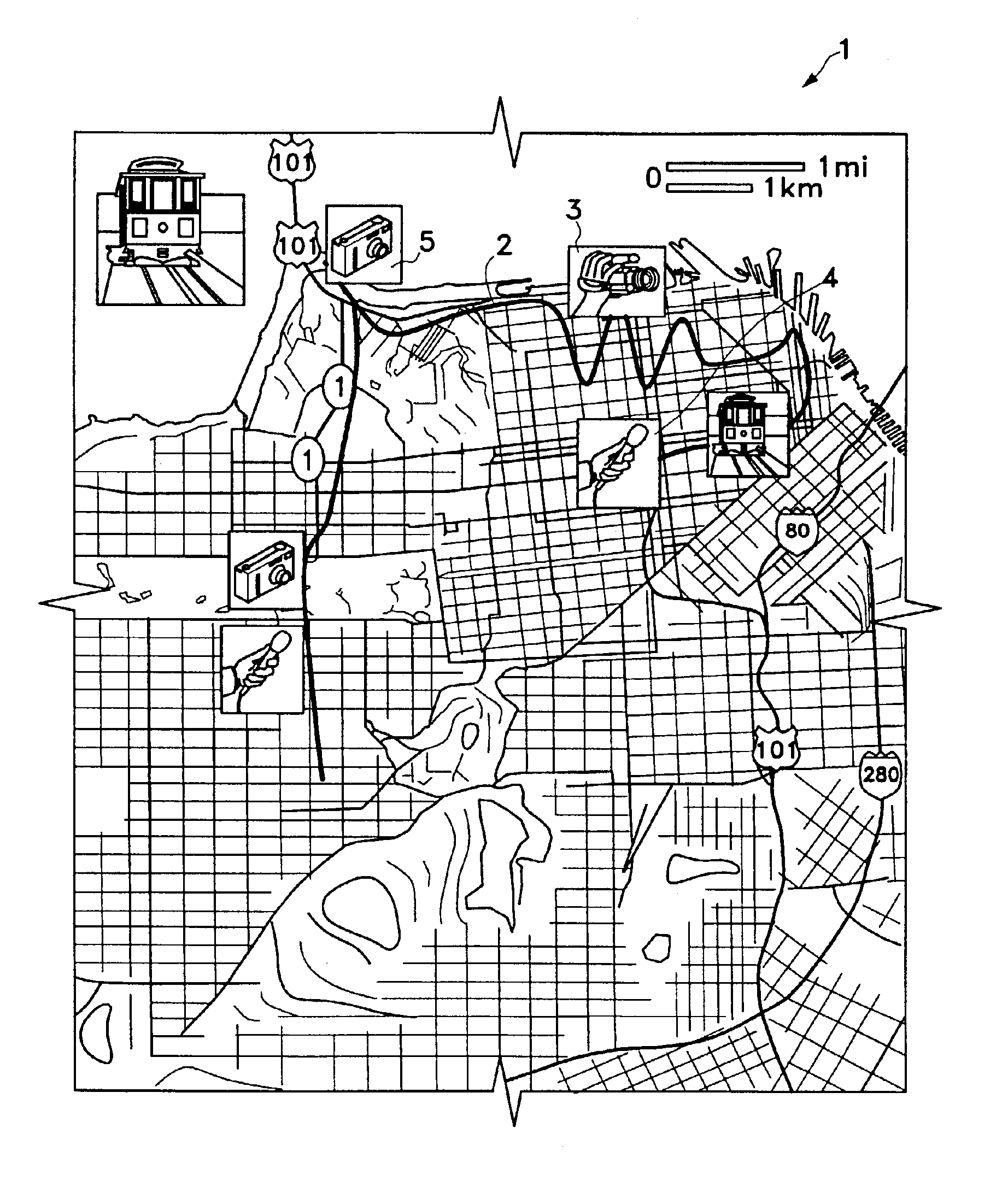
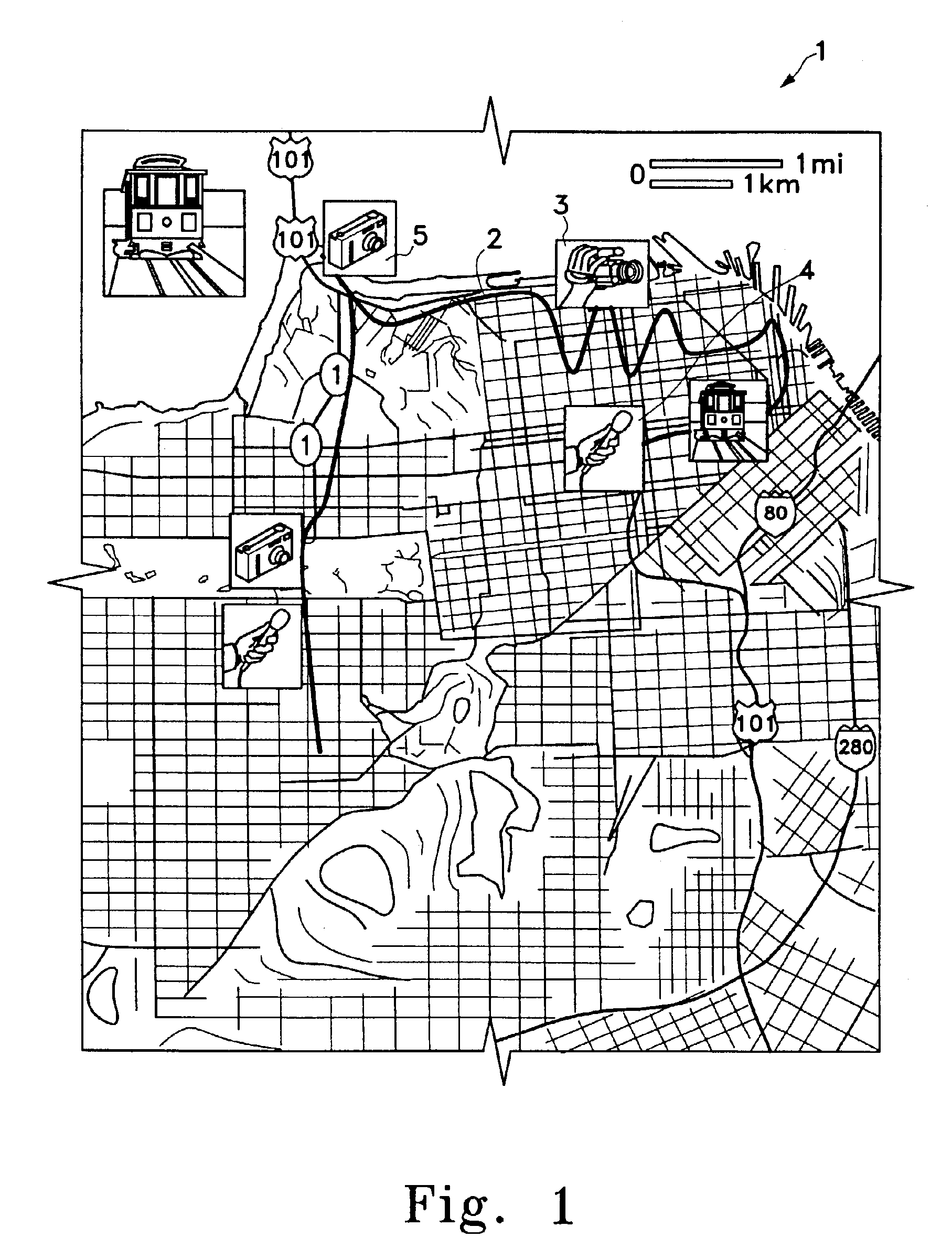
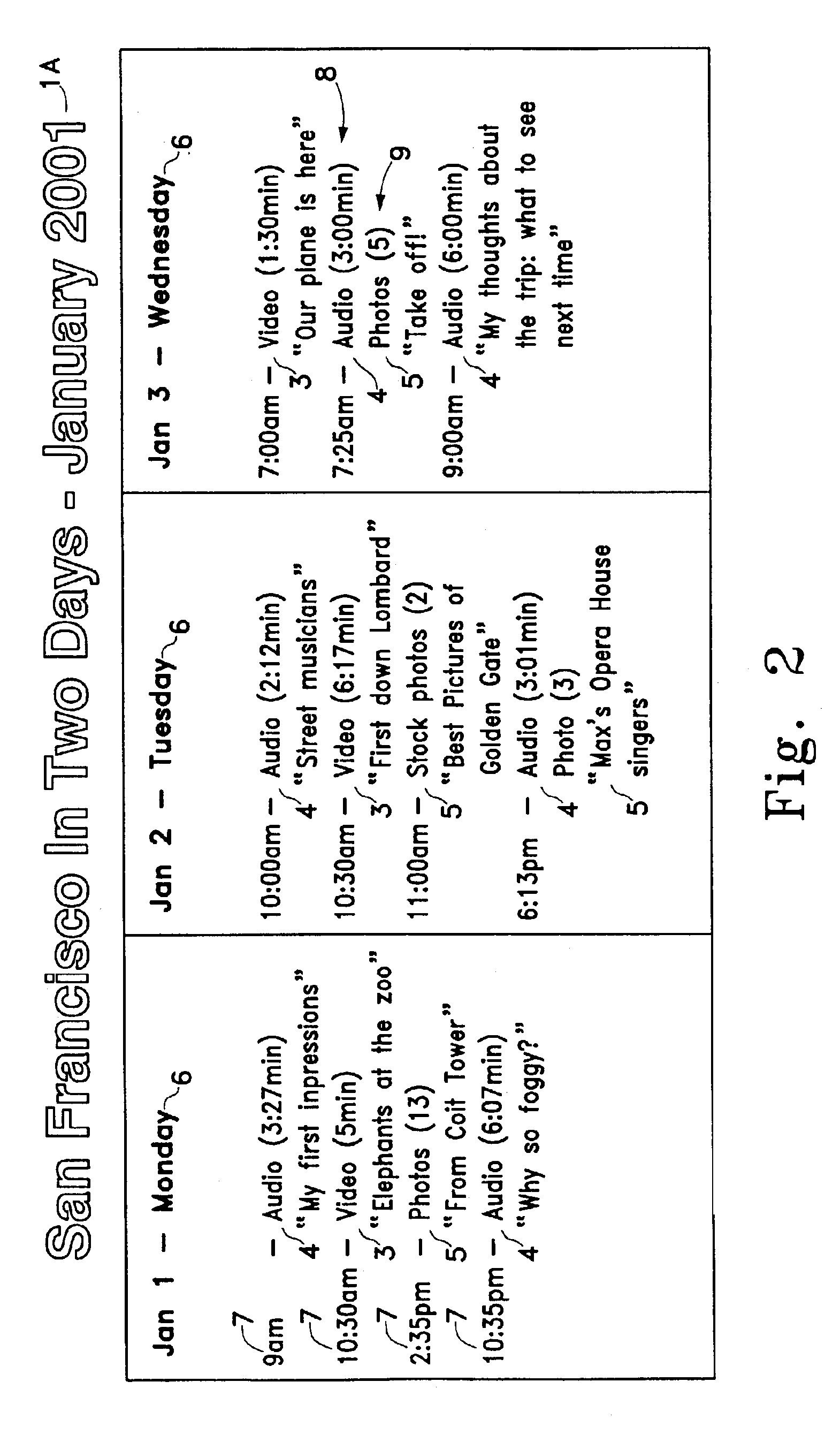
[0027]FIG. 1 shows an example of PEM data displayed according to a first selected view. For purposes of the present disclosure, the “view” describes abstractly how a collection of PEM data is to be presented on a display device to a user. The view determines the organization of the PEM data presentation. A view can organize the presentation of the PEM data in several ways, including by geography (e.g., a “mapped-based view”), by time (e.g., a “calendar-based view”), by media type (e.g., a “media-list view”), and by combinations thereof. Each “type” of view organization may be further qualified by “style” parameters that control specific presentation appearance options (as will be described herein below). For example, in map-based views, style parameters include the choice of background map (e.g., a road map...
PUM
 Login to View More
 Abstract
Description
Claims
Application Information
 Login to View More