
Vertebral implant with dampening matrix adapted for posterior insertion
a technology of dampening matrix and posterior insertion, which is applied in the field of endoprosthetic implants to replace intervertebral discs, can solve the problems of increasing pressure, limiting spinal movement, and wear and damage of fibrocartilage in intervertebral discs, and achieves the elimination of most posterior spinal pathology, prolonging wear life, and reducing the effect of fibrocartilage wear
- Summary
- Abstract
- Description
- Claims
- Application Information
AI Technical Summary
Benefits of technology
Problems solved by technology
Method used
Image

Examples
Embodiment Construction
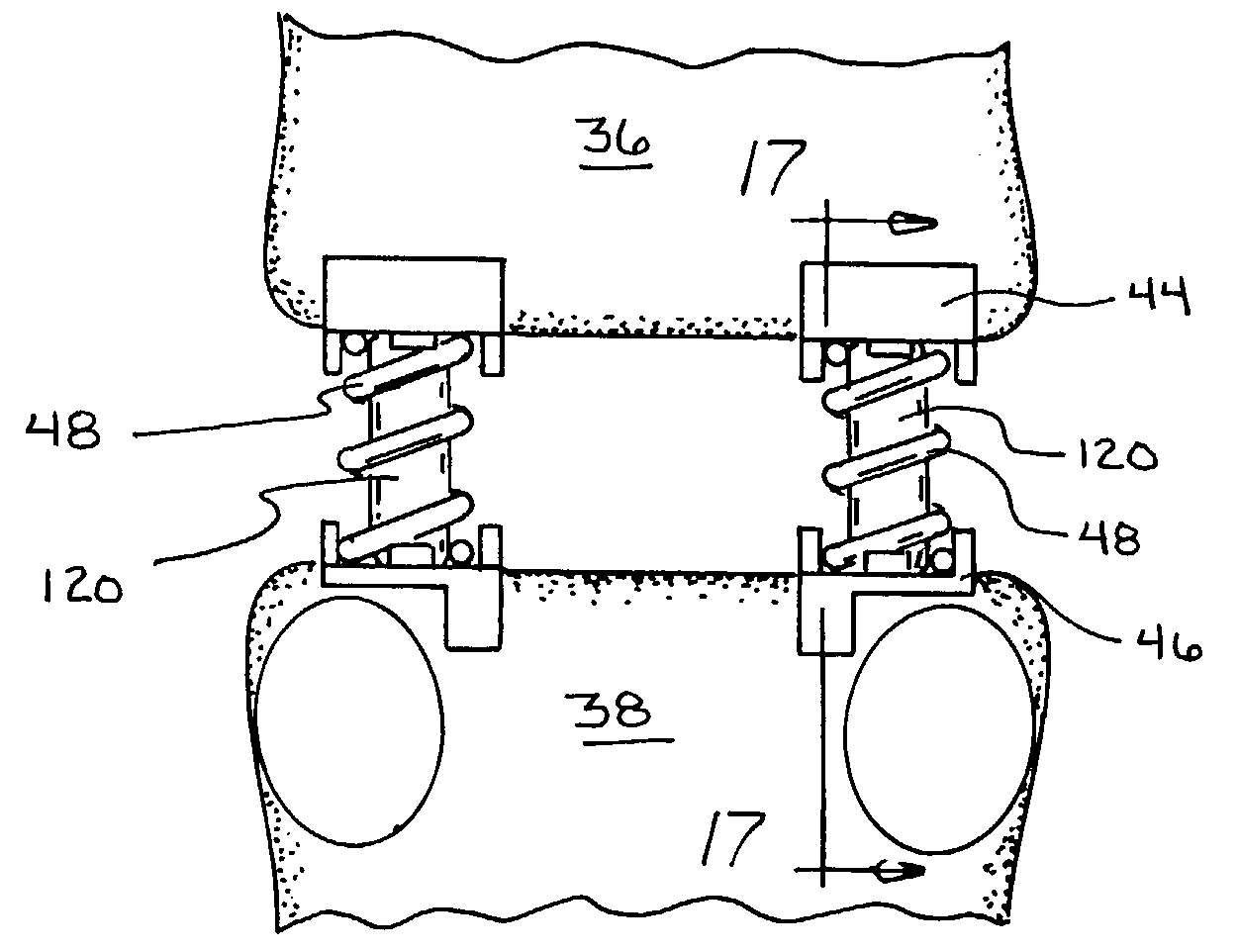
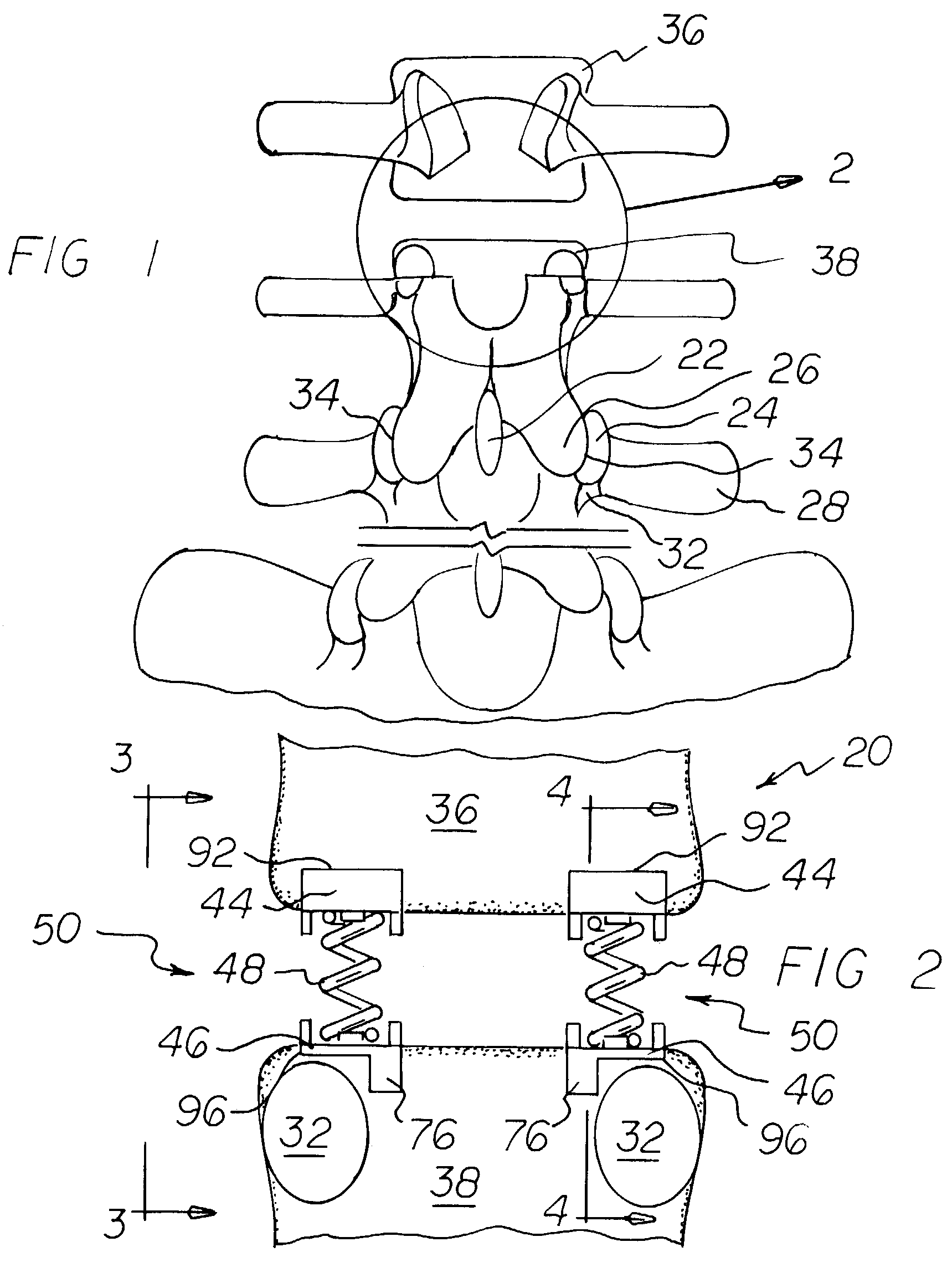
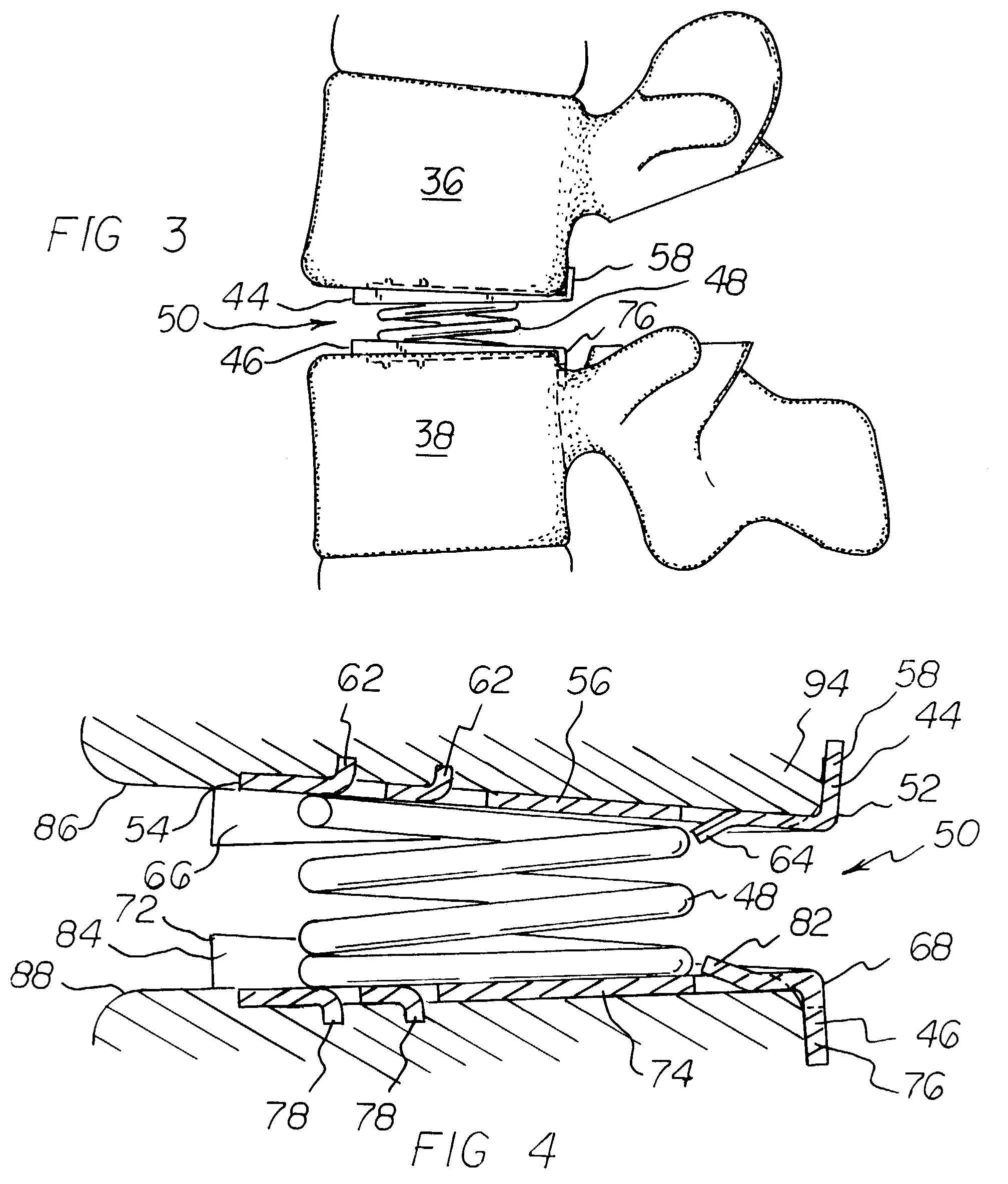
[0043]The present invention relates to an endoprosthetic implant for a human spinal disc. The structure of the implant allows it to be inserted posteriorly. This insertion is accomplished by performing a partial discectomy in the affected region. An intervertebral space is then created by removing the fibrocartilage between the facing surfaces of adjacent vertebrae. The implant is then inserted into the intervertebral space. The implant is thus adapted to replace damaged or worn intervertebral discs. Furthermore, the structure of the implant, and its posterior insertion, alleviate most spinal pathologies. The implant of the present invention, and the manner in which it is employed, are described in fuller detail hereinafter.
[0044]With reference now to FIG. 1, a posterior view of the lumbar region of a human spine is depicted. The implant of the present invention 20 is specifically adapted for insertion between adjacent vertebrae in this lumbar region, specifically vertebrae L3 throu...
PUM
| Property | Measurement | Unit |
|---|---|---|
| angle | aaaaa | aaaaa |
| flexible | aaaaa | aaaaa |
| force | aaaaa | aaaaa |
Abstract
Description
Claims
Application Information
 Login to View More