Osteogenic fusion device

a fusion device and osteogenic technology, applied in the field of implants, can solve the problems of affecting the normal anatomical function of the disc, affecting and the hardware used to maintain the stability of the spine became superfluous, so as to reduce the chance of neurological complications or damag
US7763079B2Inactive Publication Date: 2010-07-27WARSAW ORTHOPEDIC INC

Patent Information

Authority / Receiving Office
US ยท United States
Patent Type
Patents(United States)
Current Assignee / Owner
WARSAW ORTHOPEDIC INC
Publication Date
2010-07-27
Estimated Expiration
Not applicable ยท inactive patent

Smart Images

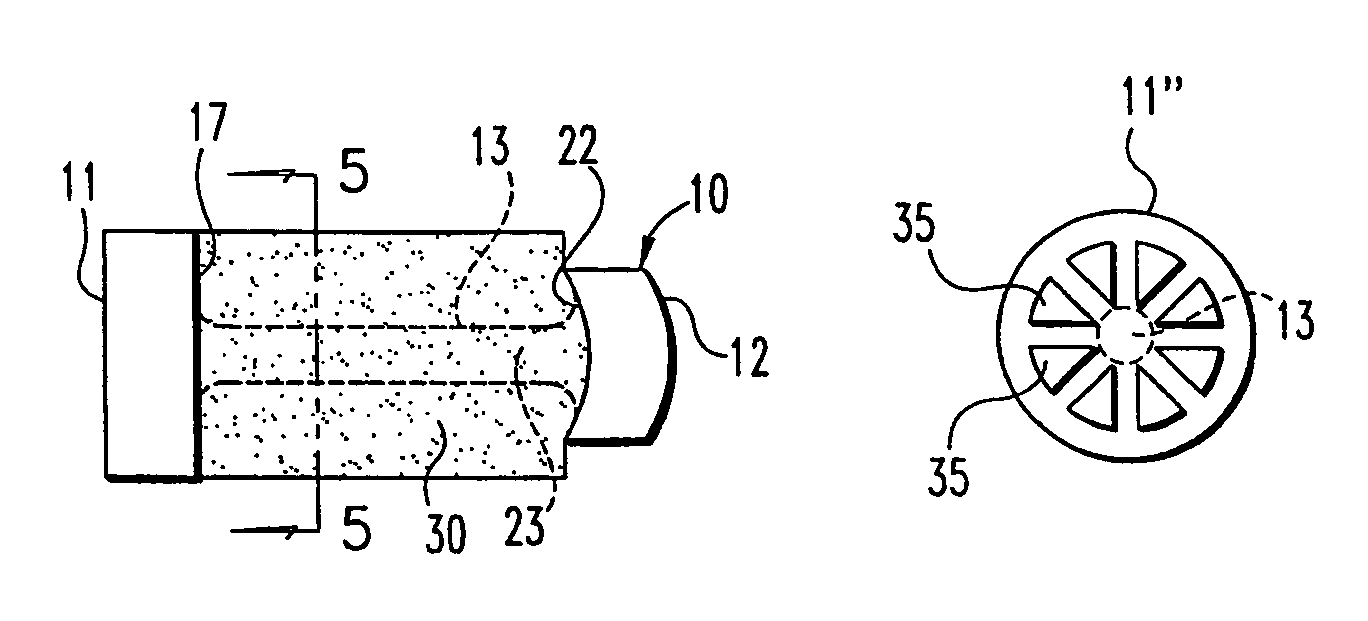
  • Figure 1
    Figure 1
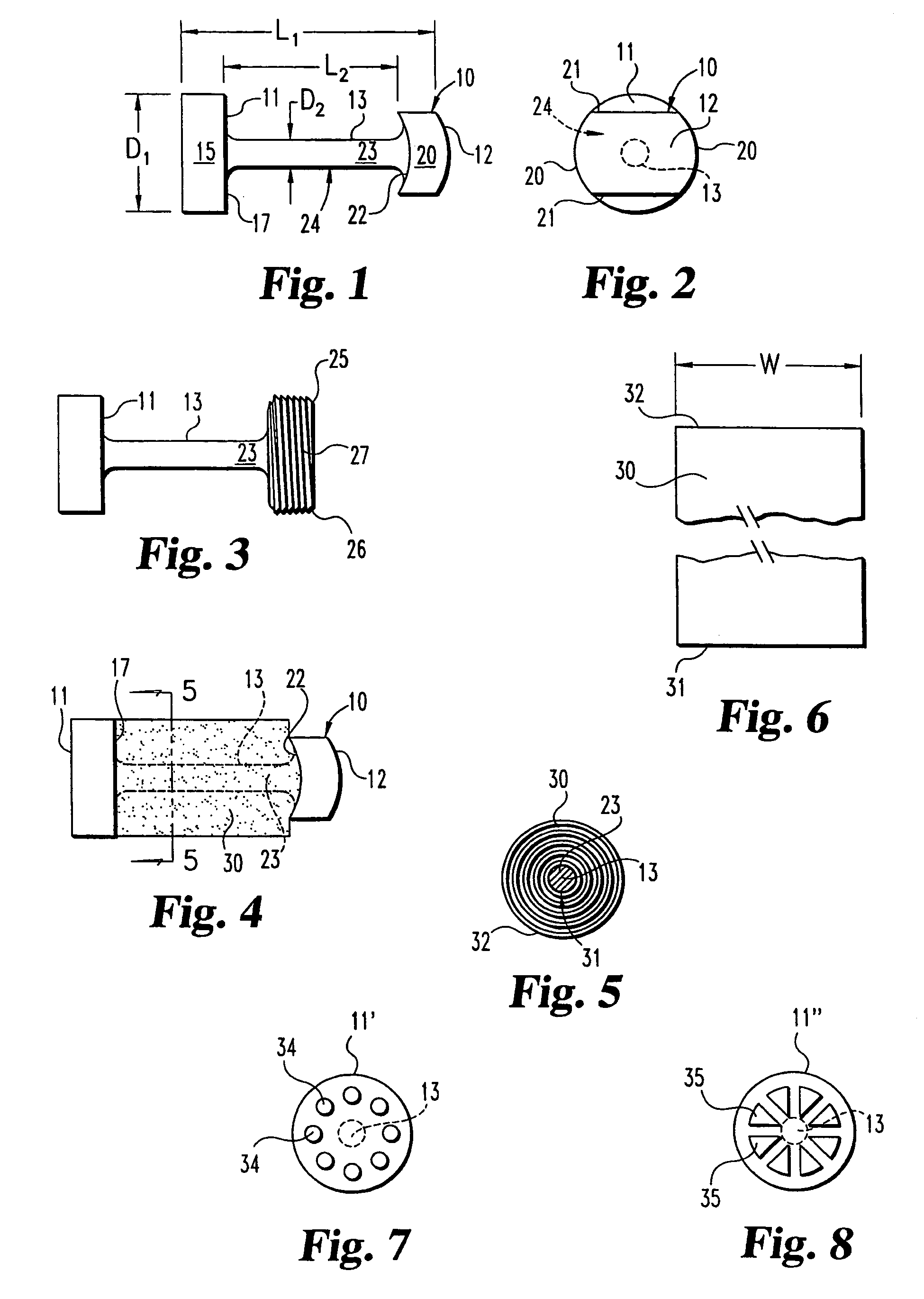
  • Figure 2
    Figure 2
  • Figure 3
    Figure 3
Patent Text Reader

Abstract

An interbody osteogenic fusion device is provided that includes opposite end pieces with an integral central element. The end pieces are sized to maintain the height of an intervertebral disc space. The central element has a much smaller diameter so that the osteogenic fusion device forms an annular pocket around the central element. An osteogenic material is disposed within the annular pocket between the opposite end pieces. In one embodiment, the osteogenic material constitutes a collagen sheet soaked in a solution containing a bone morphogenetic protein. The osteogenic fusion device is configured so that the osteogenic material is in direct contact with the adjacent vertebral bone. In addition to the enhanced area of contact between the vertebral bone and the fusion material, the inventive osteogenic fusion device reduces stress-shielding and minimizes the radiopacity of the implant so that growth of the fusion mass can be continuously assessed. In yet another embodiment, the osteogenic fusion device includes at least one end piece with a truncated surface. The osteogenic fusion devices of the present invention may be combined with other fusion devices to form an implant system. The implant system includes at least one load bearing member having a truncated surface configured to nest within another load bearing member, preferably the load bearing, osteogenic fusion device of the present invention. The invention also provides implant systems comprising adjacent load bearing members connected to one another to resist lateral separation. Methods of promoting fusion bone growth in the space between adjacent vertebrae utilizing devices and systems of the invention are also described.
Need to check novelty before this filing date? Find Prior Art

Description

CROSS REFERENCE TO RELATED APPLICATIONS

[0001] This application is a continuation of U.S. patent application Ser. No. 10 / 634,711, filed Aug. 5, 2003 now U.S. Pat. No. 7,179,293, which is a divisional of U.S. patent application Ser. No. 09 / 581,335, filed Sep. 25, 2000 and issued as U.S. Pat. No. 6,648,916, which is the National Stage of International PCT Application No. PCT / US98 / 26254, filed Dec. 10, 1998 and published in English, which is a continuation-in-part of U.S. patent application Ser. No. 08 / 988,142, filed Dec. 10, 1997 and issued as U.S. Pat. No. 6,146,420, each of which are hereby incorporated by reference in their entirety.BACKGROUND OF THE INVENTION

[0002] The present invention relates to an implant to be placed into the intervertebral space left after the removal of a damaged spinal disc. Specifically, the invention concerns an osteogenic fusion device that enhances arthrodesis or fusion between adjacent vertebrae while also maintaining the normal spinal anatomy at the inst...

Claims

the structure of the environmentally friendly knitted fabric provided by the present invention; figure 2 Flow chart of the yarn wrapping machine for environmentally friendly knitted fabrics and storage devices; image 3 Is the parameter map of the yarn covering machine
Login to View More