
Responsivity enhancement of solar light compositions and devices for thermochromic windows
a solar light composition and thermochromic window technology, applied in non-linear optics, instruments, chemistry apparatus and processes, etc., can solve problems such as ineffective approach, and achieve the effects of improving visibility, enhancing the ability to see cold targets, and expanding the dynamic rang
- Summary
- Abstract
- Description
- Claims
- Application Information
AI Technical Summary
Benefits of technology
Problems solved by technology
Method used
Image

Examples
Embodiment Construction
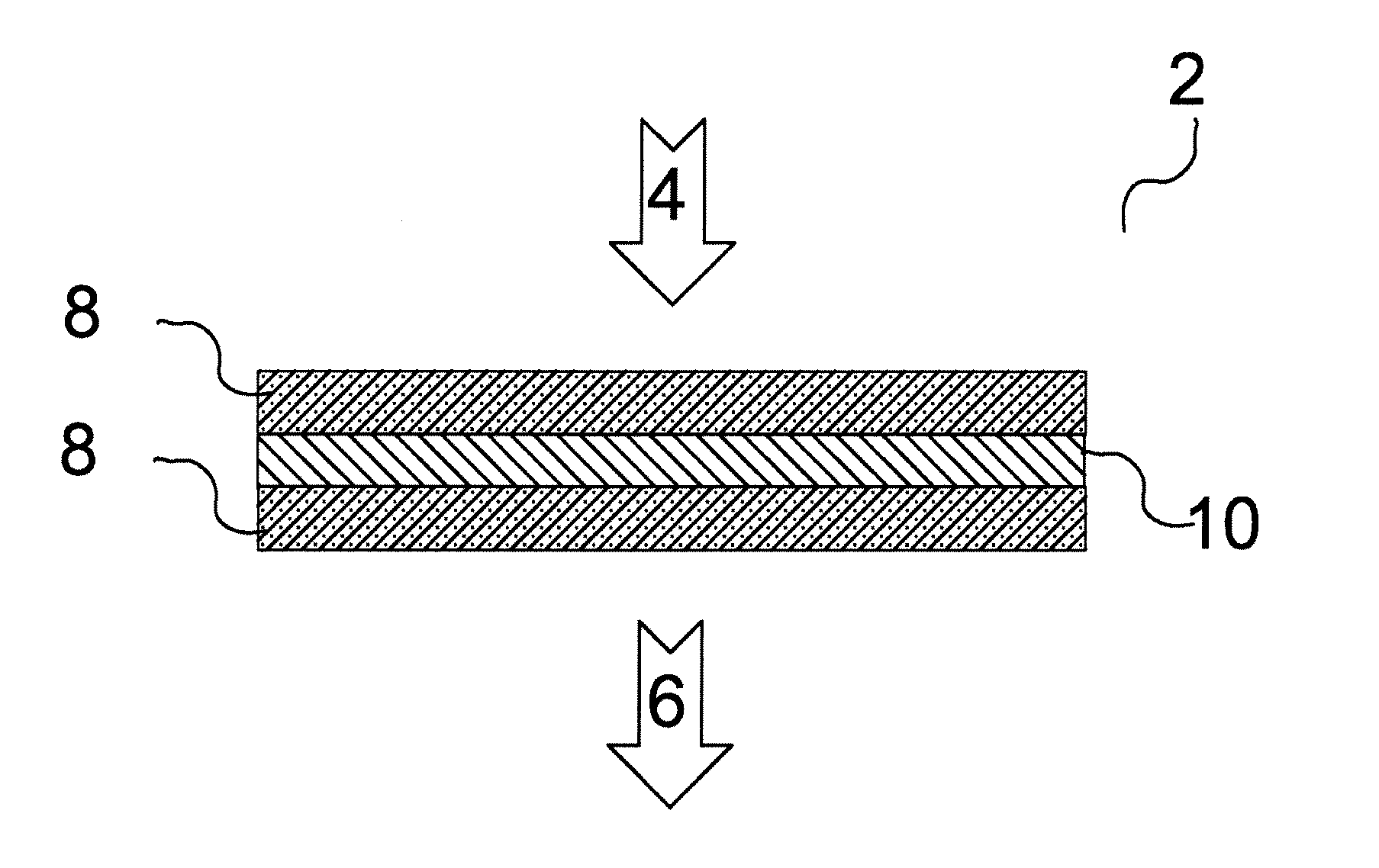
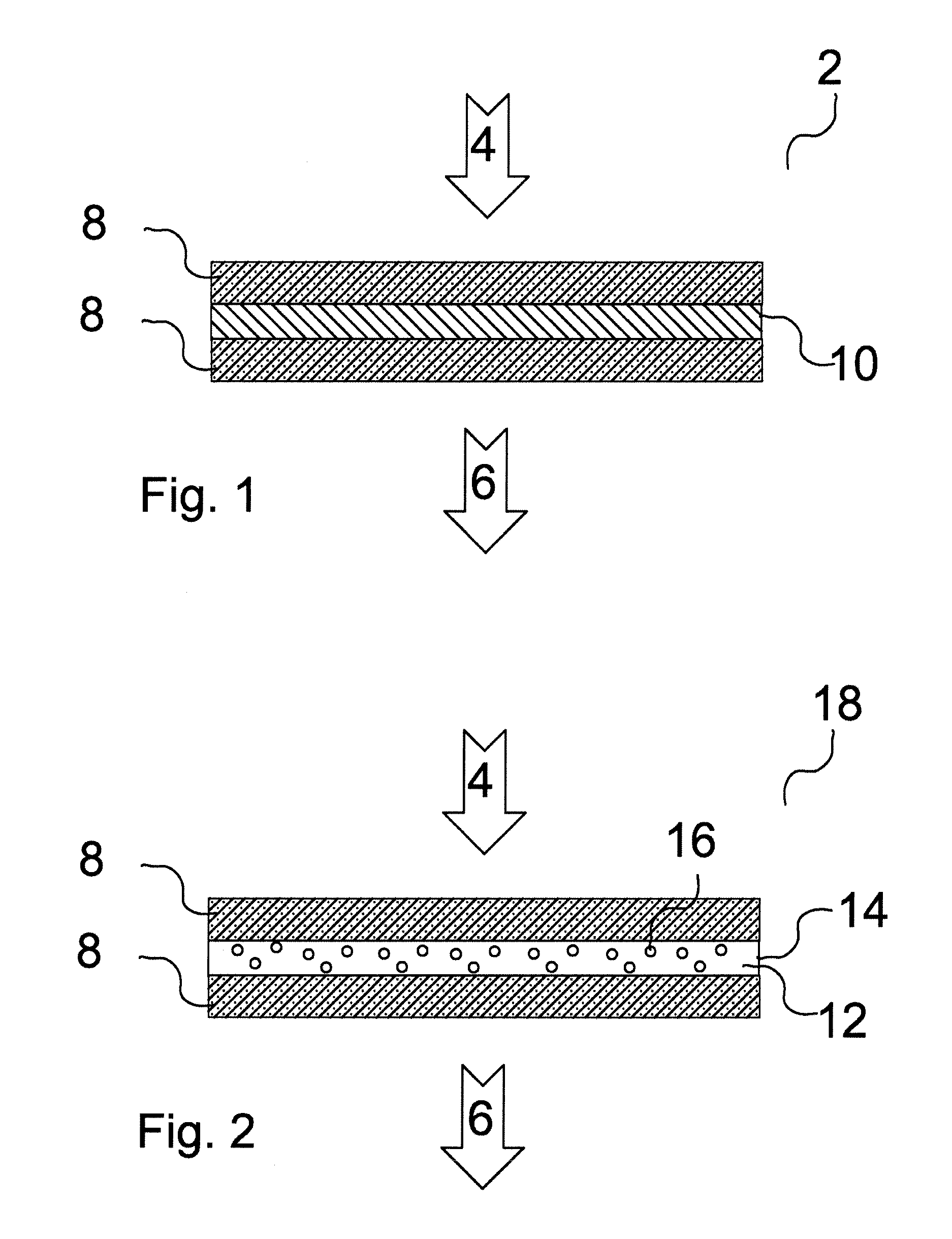
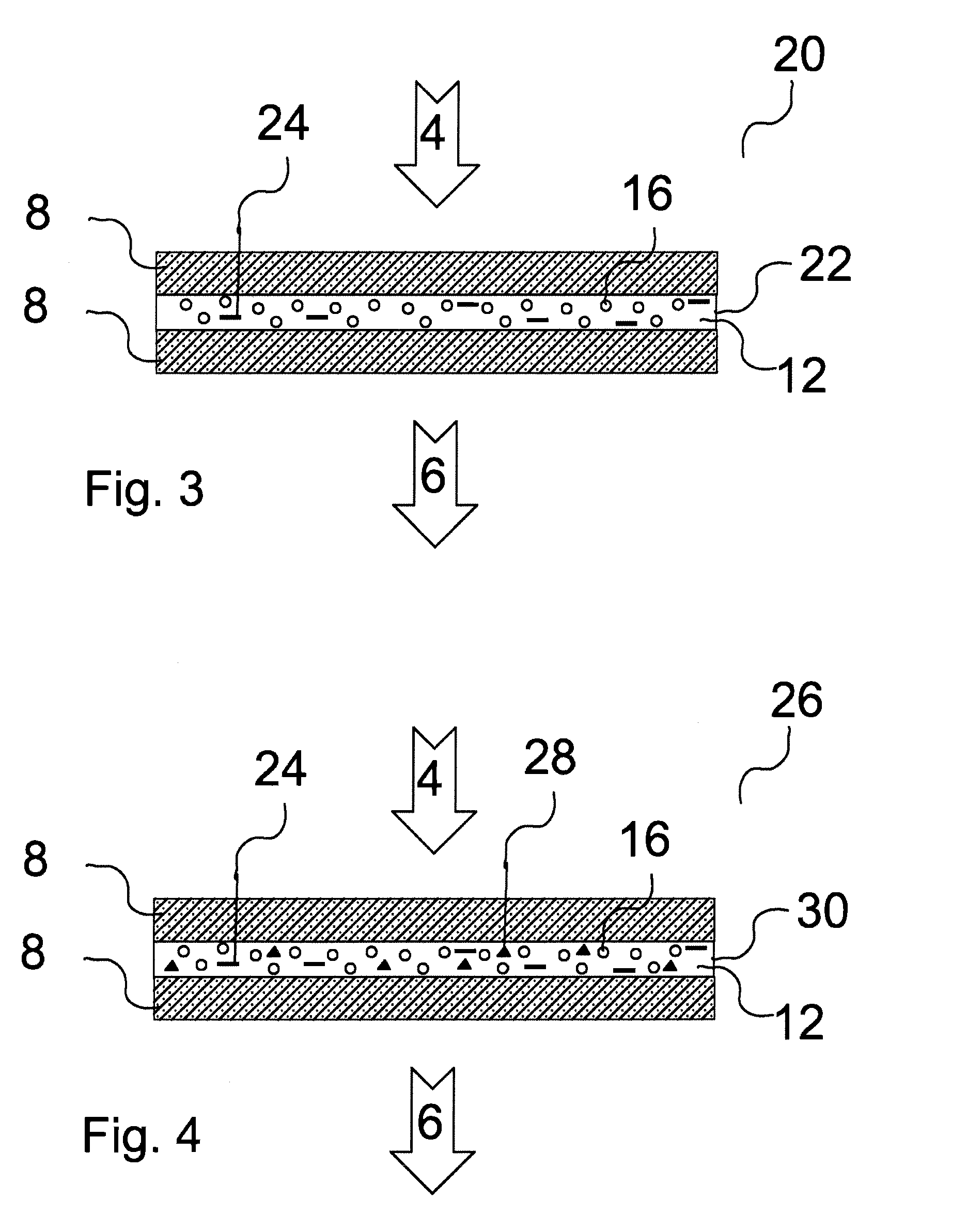
[0041]Despite the remarkable utility potential of thermochromic materials, their practical uses have been extremely limited. The limitations are largely attributed to the difficulties in providing thermochromic materials that react in low temperatures in the region of 18-30° C. Here we introduce a novel Thermochromic Composition (TCC) containing at least two kinds of materials, embedded in a transparent matrix, where one kind is thermochromic nanoparticle, e.g., VO2 nanoparticles (1 to 100 nanometers in size), and the second kind is light absorbing that can be either covalently bonded to the nanoparticles or dyes not connected chemically, or nanoparticles (1 to 100 nanometers in size) that exhibit strong absorption of the impinging light, e.g., carbon black, ATO (Antimony Tin Oxide), ITO (indium Tin Oxide), FTO (Fluorine doped Tin Oxide) or LaB6 nanoparticles. Examples for light absorbing dyes are commercial dyes made by Epolin Inc, like Epolight 5699 and Epolight 5447, or American ...
PUM
| Property | Measurement | Unit |
|---|---|---|
| transition temperature | aaaaa | aaaaa |
| size | aaaaa | aaaaa |
| wavelengths | aaaaa | aaaaa |
Abstract
Description
Claims
Application Information
 Login to View More