
High-voltage H-bridge control circuit for a lens driver of an electronic ophthalmic lens
a technology of electronic ophthalmology and control circuit, which is applied in the field of electronic devices, can solve the problems of increasing the likelihood of creating wearable or embeddable microelectronic devices, affecting the clinical effect of patients, and affecting the clinical effect, so as to reduce the current consumption, reduce the current, and reduce the cos
- Summary
- Abstract
- Description
- Claims
- Application Information
AI Technical Summary
Benefits of technology
Problems solved by technology
Method used
Image

Examples
Embodiment Construction
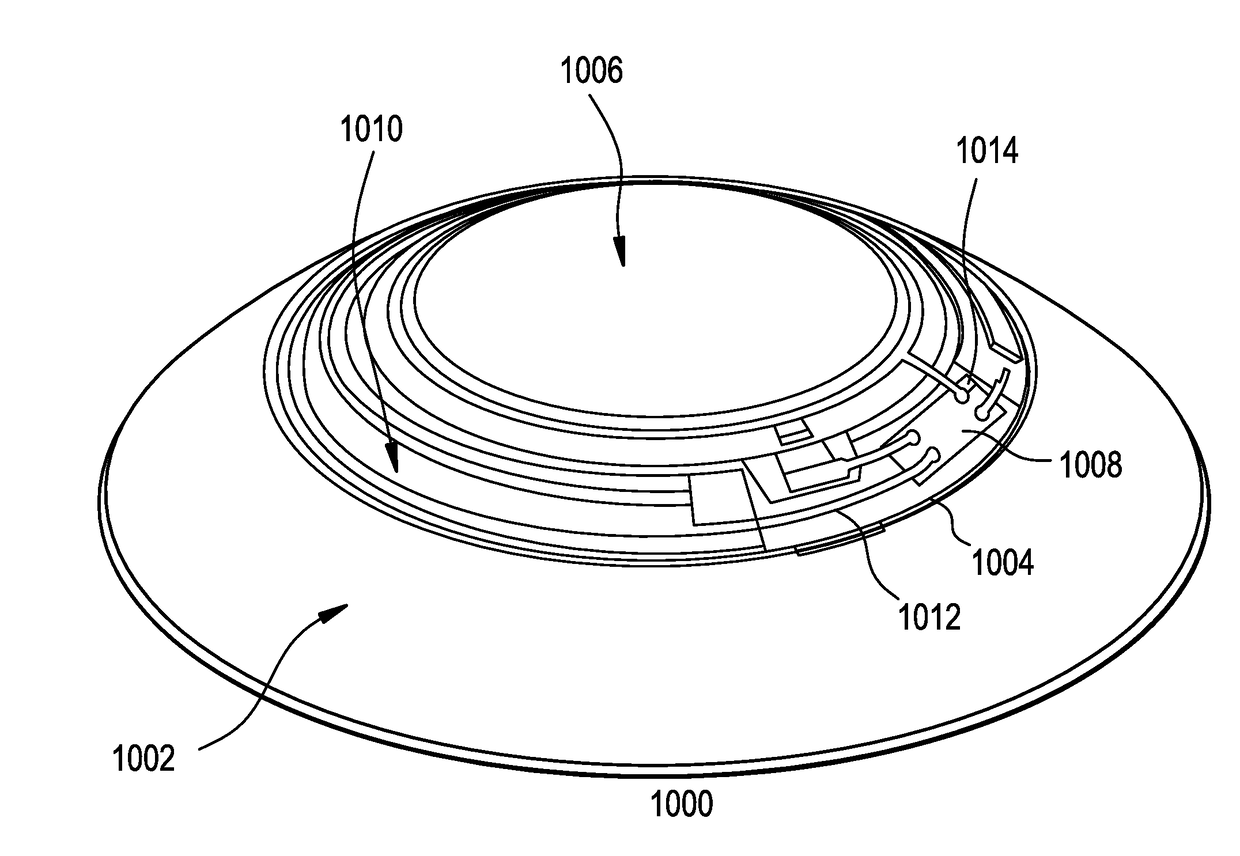
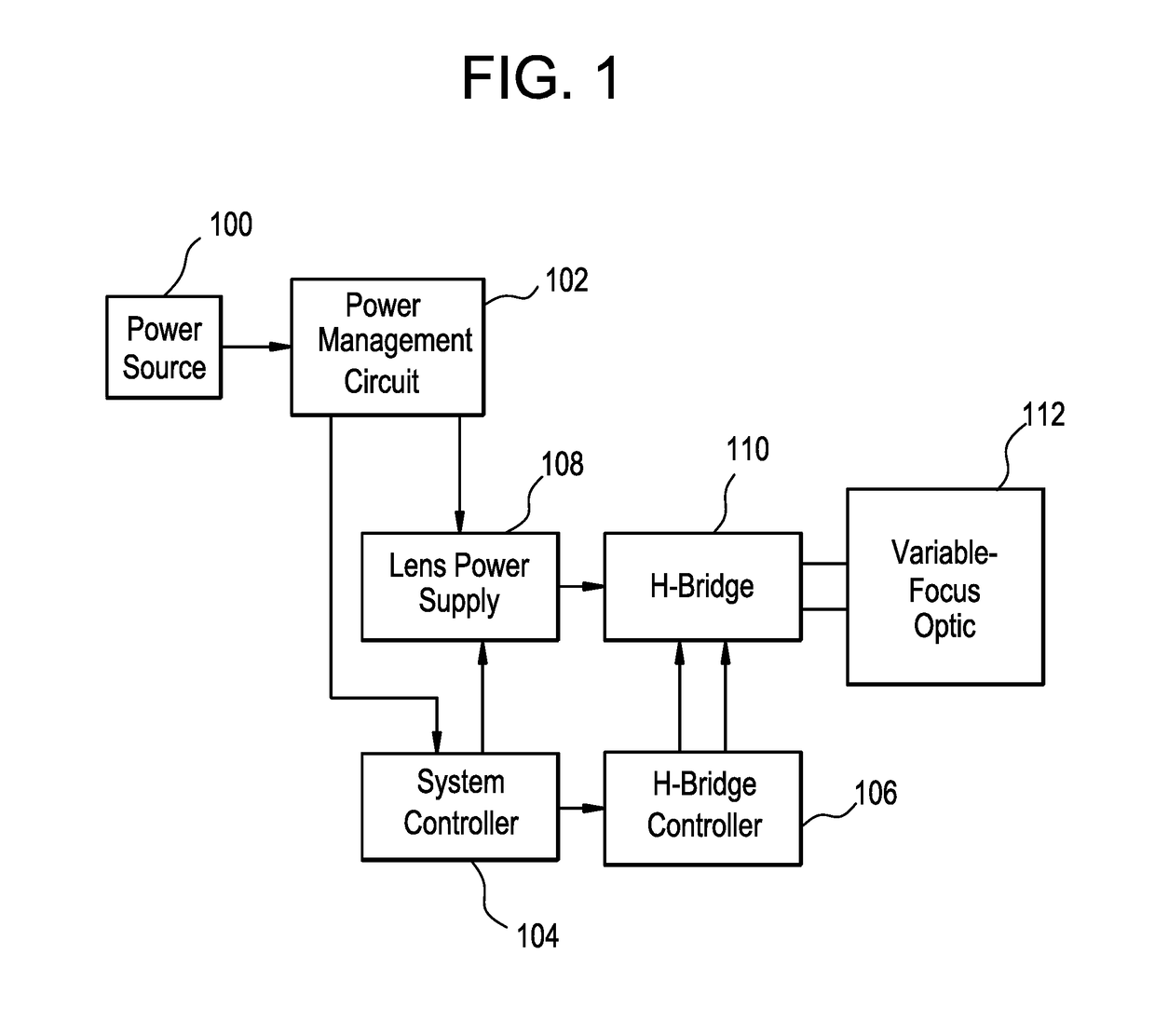
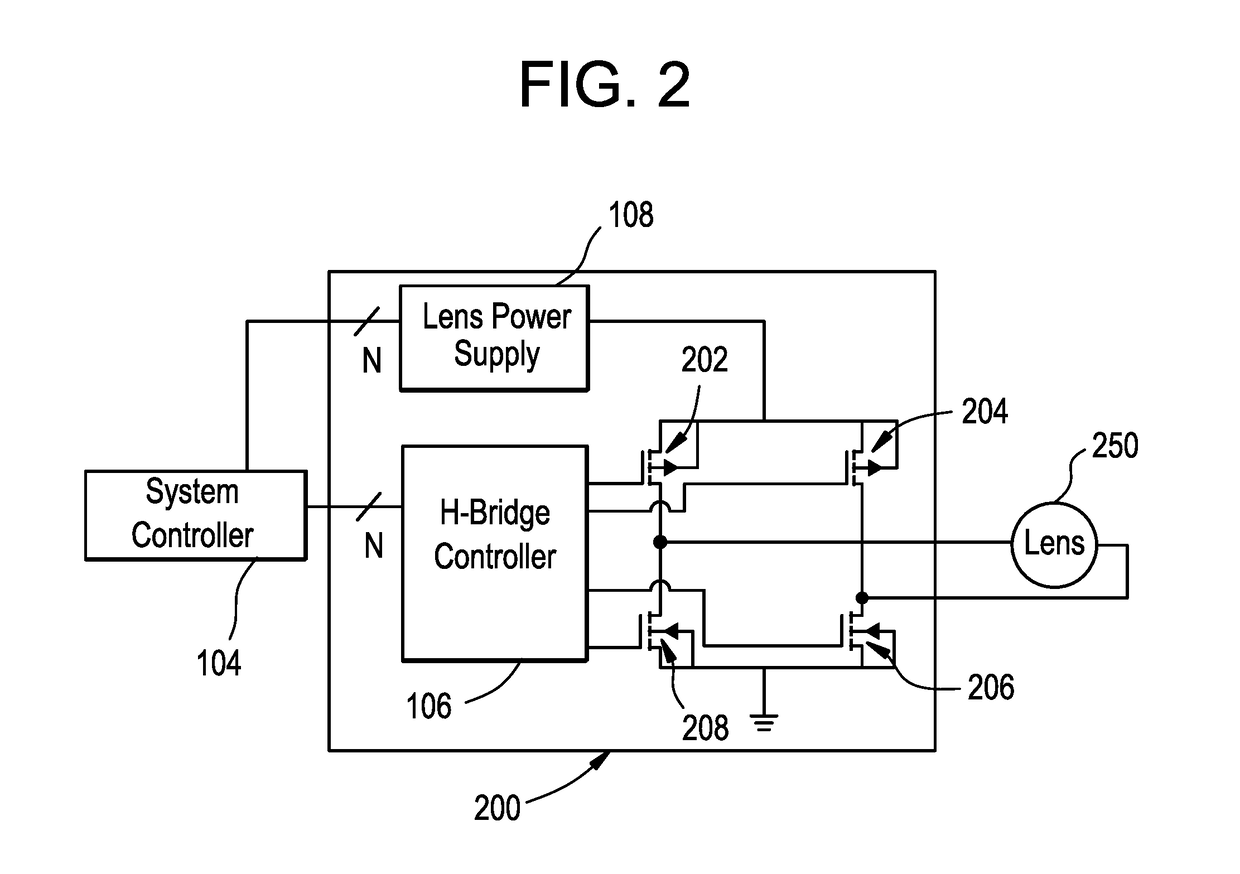
[0044]Conventional contact lenses are polymeric structures with specific shapes to correct various vision problems as briefly set forth above. To achieve enhanced functionality, various circuits and components have to be integrated into these polymeric structures. For example, control circuits, microprocessors, communication devices, power supplies, sensors, actuators, light emitting diodes, and miniature antennas may be integrated into contact lenses via custom built optoelectronic components to not only correct vision, but to enhance vision as well as provide additional functionality as is explained herein. Electronic and / or powered contract lenses may be designed to provide enhanced vision via zoom-in and zoom-out capabilities or just simply modifying the refractive capabilities of the lenses. Electronic and / or powered contact lenses may be designed to enhance color and resolution, to display textural information, to translate speech into captions in real time, to offer visual cu...
PUM
 Login to View More
 Abstract
Description
Claims
Application Information
 Login to View More