
Method for modifying titanium-silicon molecular sieve
A titanium-silicon molecular sieve and modification technology, used in molecular sieve catalysts, chemical instruments and methods, physical/chemical process catalysts, etc., can solve the problems of low effective utilization rate, poor stability, low catalyst activity, etc., and improve the total titanium content. , strong activity stability, the effect of increasing the relative amount of skeleton titanium
Patent Information
- Authority / Receiving Office
- CN · China
- Patent Type
- Patents(China)
- Current Assignee / Owner
- Publication Date
- 2011-02-09
Smart Images
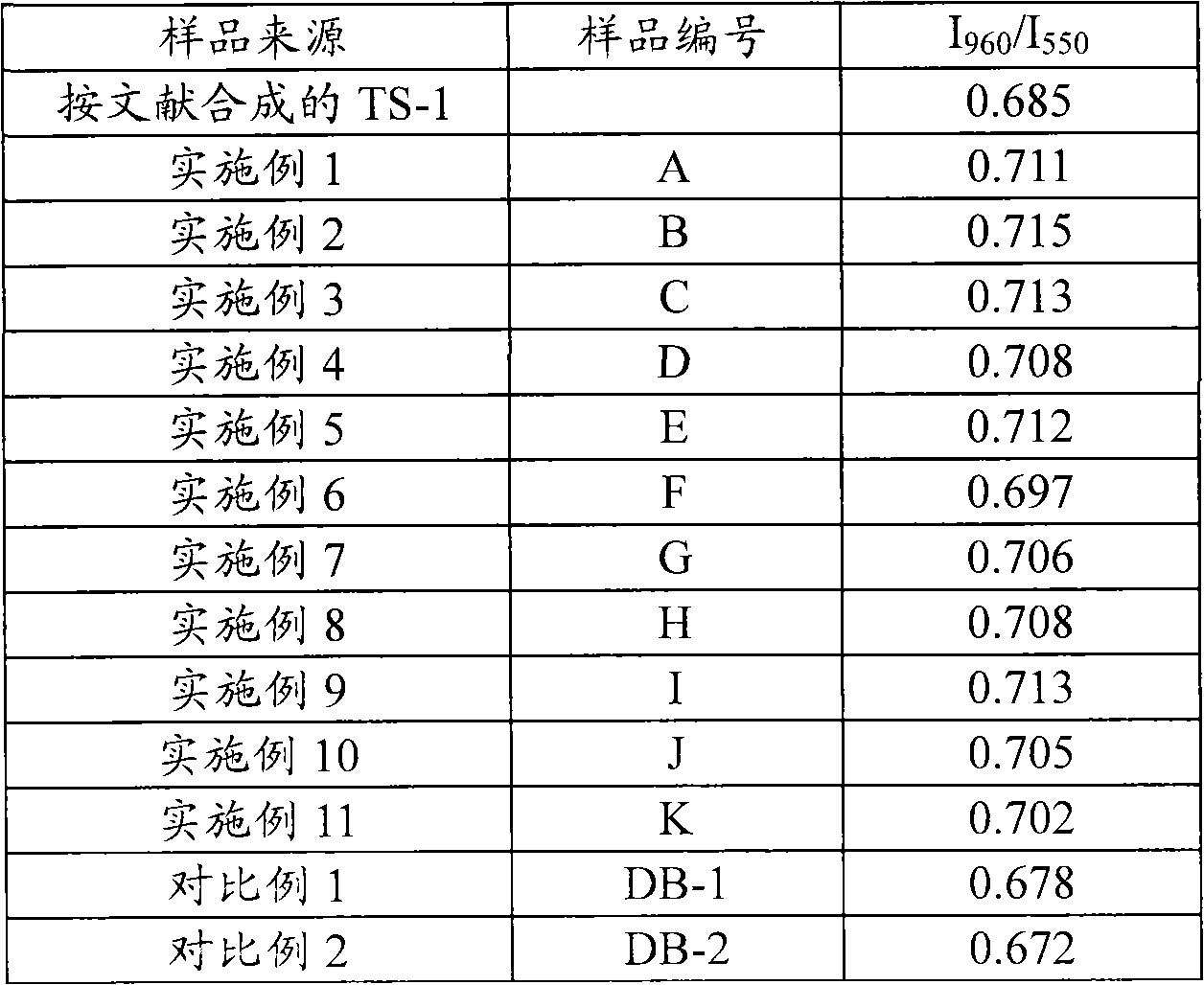
Figure 1 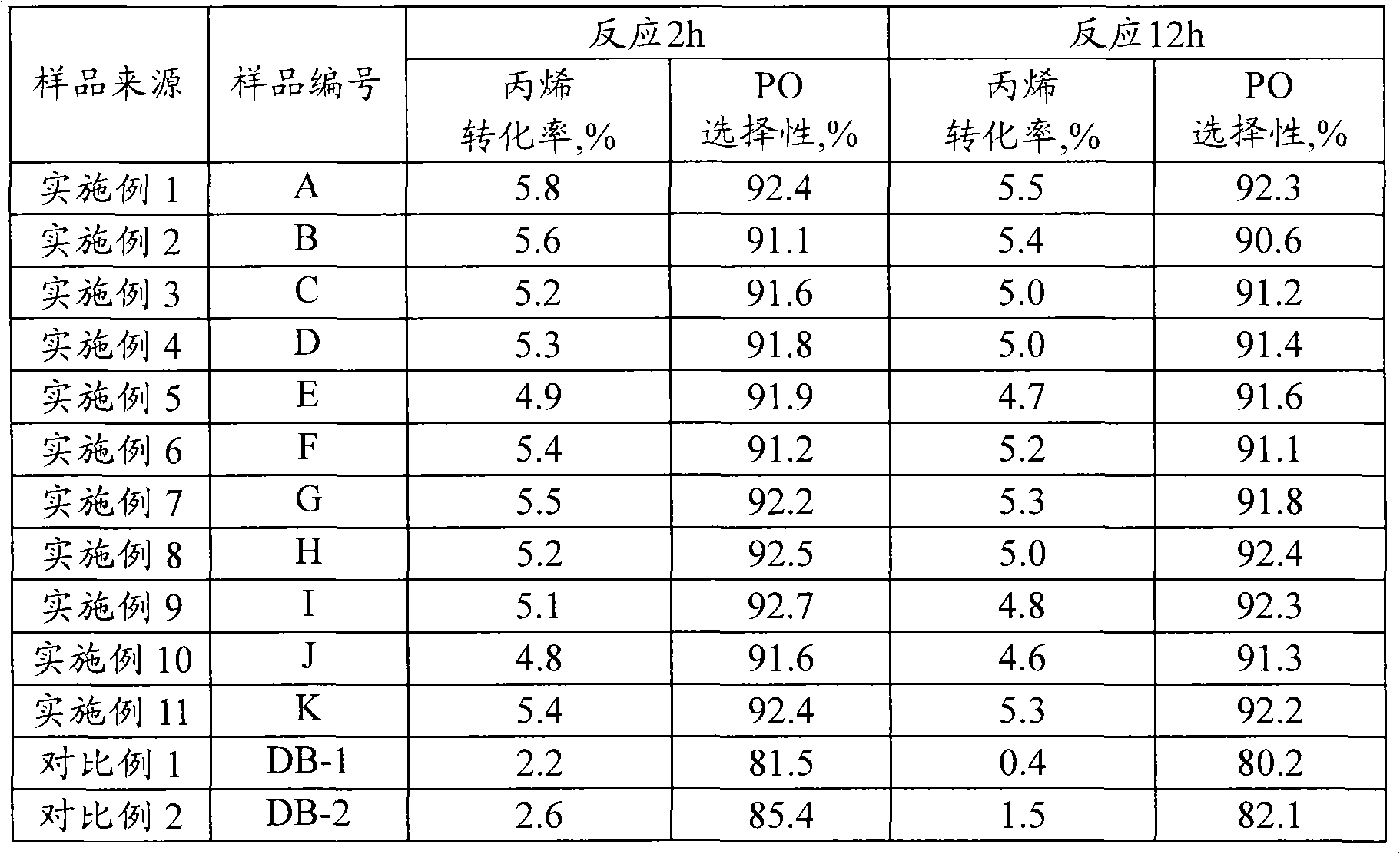
Figure 2
Abstract
Description
technical field
[0001] The invention relates to a method for modifying a titanium-silicon molecular sieve. Background technique
[0002] Titanium silicate molecular sieve is a new type of heteroatom molecular sieve developed in the early 1980s. At present, TS-1 with MFI structure, TS-2 with MEL structure, MCM-22 with MWW structure and TS-48 with larger pore structure have been synthesized. Titanium silicate molecular sieves can be used to catalyze a variety of organic oxidation reactions, such as olefin epoxidation, alkane partial oxidation, alcohol oxidation, phenol hydroxylation, cyclic ketone ammoxidation, and in the reaction, non-polluting low-concentration peroxidation can be used As an oxidizing agent, hydrogen has high reaction selectivity and has the incomparable advantages of energy saving, economy and environmental friendliness compared with traditional oxidation systems. As a catalyst for the selective oxidation of organic matter, titanium-silicon molecular siev...
Examples
Embodiment 1
[0033] Get 20 grams of titanium-silicon molecular sieves TS-1, the concentration of 0.01g / mL (in terms of palladium atoms) ammonium nitrate palladium complex solution and cetyltrimethylammonium bromide to join the tetrapropylammonium hydroxide Stir in an aqueous solution (mass percentage concentration 10%) to obtain a mixed solution 1, wherein titanium silicon molecular sieve (gram): hexadecyltrimethylammonium bromide (mole): tetrapropyl ammonium hydroxide (mole): ammonium nitrate Palladium complex (g, calculated as palladium): water (mol) = 100: 0.3: 0.005: 0.5: 1000. TiCl 4 , isopropanol, butylenediamine and water according to TiCl 4 (mol): isopropanol (mol): butylenediamine (mol): water (mol) = 1: 25: 5: 200 ratio was mixed at room temperature, stirred for 30 minutes to obtain mixed solution 2, and then mixed solution 1 and the mixed solution 2 are mixed according to the ratio of molecular sieve (g): Ti (mol) = 200: 1, then put into a stainless steel reactor and sealed, h...
Embodiment 2
[0035] Take 20 grams of titanium-silicon molecular sieve TS-1, palladium chloride solution and polyacrylate with a concentration of 0.01 g / mL (calculated as palladium atoms), and add them to an aqueous solution of sodium hydroxide (mass percentage concentration 15%) and stir evenly to obtain a mixed Liquid 1, wherein titanium-silicon molecular sieve (gram): polyacrylate (mol): sodium hydroxide (mol): palladium chloride (gram, calculated as palladium): water (mol) = 100: 0.9: 1.0: 0.15: 1600 . Ti(SO 4 ) 2 , isopropanol, tetrapropylammonium hydroxide and water according to Ti(SO 4 ) 2 (mol): isopropanol (mol): tetrapropyl ammonium hydroxide (mol): water (mol)=1: 5: 8: 100 ratio mixes, stirs 60 minutes, gets mixed solution 2, then mixed solution 1 and the mixed solution 2 are mixed according to the ratio of molecular sieve (g): Ti (mol) = 500: 1, then put into a stainless steel reaction kettle, seal, hydrothermally treat at a temperature of 180° C. and autogenous pressure for...
Embodiment 3
[0037] Get 20 grams of titanium silicon molecular sieve TS-1, concentration is the palladium nitrate solution of 0.01g / mL (as palladium atom) and Tween 80 and joins the aqueous solution (mass percentage concentration 10% of tetrapropyl ammonium hydroxide and butanediamine) ) and stirred uniformly to obtain mixed solution 1, wherein titanium silicon molecular sieve (gram): protective agent (mol): organic amine (mol): palladium source (gram, calculated as palladium): water (mol) = 100: 0.03: 0.1: 0.05:550; TiOCl at room temperature 2 , butylenediamine and water according to TiOCl 2 (mol): butyldiamine (mol): water (mol) = 1: 2: 50 ratio mixed, stirred for 15 minutes to obtain mixed solution 2, then mixed solution 1 and mixed solution 2 according to molecular sieve (gram): Ti( mol) = 800:1 ratio, put into stainless steel reactor, seal, hydrothermal treatment at 120°C temperature and autogenous pressure for 120h, filter, wash, and then dry at 150°C for 3h, in a nitrogen atmospher...